
Last updated November 16, 2026
 Home additions & ADU
 Kitchen remodeling
 Bathroom remodeling
 Roofing
 Windows & doors
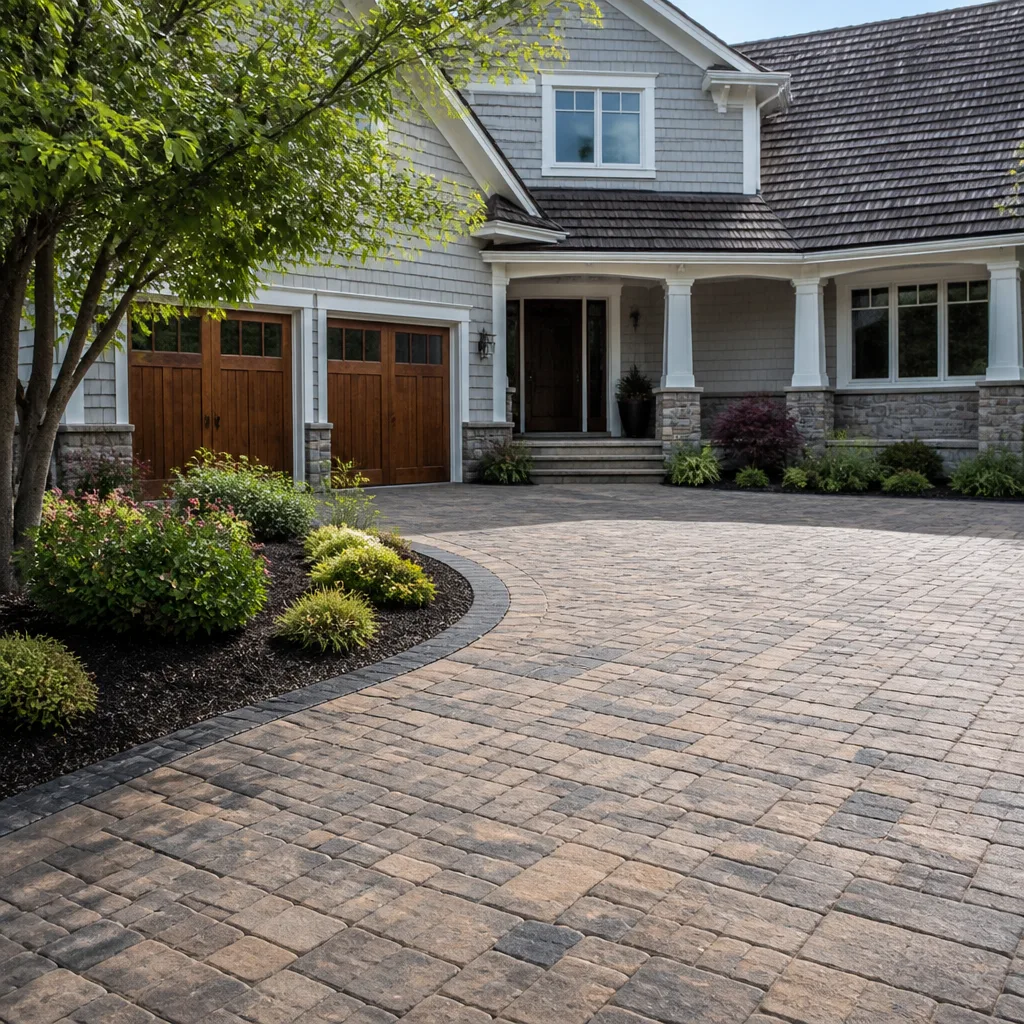 Driveway & pavers
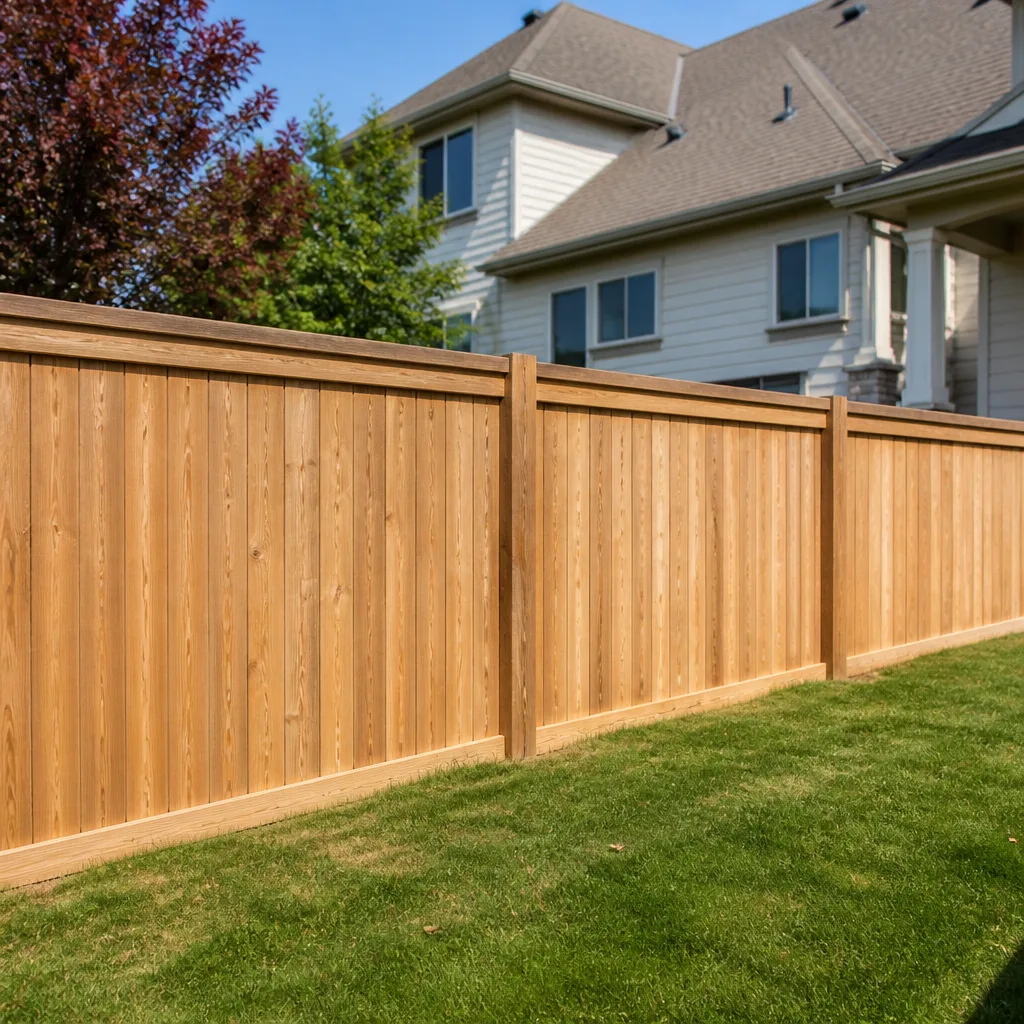 Fence
Free written scope consultation - allowances, timeline, and change-order rules on paper before a single trade is scheduled
Construction Warning Signs: A Santa Clarita Homeowner’s Reference Guide
A hairline stucco crack running diagonally from a window corner isn’t cosmetic. It’s a stress fracture pattern that in Santa Clarita’s expansive clay soil zones often means the foundation is moving, not settling. Most construction failure we see in this valley doesn’t arrive overnight. It announces itself for months through cracks, efflorescence, stains, and gaps, and homeowners explain each one away until the repair bill is five times what it would have been. This guide walks through the signs that actually matter in Santa Clarita, how to tell cosmetic settling from structural movement, and the documentation habit that makes both contractor conversations and insurance claims far easier.
Quick Answer
In Santa Clarita, the construction warning signs that genuinely warrant attention are diagonal or stair-step cracks in stucco and block, white mineral bloom (efflorescence) on masonry, water pooling against the foundation six hours after rain, and lips or depressions in decks, patios, and driveways. Cosmetic settling usually shows as thin, vertical hairline cracks that don’t widen; structural movement tends to be diagonal, wider than 1/8 inch, and paired with doors that stick or a wall that’s visibly leaning.
Styles & brands we work with
- Kitchen remodeling
- Bathroom remodeling
- Home additions & ADU
- Roofing
- Windows & doors
- Driveway & pavers
- Fence
Table of Contents
- How to Tell Settling Cracks From Structural Movement Cracks
- What Efflorescence on Block Walls and Foundations Really Means
- Drainage Red Flags You Can Only See After Rain
- Deck and Patio Warnings: Base Failure vs. Surface Wear
- Why Santa Clarita’s Soil Makes These Signs Mean More Here
- The Documentation Habit That Saves You Money Later
- Why Permit Paperwork Is Your Best Warning System
How to Tell Settling Cracks From Structural Movement Cracks
Settling is normal. Movement is not. The difference is in the shape, width, and location of the crack, and it’s worth understanding because the two lead to very different conversations. A crack that’s genuinely structural will keep widening over months; a cosmetic settling crack settles and stays that way.
Here’s a practical checklist we walk homeowners through in Santa Clarita:
- Vertical hairline (under 1/16 inch), in drywall or paint, no widened edges: Cosmetic. Usually seasonal shrink and swell. Monitor it with a pencil mark and date.
- Diagonal, running from a window or door corner toward the ceiling or floor: Stress fracture pattern. Often indicates foundation movement or a load path issue. Call a professional to evaluate.
- Stair-step at mortar joints in block or brick: Structural movement in masonry. Nearly always warrants a foundation inspection.
- Horizontal crack in a foundation stem wall: This is the one to take most seriously. It’s frequently a soil pressure or drainage issue, not settling.
- Cracks wider than 1/8 inch anywhere, or cracks that reappear after patching: Movement is active. Patching hides it; it doesn’t fix it.
- Crack plus a door that sticks, a floor that feels uneven, or a window that suddenly won’t close: Multiple systems are reacting to the same movement. That’s your cue to stop watching and start documenting.
We’ve watched a two-story home in Saugus develop a single diagonal crack that the homeowner patched three times before calling anybody. By the third year, that “cosmetic” crack had been joined by a sticking slider and a sloping hallway. The fix would have been a fraction of the cost if the first crack had been evaluated instead of painted over.
What Efflorescence on Block Walls and Foundations Really Means
Efflorescence is the powdery white bloom you’ll see on block walls, retaining walls, and foundation stem walls. It’s salt drawn to the surface by moisture moving through the masonry. The bloom itself is harmless; the moisture pathway behind it is not. When you see it, the question isn’t “how do I clean this,” it’s “where is the water coming from and how long has it been moving?”
In Santa Clarita, efflorescence shows up most on walls that face our dry winds and absorb moisture on the shaded side, on retaining walls with failed drainage behind them, and on block walls at the base of a slope. Three things to check when you see it:
- Is it recurring? Efflorescence that returns after cleaning means moisture is still entering. One-time bloom after a rare wet winter is less concerning.
- Is it paired with spalling? Flaking or crumbling at the surface means freeze-thaw or salt cycling has started to damage the block. That’s structural territory.
- Is it near a planter, downspout, or slope? Efflorescence concentrated in one zone usually points to a specific water source, not general masonry moisture.
Efflorescence under a window on a south-facing wall in Valencia reads differently than efflorescence at the base of a retaining wall in Canyon Country. The first is often condensation; the second is usually a drainage failure that will eventually undermine the wall. If it’s on a retaining wall that holds back a slope, get it looked at before the next wet season.
Drainage Red Flags You Can Only See After Rain
Drainage problems are invisible on a dry day. The most useful 15 minutes you’ll spend on your property this year are on a wet morning, walking the perimeter with a phone camera. Here’s what to look for, in order:
- Pooling against the foundation. Water standing within 36 inches of the foundation four to six hours after rain stops is a grading failure. It will find its way into the crawl space or slab edge.
- Staining patterns on the stucco or block. A vertical dark streak from a window corner, a soffit, or a fascia board tells you water is running there and has been for a while.
- Downspout discharge that lands too close. A downspout that dumps 18 inches from the wall is delivering the entire roof’s water to your foundation. Extend it eight feet or pipe it to a dry well.
- Soil pulling away from the foundation. A visible gap between grade and stem wall means water is running into it, not away from it.
- Mulch or gravel washed downstream. If your decorative rock moved, water moved it. Look uphill to find why.
Santa Clarita gets most of its rain in a few concentrated storms rather than a slow season, which means drainage systems get tested hard and fast. A yard that barely shows a problem in a light drizzle can pond three inches deep in a January storm. Driveways and pavers that were graded correctly will shed water; if yours holds it, the grading is the issue, not the concrete. If you’re already seeing paver depressions or sunken edges, our Driveway & Pavers in Santa Clarita page covers what repair actually looks like.
Deck and Patio Warnings: Base Failure vs. Surface Wear
Decks and patios fail in two completely different ways, and the repair is different for each. Surface wear is cosmetic and cheap. Base failure is structural and gets expensive fast if you ignore it.
Surface wear looks like faded or splintering deck boards, minor surface cracks in a patio slab, or stain wearing thin. It’s cosmetic aging.
Base failure looks like a deck that feels springy underfoot, posts that have sunk below their footing line, patio pavers that rock when you walk across them, a visible lip where the lawn meets the concrete, or a low spot that holds water after rain. Those are signs the subgrade has moved, the base wasn’t compacted correctly, or drainage has undermined the structure from below.
Here’s the distinction that matters: if you patch a surface crack and the underlying base is failing, the crack comes back within a season. Fix the base, and the surface stays fixed. If a paver driveway or patio rocks or has settled, that’s a base conversation, not a topcoat one. And if a deck springboards underfoot or a post has visibly sunk, stop using the deck until a professional inspects the framing and footings. Safety first.
The other thing we see often: deck rails that wobble at the post. That’s not wear. That’s the post connection or footing starting to give, and a rail is a fall hazard when it moves.
Why Santa Clarita’s Soil Makes These Signs Mean More Here
Santa Clarita sits on soil that contains expansive clay. That soil swells when it’s wet and shrinks when it dries, and our wet-and-dry swing is significant. A foundation that would be perfectly stable on a gravel base will move seasonally here, especially during the dry-to-wet transition in late fall and early winter.
In our experience, neighborhoods like Saugus, Canyon Country, and Newhall see these seasonal movement signs most often on homes built on fill lots or older slabs without modern moisture barriers. A crack that’s stable all summer and opens in December is doing exactly what expansive soil does. That’s why the “monitor and date” step matters so much in Santa Clarita; you’re not just watching the crack, you’re watching whether it moves with the season or moves regardless of it.
Water management is the practical defense. Consistent moisture at the perimeter during dry months (a soaker hose on a timer, not a sprinkler flooding the wall) smooths out the swell-shrink cycle. Good drainage keeps water out. Correctly installed drip irrigation for plantings near the foundation prevents the “wet on one side, dry on the other” pattern that produces the worst movement.
None of that is a substitute for looking at the crack. If it’s widened by more than 1/8 inch, or it’s paired with a sticking door, call a professional. Catching the pattern early is the whole game.
The Documentation Habit That Saves You Money Later
Here’s the habit that pays for itself more than any other: for every warning sign you spot, take a dated photo and log it. Over a year, that log becomes the most valuable piece of paper in your house because it tells a story the crack itself can’t.
Every photo should have:
- Date and time. Your phone metadata can do it, but write it in the caption too.
- A wide shot and a close-up. The wide shot shows where the crack is on the house; the close-up shows the dimensions.
- A measurement reference. A quarter next to the crack gives the size context immediately.
- Whether it’s changed. A simple “same as last month” or “wider, maybe 1/8 inch now” note.
- The weather conditions. “Took this photo after 2 inches of rain in January” or “dry season, 90-degree day.”
Two big reasons this matters. First, when you call a contractor, you don’t have to describe a vague memory; you can hand over a record that shows exactly how long the sign has been there and whether it’s moving. The contractor’s diagnosis takes minutes instead of hours. Second, if a repair ever becomes an insurance claim, your log is dating and causality evidence. An adjuster who sees a documented pattern of a recurring crack is having an entirely different conversation than one looking at a single photo you took yesterday.
Keep the log in a shared folder in the cloud, so it’s not on a laptop that dies. Add contractor invoices, permits, and inspection records to the same folder. When you go to sell the house, that record is a feature, not a chore.
Why Permit Paperwork Is Your Best Warning System
The last warning sign most homeowners miss is the absence of a permit. In Santa Clarita, as throughout Los Angeles County, a permitted job gets inspected, and inspections catch structural problems early, on the record. An unpermitted job skips all of that.
If a contractor ever tells you permits are optional or “not needed” for a job of any real scope, that’s the warning sign. Full stop. The permit inspector works for you, not for the contractor, and the paper trail they create is exactly what you need if you ever sell the house or need to prove what was done.
When you do pull a permit, add every permit, every inspection card, and every signed-off final to the same documentation folder as your crack photos. That habit is the single biggest difference between a homeowner who wins an insurance or resale conversation and one who doesn’t. If you’re planning a bigger project and want to see how we handle the paperwork, our Home Additions & ADU in Santa Clarita page walks through it.
Common Mistakes to Avoid
- Patching a diagonal stucco crack without investigating it. Patching hides the movement, doesn’t stop it, and it comes back within a season. Find the cause first, patch second.
- Ignoring efflorescence and just power-washing it away. The bloom returns because the moisture is still moving. Chase the water source, not the stain.
- Assuming any ponding is a “grading quirk.” Water standing near a Santa Clarita foundation after rain is a drainage failure that will find the slab edge. Fix it before the next storm season.
- Putting off a deck that feels springy. A deck that bounces or a rail that wobbles is not normal break-in. Both are fall hazards until inspected.
- Repaving a paver driveway or patio without fixing the base. If the subgrade or base failed, new surface pavers fail on the same timeline as the old ones.
- Trusting a contractor who says permits are unnecessary. In Santa Clarita, that’s a red flag about every other part of the job too.
- Forgetting to document anything. No photos, no dates, no records means every later conversation about the problem starts from a memory instead of evidence.
See the difference
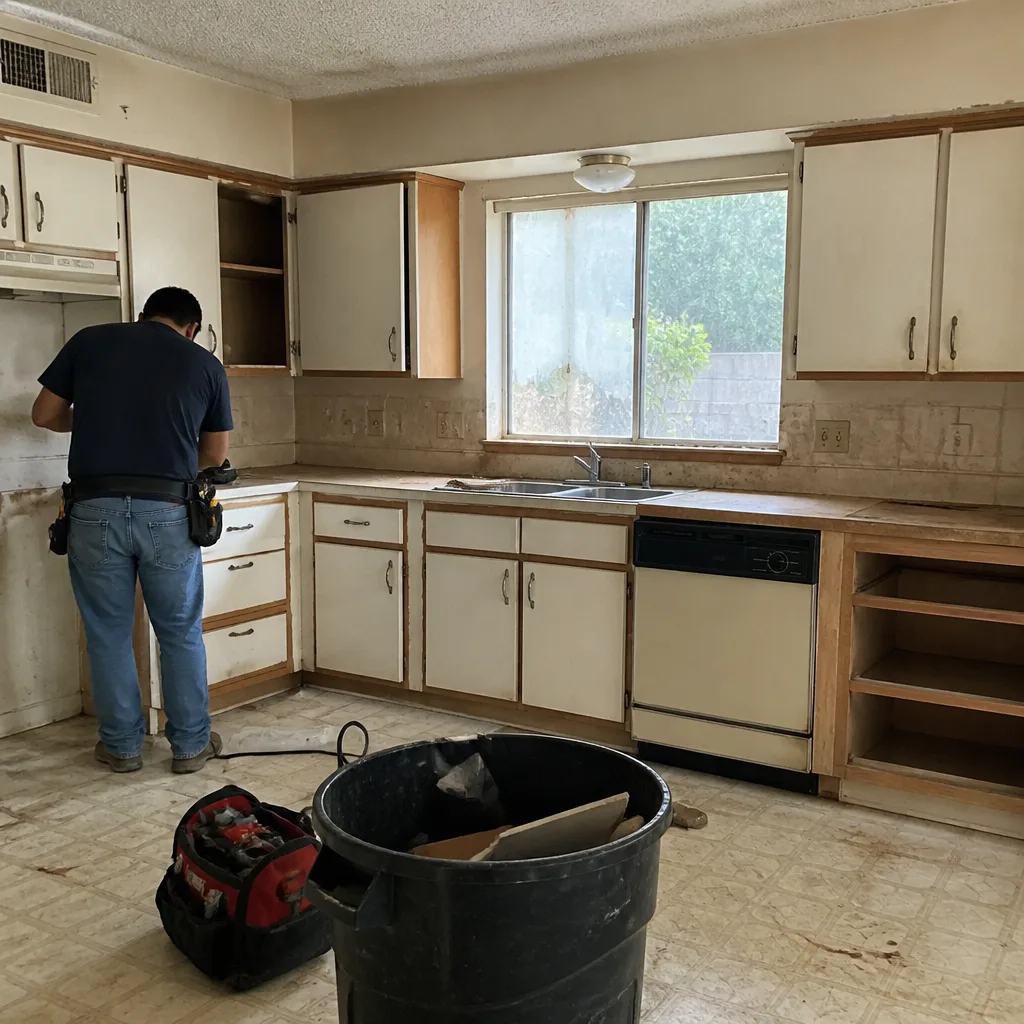 Before
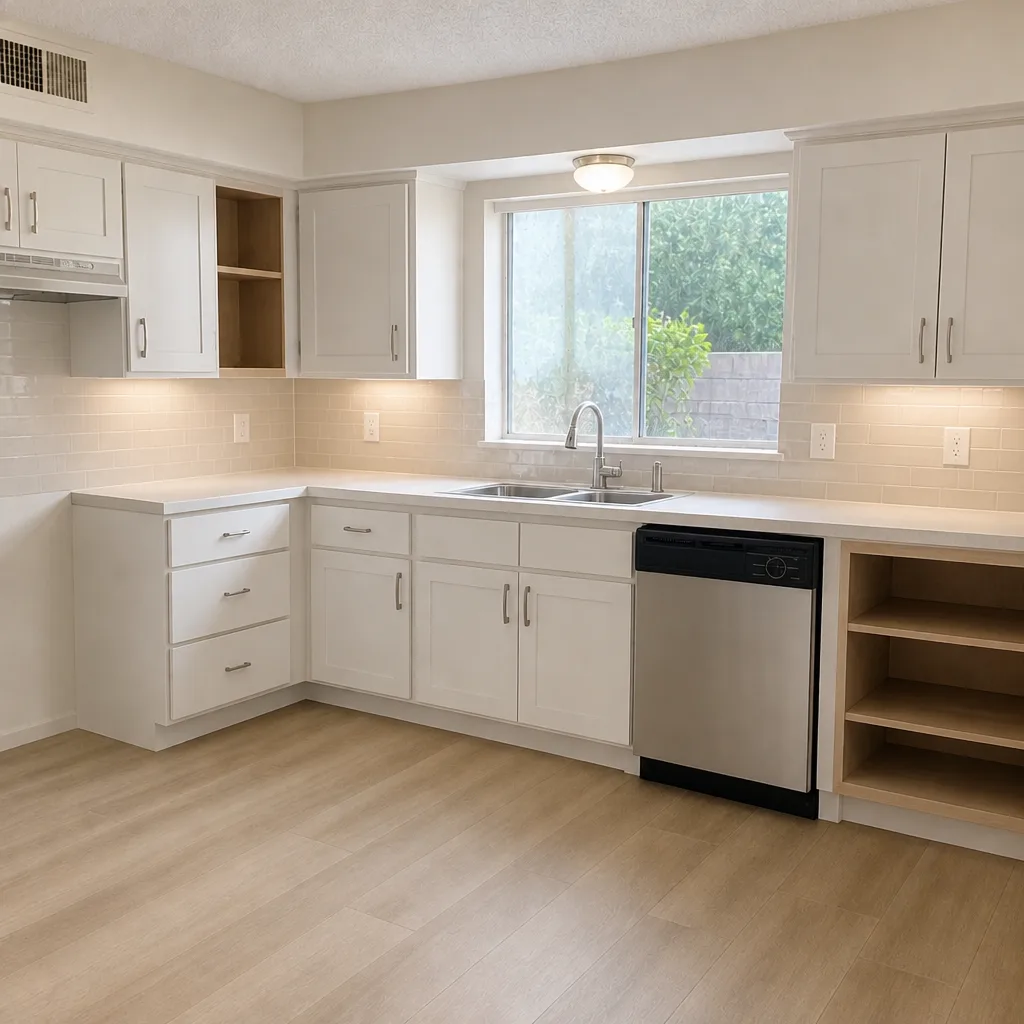 After
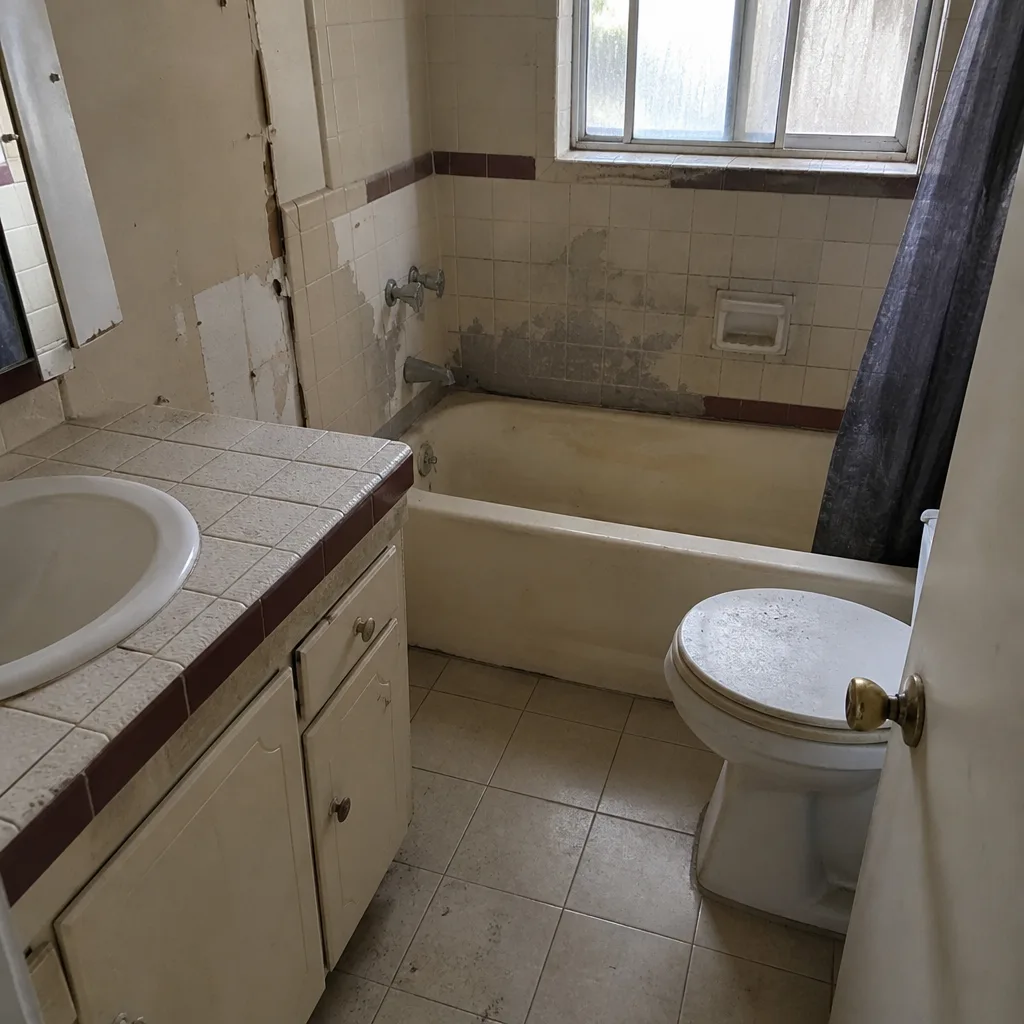 Before
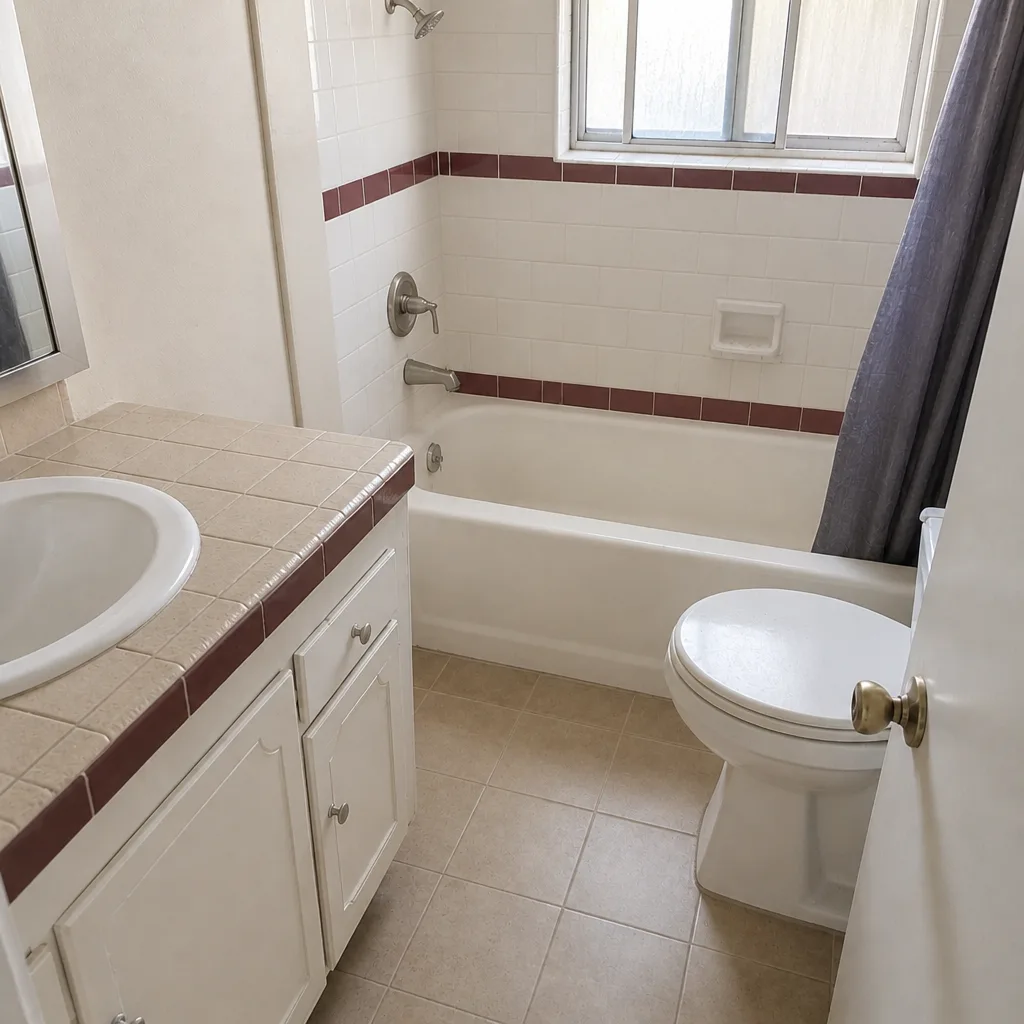 After
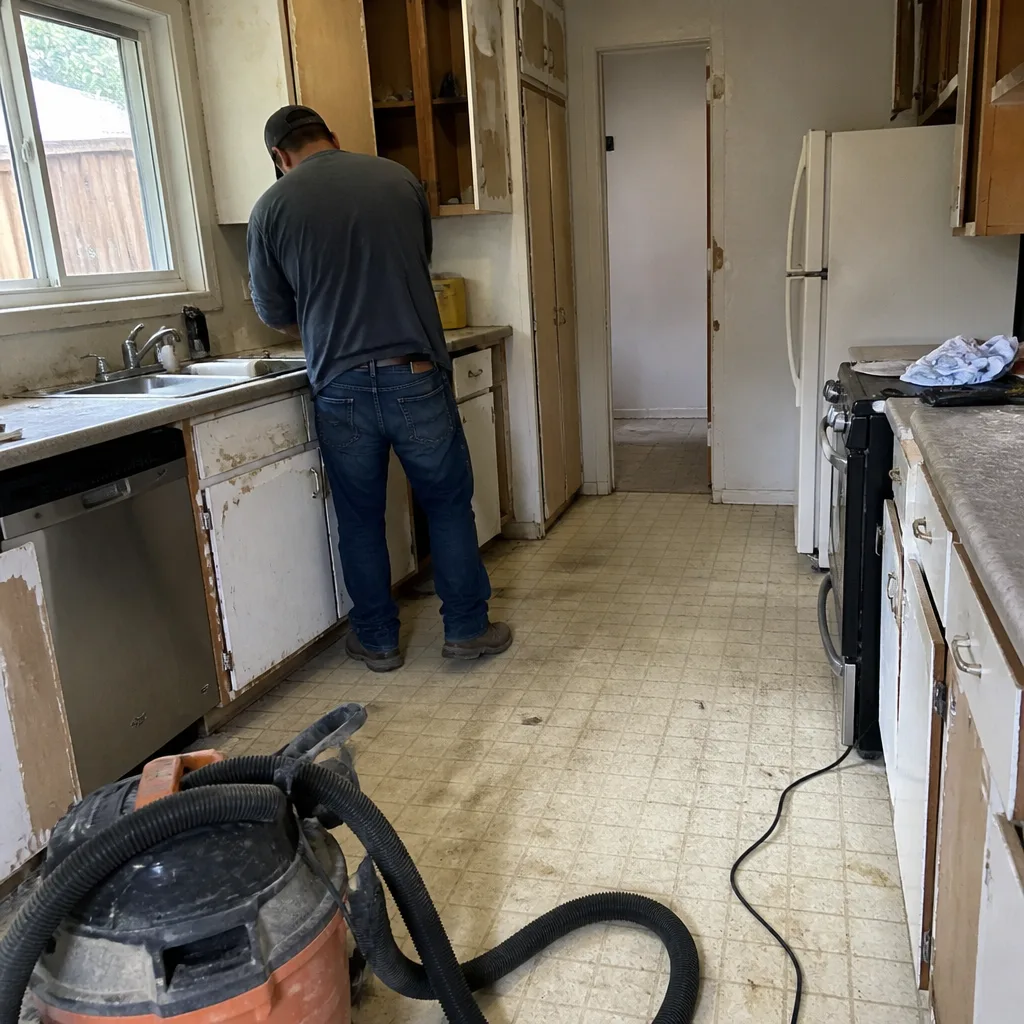 Before
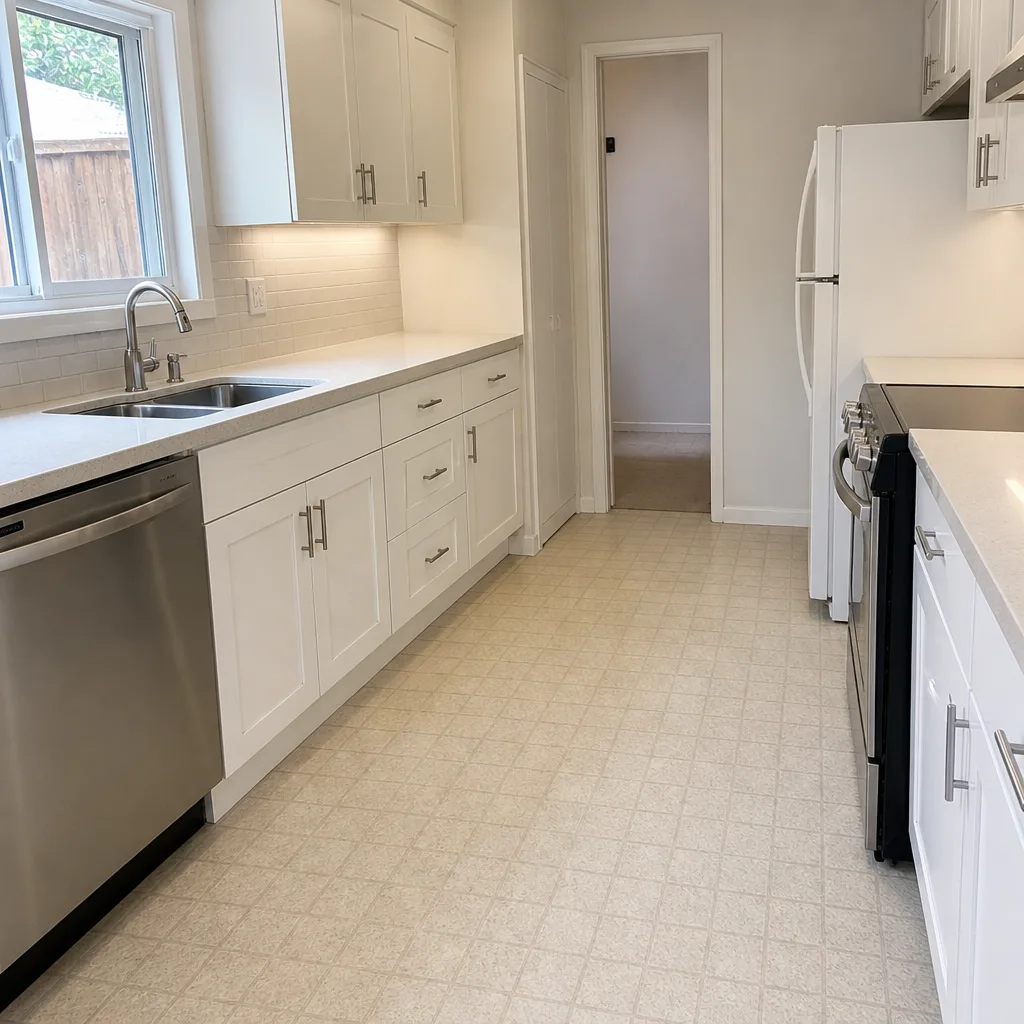 After
When to Call a Professional
Call a professional when the sign is one of these: a crack wider than 1/8 inch, a diagonal or stair-step crack, a horizontal crack in a foundation wall, efflorescence that returns after cleaning, water pooling against the foundation, a deck or post that has visibly moved, or a patio slab that rocks. Also call when a symptom shows up in more than one place at once; a sticking door plus a cracked wall is a pattern, not a coincidence. For fencing concerns, sunken posts and leaning panels after a season of shrink-swell soil are worth a look from our Fence Installation in Santa Clarita team. Barrett & Sons Construction Santa Clarita offers free estimates across Santa Clarita. Call (833) 762-8116 and a live person answers.
Frequently Asked Questions
The top four are diagonal or stair-step cracks in stucco and block, efflorescence on masonry, water pooling against the foundation after rain, and lips or depressions in decks, patios, and driveways. Each points to a specific cause; diagonal cracks and pooling water are the two to prioritize. Call (833) 762-8116 for a free estimate if you’re seeing any of these.
Settling cracks are thin, vertical, and stable; structural cracks are diagonal, wider than 1/8 inch, and continuing to widen. A crack that pairs with a sticking door or uneven floor is a strong structural signal. When in doubt, document it with a dated photo and call a professional to evaluate.
White powder on a block wall is efflorescence, mineral salt drawn to the surface by moisture moving through the masonry. The bloom is harmless; the moisture pathway behind it isn’t, and it can eventually cause spalling. If it returns after cleaning, call (833) 762-8116 for a free second opinion on any written estimate.
Structural repairs and significant grading changes in Santa Clarita almost always require permits and inspection sign-off. A reputable contractor will build permits into the scope and written change orders. If a contractor says a permit isn’t needed for structural work, that’s a red flag. Call (833) 762-8116 and we’ll walk through what your specific job needs.
Document it once, then call if it’s diagonal, wider than 1/8 inch, or widening. If it’s a thin vertical hairline that isn’t changing, you can monitor with dated photos for 60 to 90 days before calling. Don’t wait past the first wet season to make the call.
In our experience, early repair typically costs a fraction of the late-stage repair because the damage hasn’t spread to secondary systems. A patched-over crack that grows into foundation movement can multiply a repair cost several times over. Call (833) 762-8116 for a free estimate and a written line-item quote on what it actually takes to fix it now.
The Bottom Line
Construction problems rarely arrive without warning. In Santa Clarita, they announce themselves in diagonal cracks from window corners, white bloom on block walls, water pooling against the foundation, and springy decks or rocking pavers. Catching those signs in month one is the difference between a spot repair and a foundation job. Take dated photos, keep a log, and pull permits on anything structural. That documentation habit protects you in contractor conversations and insurance claims alike. If you spot one of the signs in this guide, get a professional set of eyes on it before the next wet season, not after. The Barrett & Sons Construction Santa Clarita home page is a good place to start.
Call (833) 762-8116 for a free estimate. A live person answers 24 hours a day, and we’ll give you a written, line-item quote on what your property actually needs – no surprises at the door.
Written by the team at Barrett & Sons Construction Santa Clarita.