

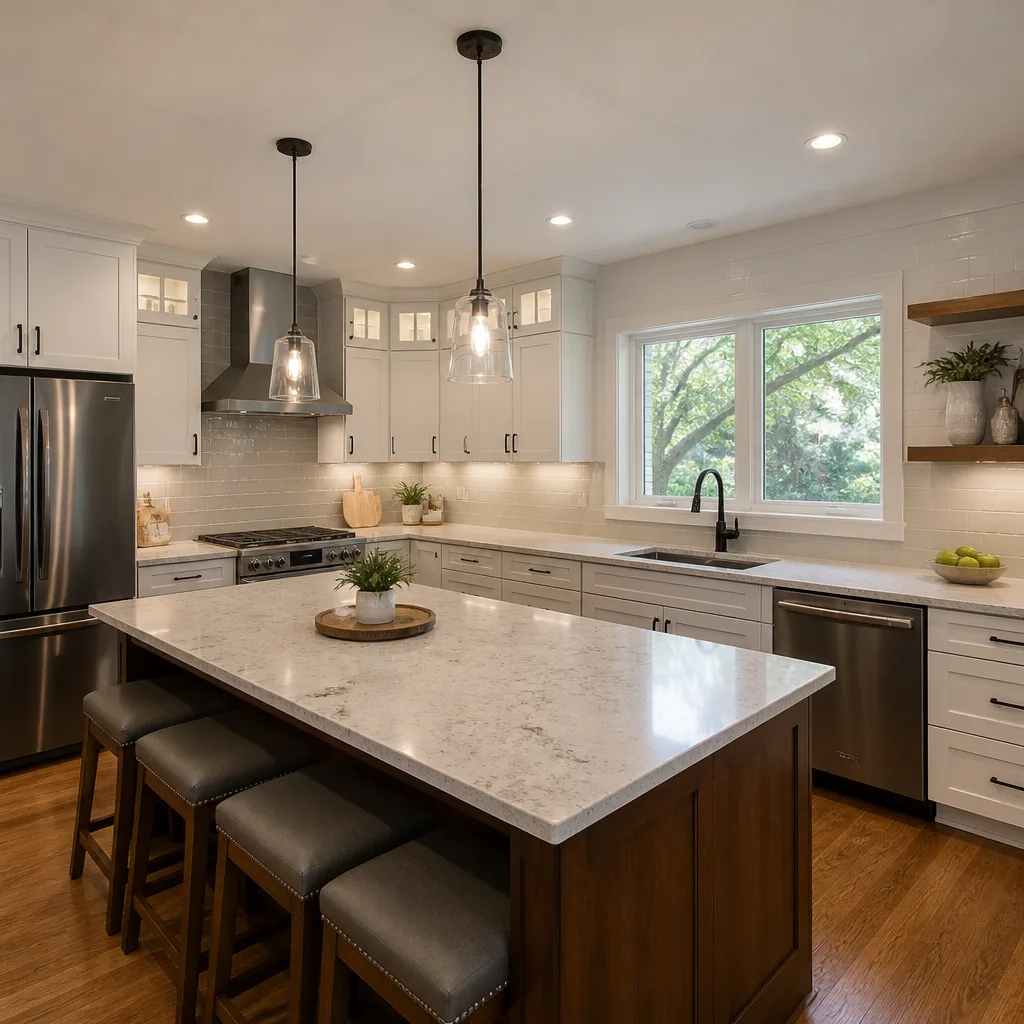
 Kitchen remodeling
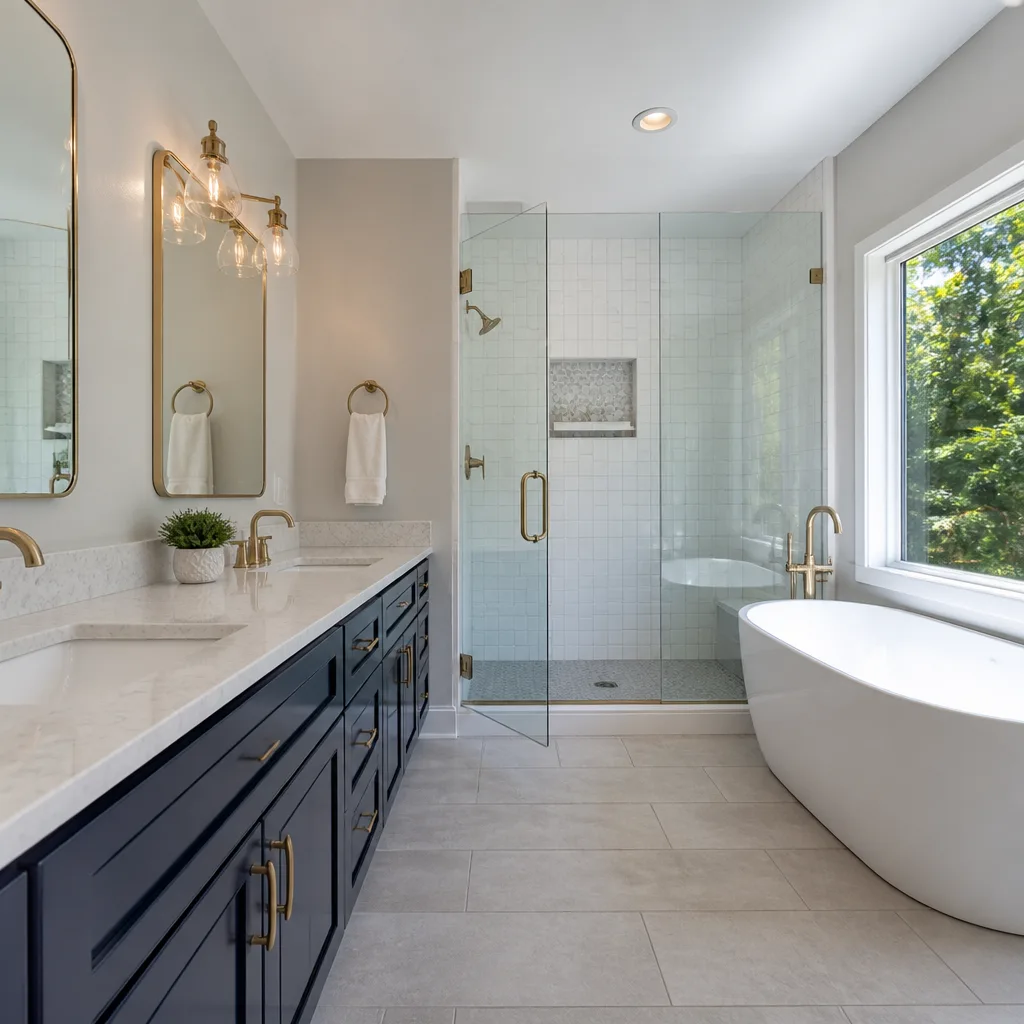 Bathroom remodeling
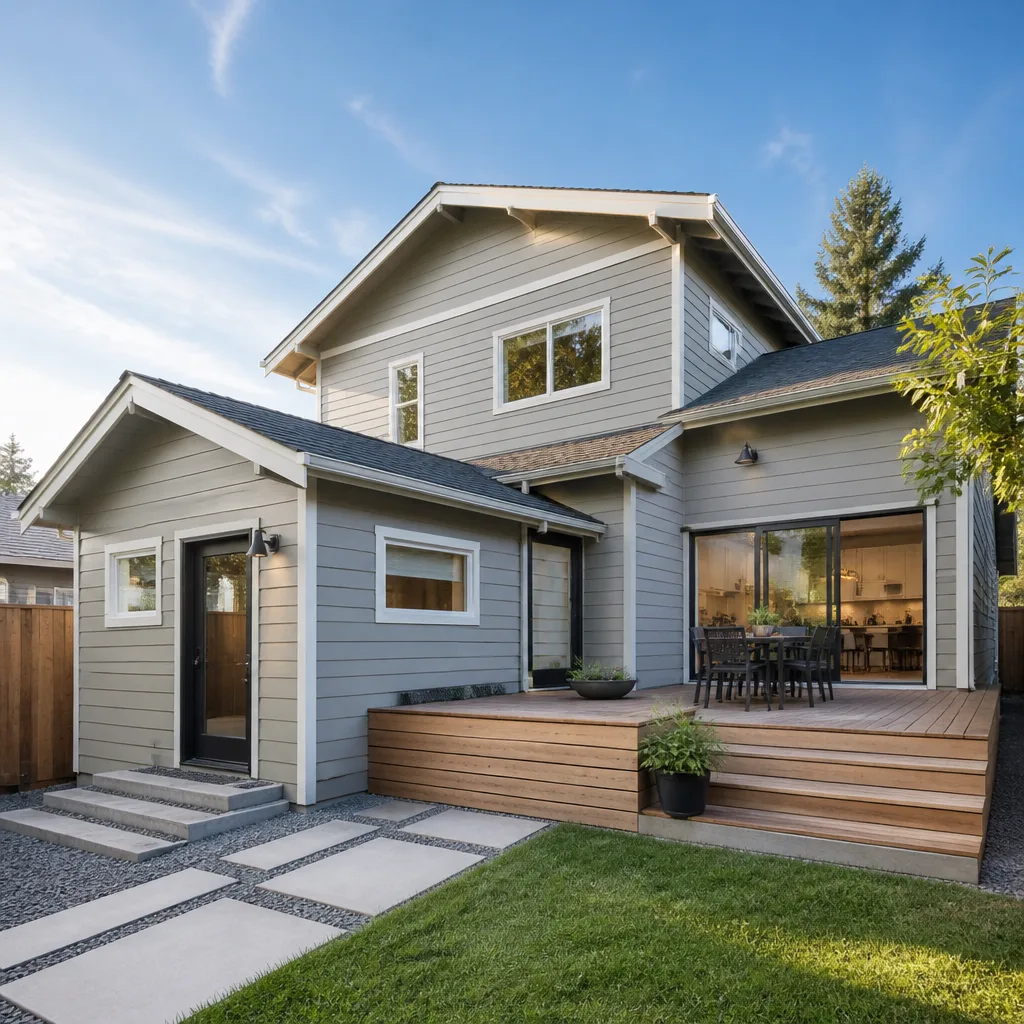 Home additions & ADU
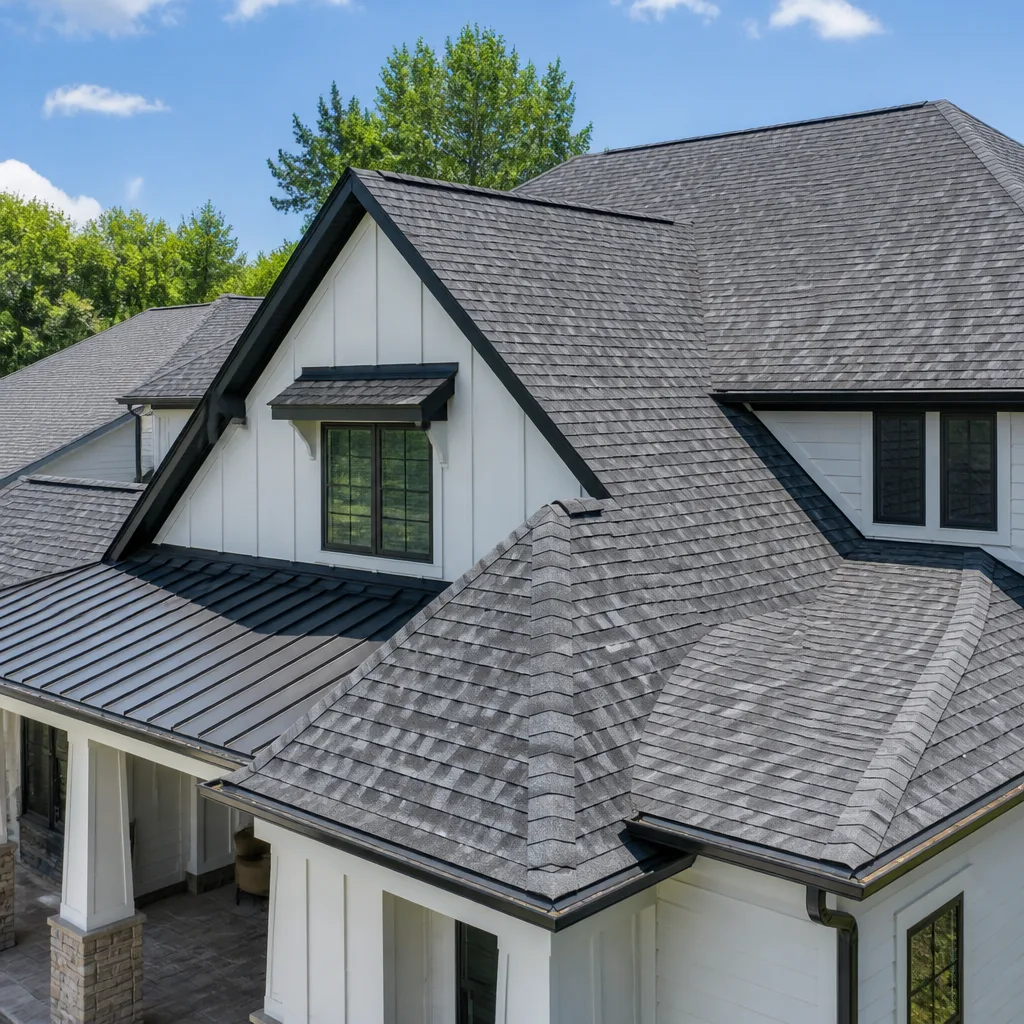 Roofing
 Windows & doors
 Driveway & pavers
 Fence
Free written scope consultation - allowances, timeline, and change-order rules on paper before a single trade is scheduled
Cambria Kitchen Remodeling: The Santa Clarita Owner’s Guide
Cambria kitchen remodeling in Santa Clarita typically runs $14,000 – $45,000 installed, and the number moves more on cabinet layout, island size, and how much plumbing relocates than on the quartz itself. If your countertop has chipped at an edge, a seam has opened, or a cabinet run is pulling away from the wall behind the slab, you’re in the right place. Those three symptoms cause most of the Cambria-related calls we get in Santa Clarita, and each one points to a different failure underneath.
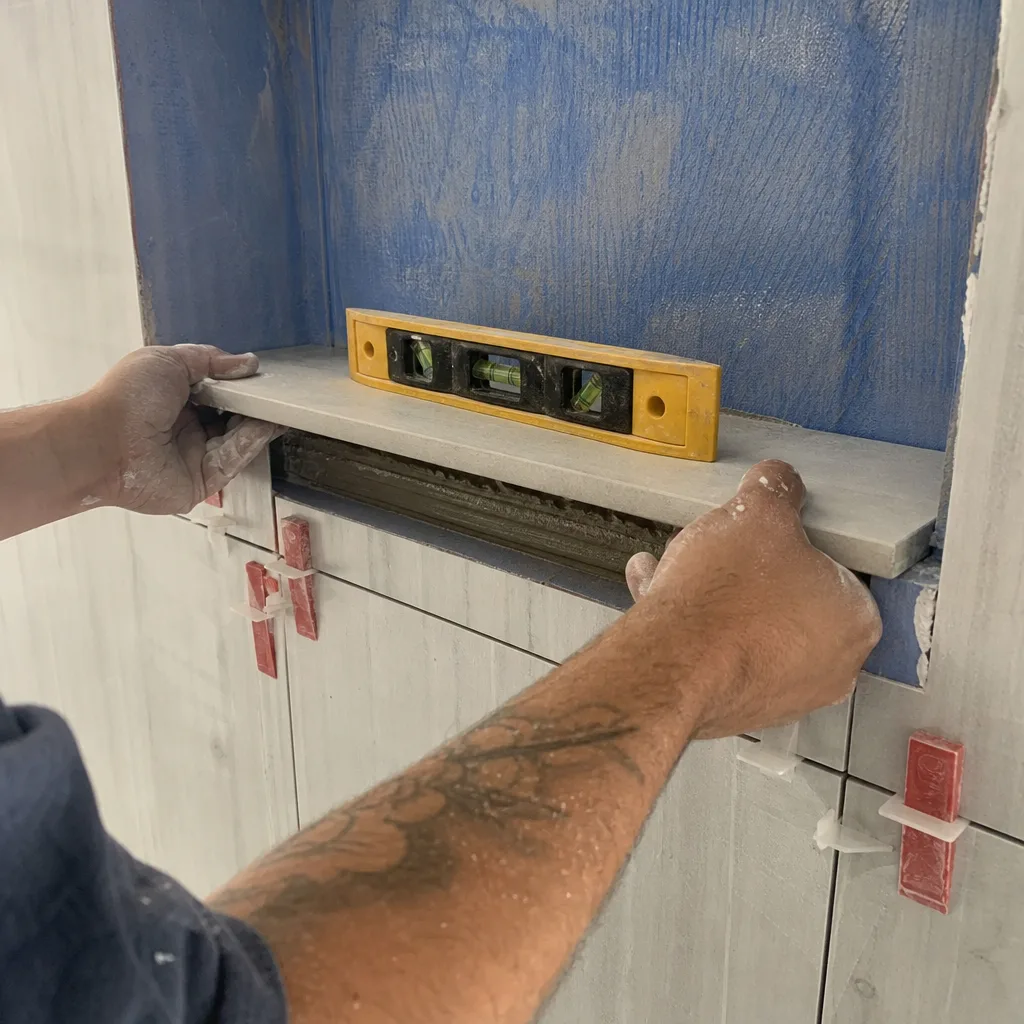
Quartz is engineered stone, and it fails differently than granite. Cambria is roughly 90 percent quartz by weight with a polymer binder, so it doesn’t chip like natural stone and it doesn’t need sealing. What it does do is telegraph whatever is happening beneath it. A slab that rocks slightly on a cabinet run, a dishwasher that vents heat into an unvented cabinet, or a seam set too close to a sink cutout will all show up as a crack or a lifted edge within a few years. In Santa Clarita specifically, we see more seam failures on west-facing kitchen walls because afternoon sun through a single-pane slider bakes that seam through the summer and the expansion never fully reverses.
Which Cambria Models This Applies To
Cambria sells by design line, not by part number, so the “model” question is really a question about the slab you bought and the cabinets it sits on. The current lines most Santa Clarita homeowners have in their kitchens are the marble-look designs (Brittanicca, Ella, Annaleigh, Skara Brae), the quartz-with-movement lines (Bellingham, Colton, Hawksmoore), and the solid and speckled designs (Torquay, Carrick, White Cliff). Older installations from the 2000s and early 2010s often used Canterbury, Newport, or Windermere, all discontinued. If yours is discontinued, matching a replacement piece for an island or a peninsula becomes a color-match problem, not a stock problem.
Identification is straightforward. Cambria stamps the design name on the underside of the slab, usually within 12 inches of a finished edge on the sink side, and your original fabricator’s sticker is often nearby. Photograph both before anyone touches the kitchen. Measure the slab thickness: standard Cambria is 2 cm or 3 cm, and 3 cm has a thicker built-up edge that changes how a replacement section gets laminated. Here’s the compatibility gotcha most homeowners miss: Cambria’s current 3 cm slabs are nominally 3 cm, but the finished thickness after surfacing can sit at 3.0 to 3.1 cm depending on the batch, so a replacement piece laminated to an older cabinet run has to be shimmed at the substrate, not sanded at the edge. We check that with a caliper on every Cambria job in Santa Clarita before a single cabinet is ordered.
OEM versus aftermarket matters less for the quartz and more for everything around it. There’s no such thing as an aftermarket Cambria slab; the design either comes from Cambria or it doesn’t. But the substrate, the edge profile, the seam adhesive, and the sink clips are all standard trade items, and quality aftermarket equivalents are fine there. We work with KraftMaid, Silestone, and Kohler on the cabinet and fixture side when a homeowner wants a different look for the same footprint, and we’re upfront that Barrett & Sons Construction Santa Clarita is an independent service provider, not affiliated with Cambria.
Styles & brands we work with
- Kitchen remodeling
- Bathroom remodeling
- Home additions & ADU
- Roofing
- Windows & doors
- Driveway & pavers
- Fence
Signs Your Cambria Kitchen Remodeling Is Failing
Owners usually find out something is wrong in one of five ways. Each one has a specific cause worth knowing before you call anybody.
- A hairline crack radiating from a sink or cooktop cutout. That’s a stress riser. The cutout corners should be radiused, and when a fabricator cuts a square inside corner, the quartz concentrates load there until it lets go. Common in Santa Clarita homes remodeled in the 2000s when cutout standards were looser.
- A seam that’s opened or gone dark. Seam adhesive fails when the cabinets beneath it move. In Santa Clarita’s clay-heavy soils, slab foundations shift seasonally with the wet-dry cycle, and a seam set within 6 inches of a sink cutout absorbs that movement first.
- The slab rocks when you press the front edge. Either the cabinet run is out of plane or the substrate skipped a shim. Quartz doesn’t bend much before it cracks, so a rock today is a crack next summer.
- Chips along a finished edge, especially at the dishwasher or trash pullout. Impact damage from a pot or a chair, but it also tells you the edge profile is too thin for the traffic. A 2 cm slab with a square edge chips where a 3 cm with a slight bevel wouldn’t.
- Discoloration or a dull ring around the cooktop. Not a stain; quartz doesn’t stain like porous stone. It’s usually heat damage from a pan set down hot, or a failing finish from an abrasive cleaner. Cambria doesn’t need sealing, but it does not tolerate a hot cast iron pan.
See the difference
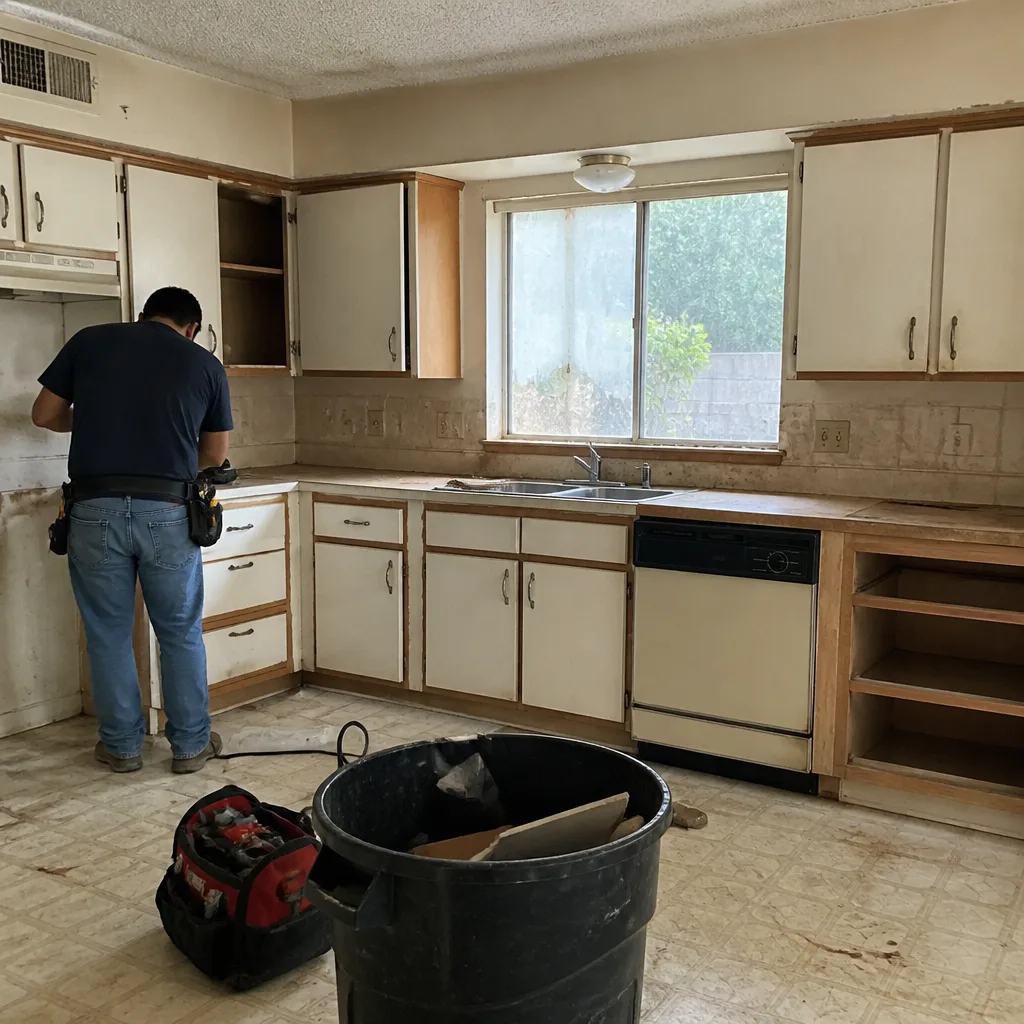 Before
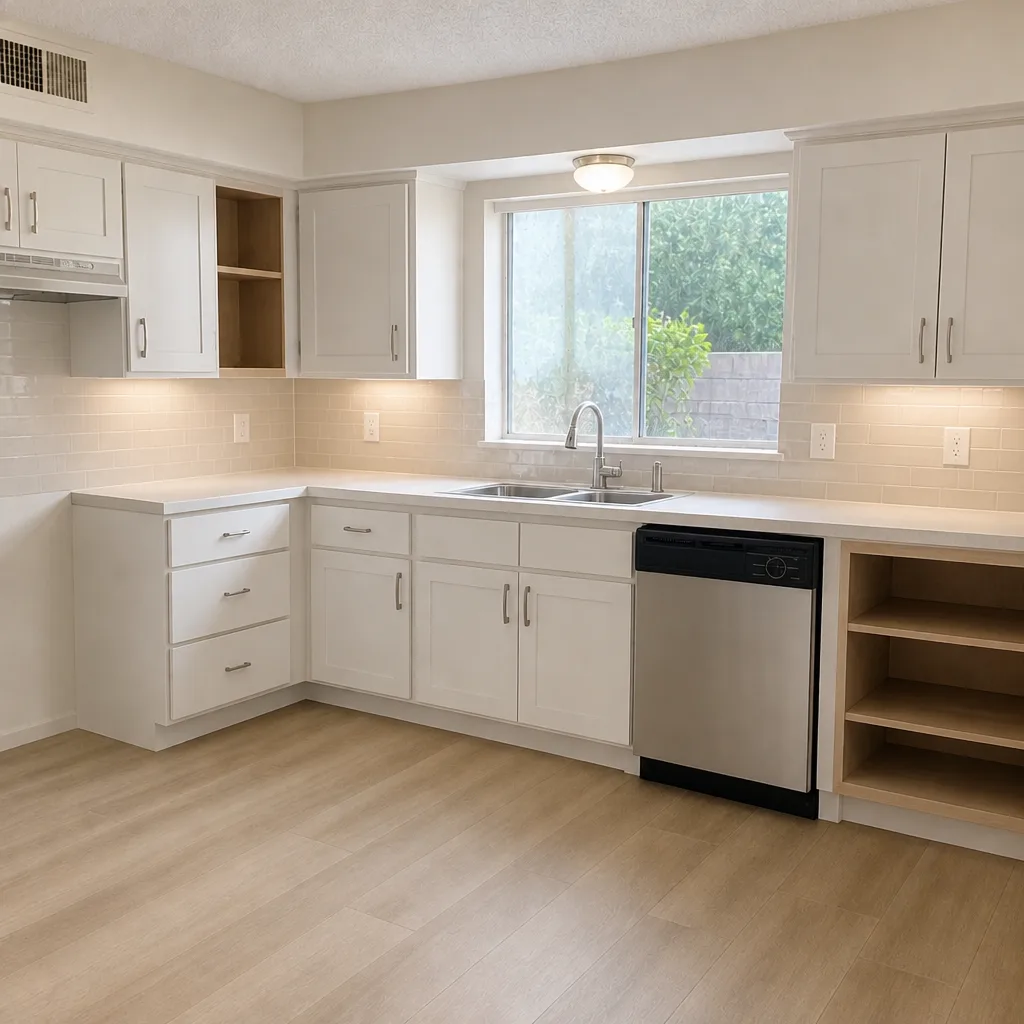 After
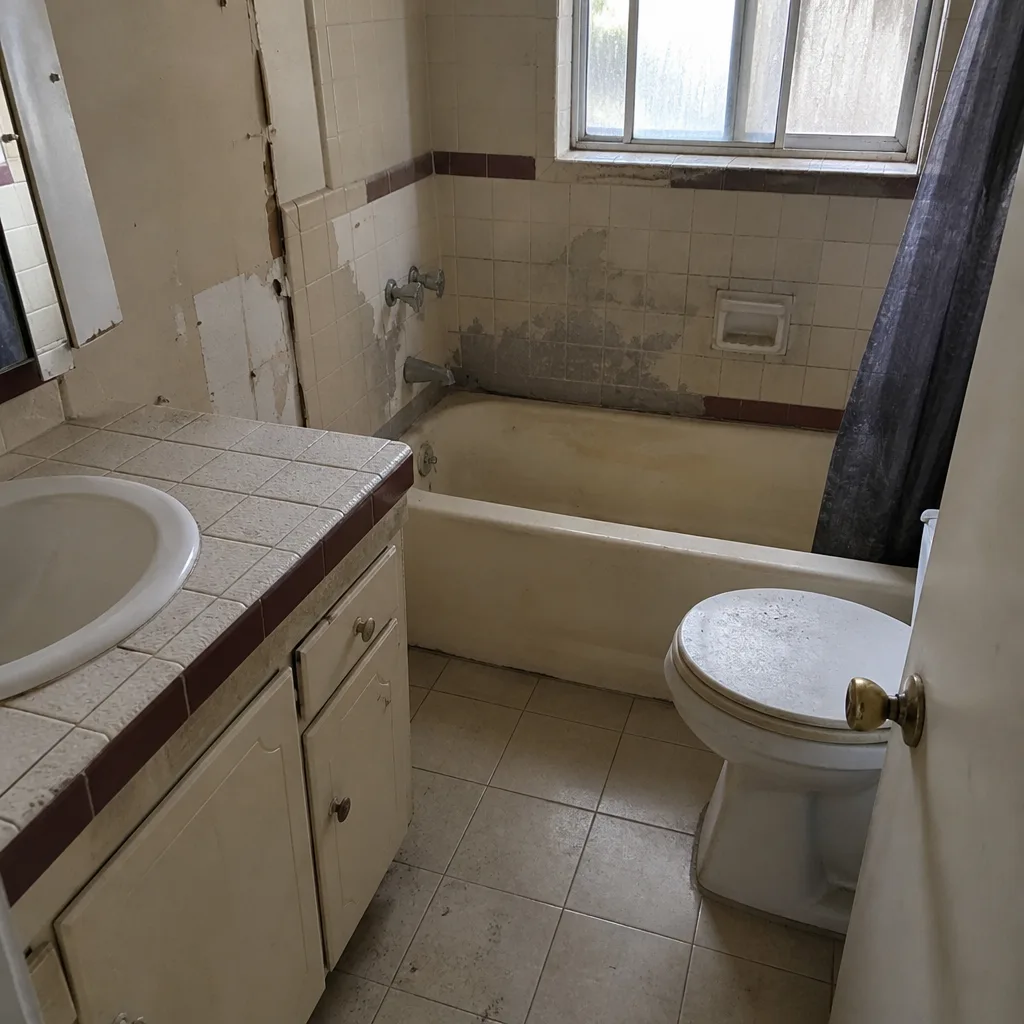 Before
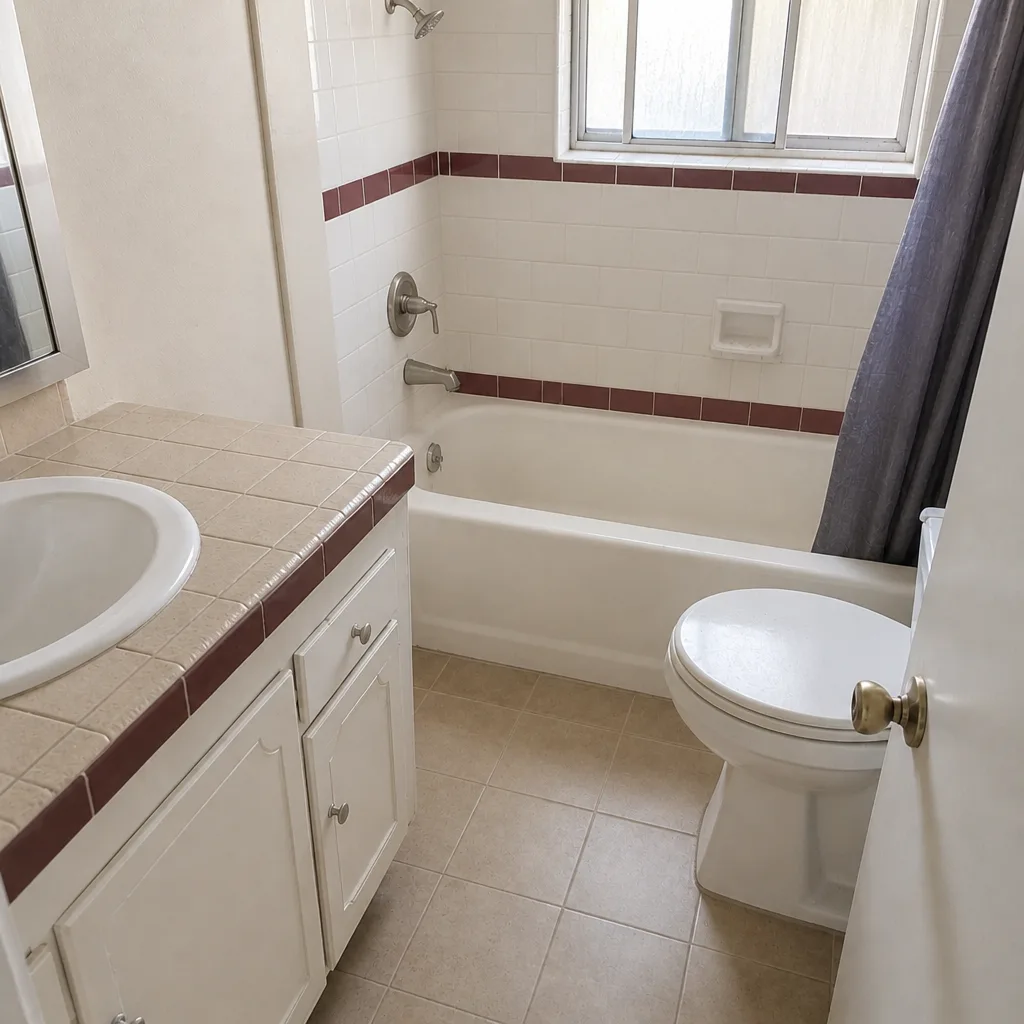 After
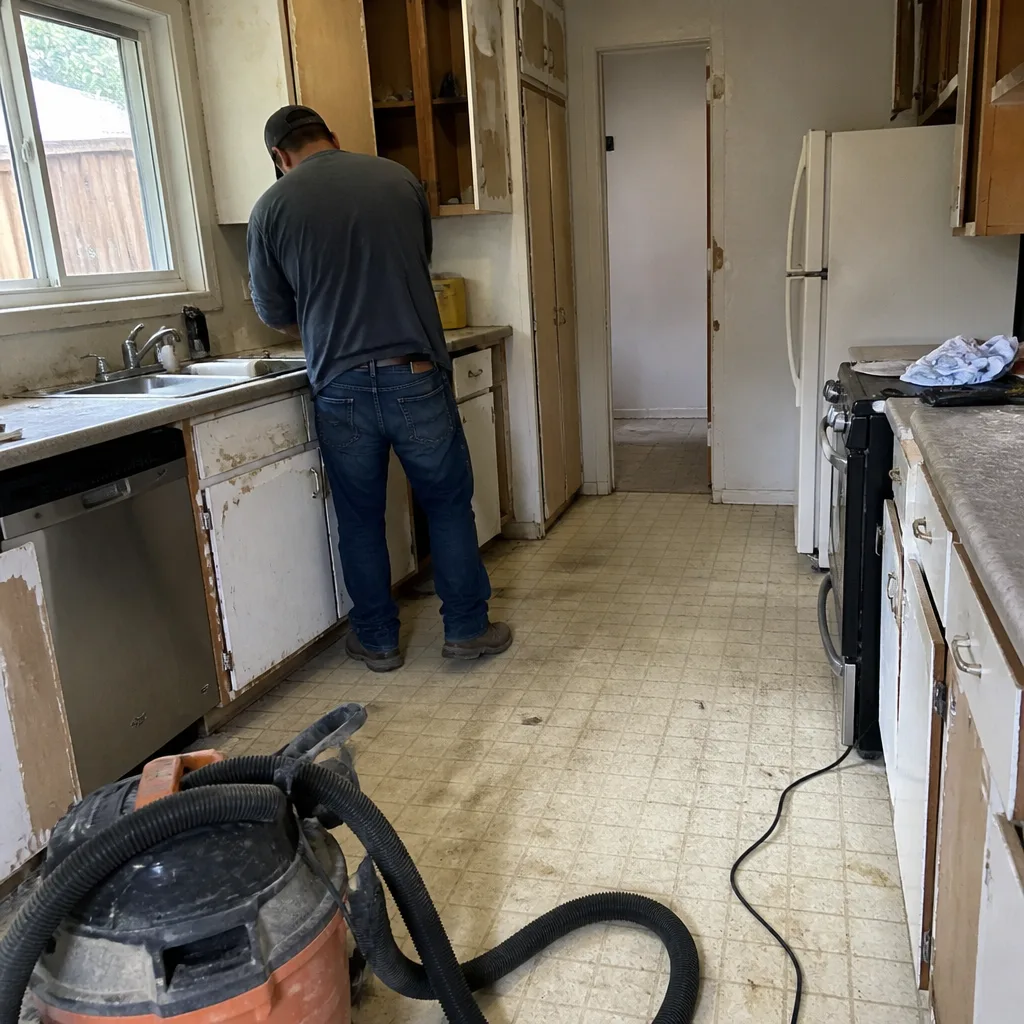 Before
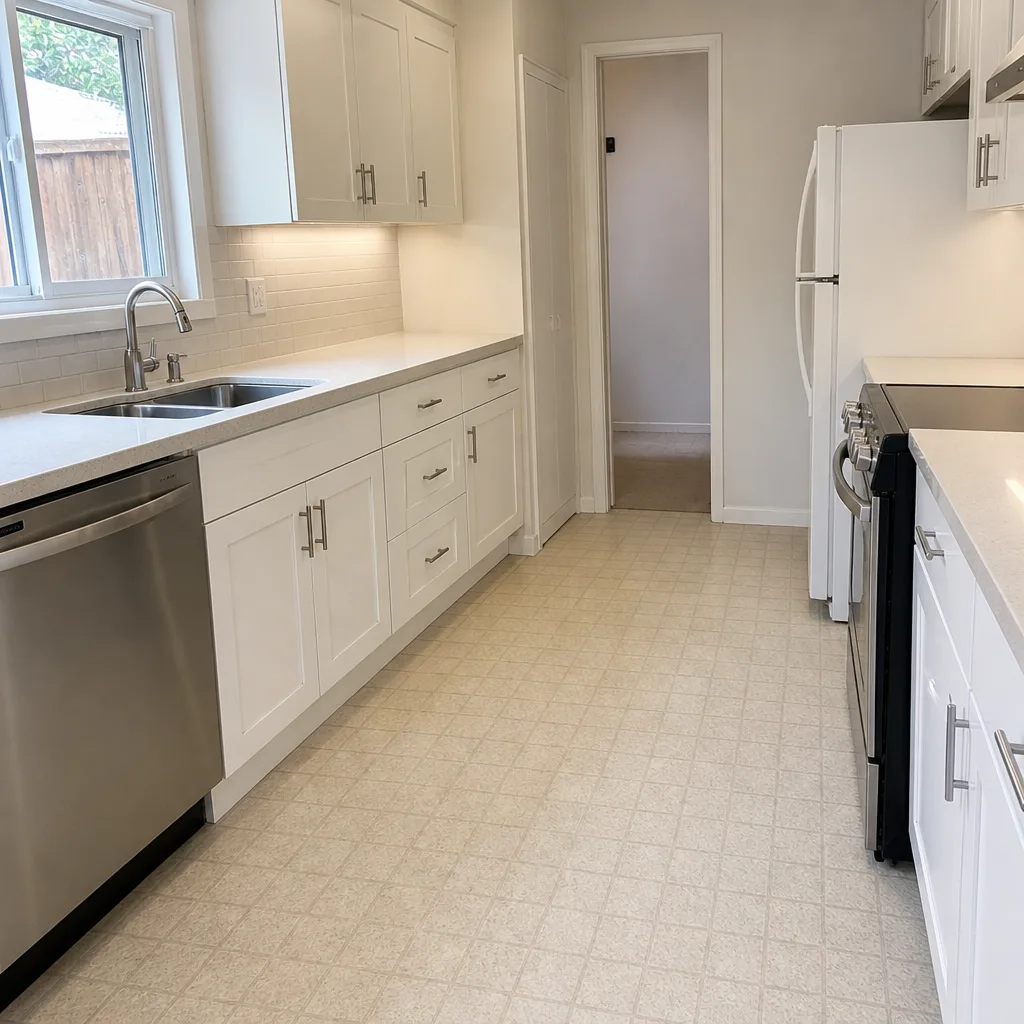 After
Replacement Cost & What’s Included
Countertop installation in Santa Clarita runs $2,000 – $6,500 for a standard kitchen, and Cambria-specific replacement sits at the upper half of that because the material costs more and seam color-matching takes real time. A backsplash addition is $800 – $2,500, and a new kitchen island with Cambria is $3,000 – $10,000. Cabinet installation, if the failure traces back to the boxes, is $4,000 – $13,000.
The spread comes down to four things: whether the sink and cooktop cutouts get recut, whether an existing seam has to be moved, whether the design is still in production, and how much of the cabinet run has to be re-leveled. We quote the parts and the labor as separate lines so you can see both, and every scope or allowance change comes to you as a written change order before work starts. Cambria design slabs run $75 to $110 per square foot in the Santa Clarita market as of this year, and that price is set by the fabricator, not by us. The work we do is backed by the 90-Day Done Right Promise, and it’s written on the contract, not tucked in the fine print.
DIY or Call Us?
You can safely check three things yourself: photograph the underside stamp, measure slab thickness with a caliper, and press the front edge to see whether the slab rocks. That’s it. Removing or resetting a quartz slab is a two-person, 300-plus pound job with almost no flex. If you lift one edge and the slab cracks, you own the replacement, and a Cambria replacement section can run more than the original install did. There is also a genuine safety issue: a slab that’s separated from its substrate can come down on hands and feet without warning.
Repair, where it’s possible, is a different story. A chipped edge can sometimes be filled and blended by a stone fabricator, and a single failed seam can be cut out and re-adhered. Those are fine jobs to hand off. Anything involving the substrate, cutout recutting, or lifting a full slab is a call to someone who does this weekly. Call (833) 762-8116 and we’ll tell you honestly whether yours is a repair or a replacement.
FAQs
Cambria quartz should last 20 to 30 years or more in a Santa Clarita kitchen, and most failures we see are not the quartz giving out but the installation underneath it. The material is nonporous and doesn’t need resealing, but it is heat-sensitive and can chip. The cabinets, substrate, and seams are what age first, and those are fixable without replacing the whole slab.
Often, yes. A localized chip or a single failed seam can usually be cut out, filled with color-matched epoxy, and re-polished by a stone fabricator, and that’s the cheapest path. What can’t be repaired is a crack that runs through a cutout or a slab that has lost its substrate, because the stress that caused it is still there. Call (833) 762-8116 and we’ll tell you which one you have.
Plan on one to three days of active work for a standard countertop swap, plus a fabrication lead time of roughly two to three weeks because the slab has to be templated, cut, and finished before it ships. Disconnected plumbing and appliances mean you’ll be without a working sink for part of that, so we schedule it so you’re not. The wait is fabrication, not install.
We pull the design name and thickness off your slab’s underside stamp, then check whether that design is still in Cambria’s active lineup. If it is, the slab comes from a Cambria fabricator and matches. If it’s a discontinued design like Canterbury or Newport, we color-match against a sample as closely as we can and tell you in writing that it won’t be an exact match. Either way, the source is on the quote before you sign anything.
If your Cambria countertop is chipped, cracked, or rock-ing on its cabinets, we’ll tell you straight whether it’s a repair or a replacement and what it costs in writing. Call (833) 762-8116 for a free estimate. Barrett & Sons Construction has pulled permits and passed inspections on every eligible job since 1998, so the work here is documented and backed by the 90-Day Done Right Promise. Serving Santa Clarita and the surrounding communities.
Written by the team at Barrett & Sons Construction Santa Clarita, serving Santa Clarita and nearby areas.