
Last updated November 16, 2026
 Bathroom remodeling
 Kitchen remodeling
 Home additions & ADU
 Roofing
 Windows & doors
 Driveway & pavers
 Fence
Free written scope consultation - allowances, timeline, and change-order rules on paper before a single trade is scheduled
Bathroom Remodeling Warning Signs Every Homeowner Should Know
A soft spot in the floor next to the toilet isn’t a flooring problem. It’s a wax ring or flange failure that’s been quietly rotting the subfloor for somewhere between six months and three years. The floor is just where you finally noticed it. In our experience walking Santa Clarita bathrooms, the expensive discoveries almost never announce themselves. They sit behind tile, under vinyl, inside a shower pan, and behind a vanity for months while the homeowner sees a stain, a smell, or a wobble and decides it’s cosmetic. This guide teaches you to read your bathroom the way we read it on a first walkthrough, so you know what’s wearing out before demo day surprises you.
Quick Answer
The warning signs that matter most in a bathroom remodel are hidden water damage (soft subfloor near the toilet or tub, a spongy shower pan, a musty smell that comes back after cleaning), failed waterproofing behind tile (dark grout lines that won’t scrub out, loose tiles, efflorescence), and age-related material failure in 1980s and 1990s Santa Clarita homes where original shower pans and supply lines are now well past their expected lifespan. Any one of these signals can turn a cosmetic refresh into an open-the-wall project, which is why spotting them early is the difference between a budget that holds and one that doesn’t.
Styles & brands we work with
- Kitchen remodeling
- Bathroom remodeling
- Home additions & ADU
- Roofing
- Windows & doors
- Driveway & pavers
- Fence
Table of Contents
- The Five Places to Press and Sniff in Any Bathroom
- Cosmetic Staining or Active Mold? How to Tell the Difference
- Warning Signs Specific to 1980s and 1990s Santa Clarita Homes
- What a Contractor’s First Walkthrough Actually Looks For
- Signs That Change the Budget Category: Replace or Open the Wall
- Permits, Code, and Why the Inspector Works for You
- What These Signs Mean for Your Timeline and Budget
- Warning Signs About the Contractor, Not the Bathroom
The Five Places to Press and Sniff in Any Bathroom
Before you call anyone, you can do useful detection with your hands and your nose. Walk your bathroom and press firmly in these five spots. You’re not looking for a small give in the caulk line. You’re feeling for a subfloor that moves under your weight, which almost always means water has been getting in from above or beside it for a long time.
- The floor beside the toilet base. Press with your thumb on both sides where the toilet meets the floor. A soft spot here usually points to a failed wax ring or a cracked flange. This is the single most common hidden-damage spot we find in Santa Clarita bathrooms.
- The shower pan floor. Step across the whole pan, heel first. A pan that flexes, pops, or sounds hollow is a pan that’s lost its mortar bed or cracked its liner. Water has likely been escaping into the framing underneath.
- The base of the tub on the accessible side. Run your hand along the floor where the tub apron meets the tile. Crumbling grout and a soft edge here mean the tub surround has been leaking behind the wall.
- Under the vanity, at the cabinet floor and back wall. Get a flashlight and look at the cabinet bottom and the wall behind the supply lines. Dark staining, bubbling paint, or a cabinet floor that’s swollen are all signs of a slow supply-line or drain leak.
- The ceiling below the bathroom. If there’s a room under the bathroom, look up at that ceiling for water rings, bubbling paint, or a rust-colored halo. That’s water that walked through the floor assembly.
Then use your nose. A musty smell in a bathroom that comes back within a day or two of cleaning is rarely the drain. It’s usually organic growth in a wall cavity or under the floor, fed by a leak you can’t see yet. Fix the drain smell and the musty smell stays? That’s your cue.
Cosmetic Staining or Active Mold? How to Tell the Difference
Grout stains and active mold behind tile look alike at a glance, but they behave differently, and the difference tells you whether you’re cleaning or opening a wall. Cosmetic staining sits on the surface of the grout and lightens when you use a proper grout cleaner. Active mold from failed waterproofing keeps coming back because it has a food and moisture source behind the tile that cleaning can’t reach.
- Test it. Scrub a stained grout line with a stiff brush and your regular bathroom cleaner. If the dark line stays put and the grout around it looks damp even a day later, you’re likely looking at moisture traveling through the grout.
- Press the tile. Loose or hollow-sounding tiles on a shower wall or floor are a classic sign the waterproofing layer behind them has failed and the thinset has let go.
- Look for efflorescence. That white, chalky, salty powder on grout or tile edges is minerals from water evaporating out of the wall. It’s one of the clearest signs that water is moving through the assembly.
- Check the corners and the bottom row. Waterproofing failures almost always show up first in the inside corners of a shower and along the bottom row of tile near the pan, because those are the seams the original membrane was meant to protect.
In Santa Clarita we see a lot of bathrooms where the grout was painted or sealed over to hide a problem before a sale. That sealant buys a few months and then fails. If your grout lines look freshly painted and dark shading creeps back within the first rainy season, treat it as active moisture, not a stain. You can read more about how we approach full bathroom tear-outs and rebuilds on our Barrett & Sons Construction Santa Clarita home page.
Warning Signs Specific to 1980s and 1990s Santa Clarita Homes
A big share of the homes in Santa Clarita were built between roughly 1980 and 2000, and that era has a well-documented set of failure timelines. If your bathroom is still wearing its original materials, these are the ones that matter.
- Lead-pan or mortar-bed shower pans. Many 1980s and early-1990s showers were built with a mortar bed over a thin lead or hot-mop pan. Those pans have a known lifespan, and by the time they reach their third or fourth decade, the seam material has often cracked or deteriorated. A pan that flexes is a pan that’s leaking.
- Galvanized or early polybutylene supply lines. Some homes from this era still have supply plumbing that’s at or past its service life. A supply line that’s failing behind a wall usually shows up as a stain on the back of the vanity cabinet or a pinhole leak that drips for weeks before you notice.
- Original vinyl flooring over particleboard underlayment. Vinyl was common in these builds, and it hides water well. Particleboard swells and disintegrates when it gets wet, so a soft spot under vinyl is often more damage than you’d expect from a tile floor.
- Single-layer waterproofing on shower walls. Early builds sometimes relied on a single layer of moisture barrier behind tile. Once that layer is compromised, the wall cavity behind it takes on water silently.
These aren’t reasons to panic. They’re reasons to check. If your Santa Clarita home is still running original bathroom materials from the 1980s or 1990s and you’re planning any kind of update, we’d want to look at the pan and the supply lines before we quote tile. Replacing the shower pan and the supply plumbing while the walls are open is far cheaper than going back in a year later.
What a Contractor’s First Walkthrough Actually Looks For
Homeowners usually show us the visual problems first: the cracked tile, the dated vanity, the grout that won’t come clean. That’s useful, but it’s the finish layer. On a first walkthrough we’re reading the room underneath the finish, and it follows an order.
- Moisture readings. We use a pin or pinless moisture meter on the floor, the walls around the shower, and the ceiling below if there’s a room underneath. A reading that comes back wet tells us where the water is, not just where it’s showing.
- Water shutoff and supply condition. We check the angle stops and supply lines under the sink and behind the toilet. If they’re original, they’re getting replaced during the remodel, no exceptions.
- Drain and venting check. We run water in the tub, the sink, and the shower and listen for slow drains or gurgling. Slow drains can mean a vent issue that goes further than the bathroom.
- Wall and floor structure. We press the floor, tap on tile, and look for movement or bounce. A subfloor that’s been softened by water needs to come out, not get covered over.
- The permit picture. We look at what’s been done before. A bathroom with a shower added over a former closet or a tile floor laid over three layers of vinyl gets our attention, because that work probably wasn’t permitted and the inspector will want it opened up anyway.
If you want the same read on your bathroom before you commit to a scope, we’re happy to walk it with you. A Home Additions & ADU in Santa Clarita project in your home or a smaller bathroom refresh starts the same way: look under the finish first. That habit is why the price on our written estimate tends to hold.
Signs That Change the Budget Category: Replace or Open the Wall
This is the part most homeowners don’t think about until they’re staring at a change order. Every warning sign you find points to one of two outcomes: a fixture-level fix, or a structural fix that means opening a wall or a floor. Knowing which is which helps you budget honestly before you sign anything.
- Replace-the-fixture signals: a worn-out faucet, a toilet that rocks on a solid floor, a vanity that’s dated but dry, a tub that’s stained but solid. These are finish-level changes. They live in the same budget line.
- Open-the-wall signals: a soft floor next to the toilet or tub, a shower pan that flexes, active moisture in a wall on a moisture meter, a drain leak under the floor, or a shower that’s clearly leaking behind the tile. These move the job from a cosmetic refresh into a rebuild that touches framing, waterproofing, and plumbing. That’s a different budget category, and pretending otherwise is how surprise invoices happen.
An allowance that isn’t on paper is a surprise waiting for a date. That’s why we put every scope item and every allowance in writing before the job starts, and why any change arrives as a written change order before a single nail moves. If we open a wall and find a shower pan that’s failed at the seam, you’ll know the exact cost of the fix before we touch it. You’ll also know whether your plan to add a second bathroom later involves different work, which is worth reading up on through our Home Additions & ADU in Santa Clarita guide.
Permits, Code, and Why the Inspector Works for You
A bathroom remodel isn’t just tile and fixtures. Changing plumbing, moving a drain, adding a shower, or converting a tub to a walk-in shower all touch the building code, and some of it touches the plumbing code. In Santa Clarita, a bathroom remodel that moves plumbing or alters the shower configuration generally needs a permit, and the work needs to pass inspection before it’s buttoned up.
Here’s the part homeowners miss: every inspection is a free quality check on your contractor’s work. The inspector is on your side. They look at the waterproofing before tile goes on, they check the framing behind the wall, and they sign off on the plumbing rough-in before the fixtures land. If a contractor tells you permits are optional, be careful. The last contractor most of our customers used told them the same thing, and the cost of added permitting came back to them at resale.
We pull permits on every eligible job and get the inspections signed, because a bathroom that’s inspected is a bathroom you can sell without drama. If your project grows from a bathroom into a bigger addition, the same approach carries over, which is why our Home Additions & ADU in Santa Clarita work goes through the same permit and inspection process. For exterior work like a new Fence Installation in Santa Clarita or Driveway & Pavers in Santa Clarita, we hold the same line.
What These Signs Mean for Your Timeline and Budget
The warning signs don’t just affect cost. They affect how long the job takes, because the biggest time variable in any bathroom remodel is whether we open a wall or a floor and find more than we expected. Here’s how these signs tend to play out.
- A cosmetic-only bathroom (solid pan, dry subfloor, sound supply lines, no active moisture) is usually a two- to three-week job, and the budget you were quoted is close to the budget you’ll pay.
- A bathroom with one open-the-wall signal (soft floor at the toilet, a failing pan, or active moisture behind tile) usually means a third to half of the job moves into a rebuild, and the timeline stretches accordingly. That’s not a surprise if you know to look for it.
- A bathroom with several signals together is often a full-gut job. Better to plan for that up front and keep a contingency line in the budget than to discover it mid-demo.
None of this means you should put off the remodel. It means you should get a professional walkthrough before you lock a scope, so you know which budget category you’re in. A written line-item quote from someone who’s actually pressed the floor and read the wall is worth more than three phone quotes from people who haven’t seen the room. When the job involves really dangerous components, like the gas line behind a bathroom heater or high-voltage wiring in a bathroom wall, we always bring in the proper trade, because some things are not DIY territory.
Warning Signs About the Contractor, Not the Bathroom
You can read the room, but you should also read the bid. Some of the most expensive warning signs in a bathroom remodel have nothing to do with mold or a failing pan. They live in the sales pitch.
- A phone quote with a firm number. Nobody can price a bathroom honestly without seeing the subfloor and opening a conversation about what’s behind the tile. A firm number given before a walkthrough is either a guess or a lowball.
- No permits mentioned. Any remodel that touches plumbing or adds a shower needs a permit. If that’s not in the quote, it’s either getting skipped or hitting you as an add-on later.
- No written allowances for tile, fixtures, or finishes. If the allowance is verbal, it doesn’t exist, and the price can move the moment you pick a real tile.
- No written change-order process. Every price change should arrive in writing before work proceeds. If a contractor says they’ll “settle it at the end,” walk away.
- Background-checked crew, uniformed on every visit. That’s a fair question to ask, and it tells you a lot about how a contractor runs a job.
- No established warranty on the work. A written guarantee on the finished job, like our 90-Day Done Right Promise, is a sign the contractor expects to be around to honor it.
Common Mistakes to Avoid
- Assuming a soft spot is a flooring problem. It’s almost always the wax ring, flange, or supply line. Replacing the floor without finding the leak just moves the damage somewhere else. In Santa Clarita, we’ve seen this go wrong within a year of a quick flip.
- Painting over grout to hide a stain. That buys a few months and then fails exactly when a buyer is looking closely. Address active moisture instead of covering it.
- Quoting the job before pressing the floor and checking the pan. The most common quote that blows up is the one priced on sight without a moisture check. A walkthrough that presses and meters is worth the extra step.
- Skipping the permit because it’s “just a bathroom.” Plumbing changes and shower replacements need inspection. The permit protects you at resale and gives you a free quality check during the job.
- Choosing the lowest bid on a bathroom with open-the-wall signals. The lowest bid on a job with hidden damage is often the bid that skipped the moisture check to keep the number low, and that gets paid back in change orders.
- Forgetting the room underneath. If there’s a ceiling below the bathroom, look up. Water that’s walked through the floor assembly shows up there first, and skipping that check means missing half the damage.
- Ignoring a musty smell that comes back. A bathroom that smells musty after cleaning has an organic growth source behind the finish. That’s not a drain issue; it’s a wall or floor issue.
See the difference
 Before
 After
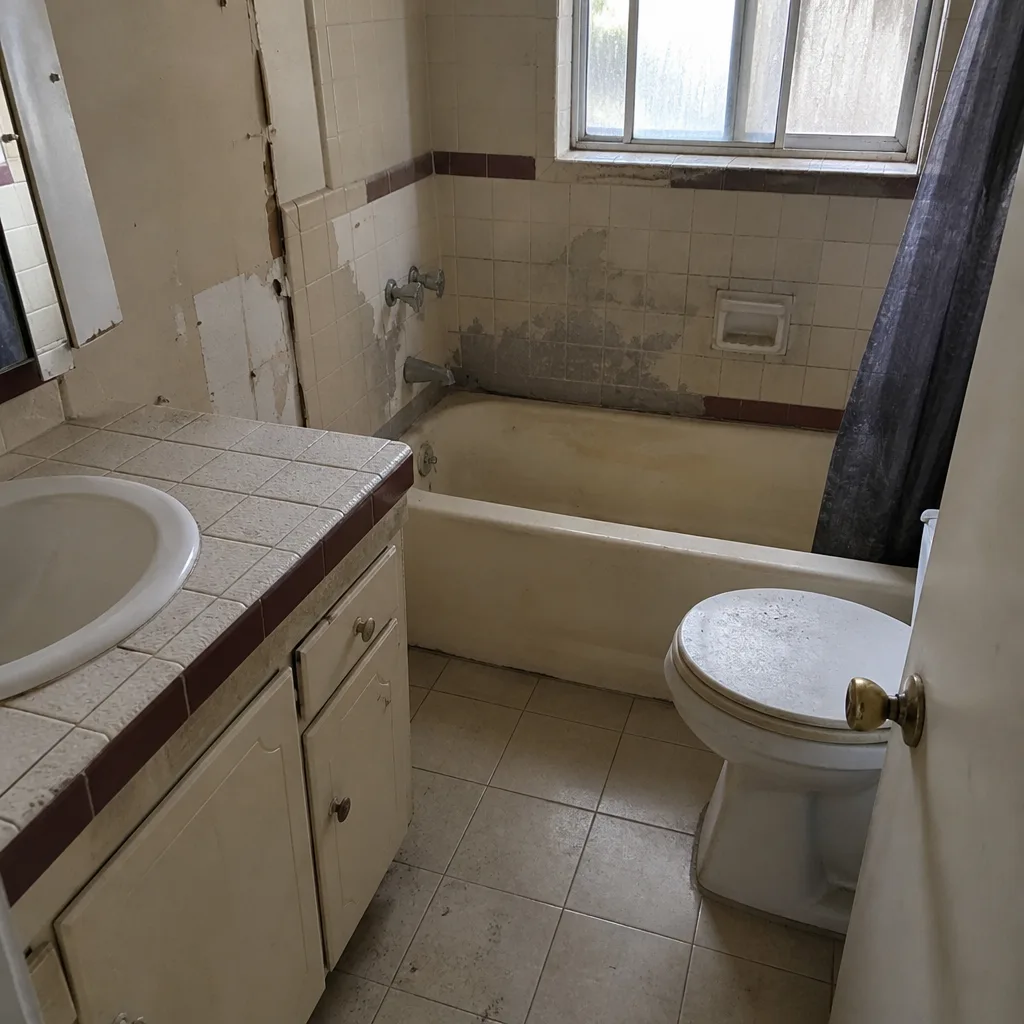 Before
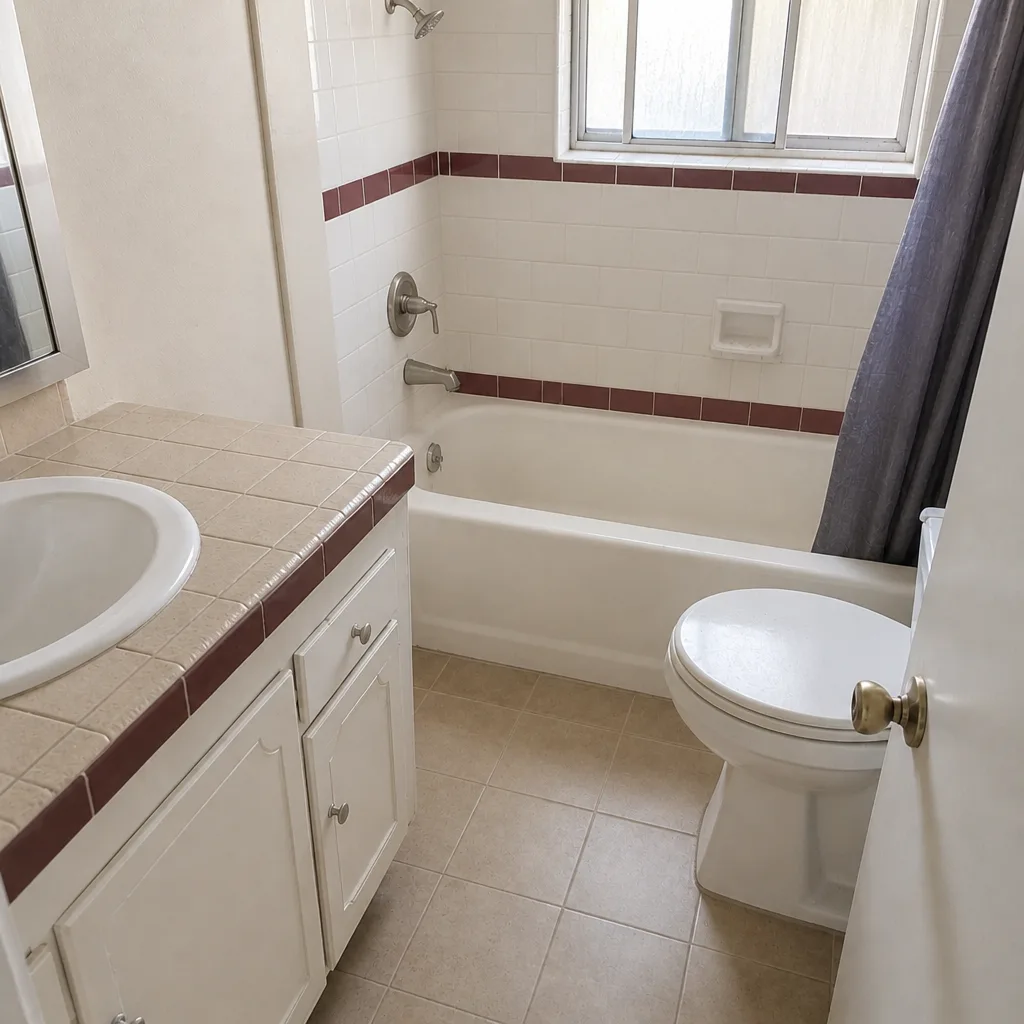 After
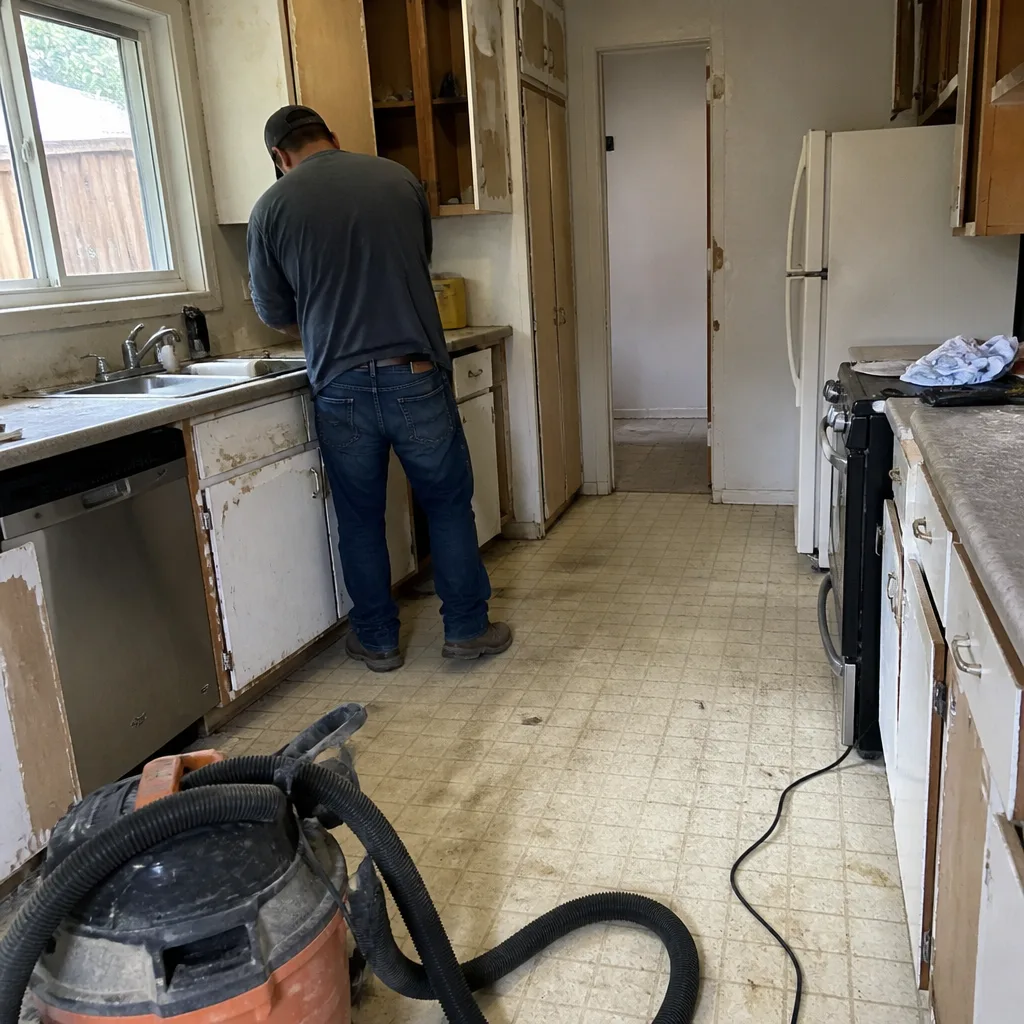 Before
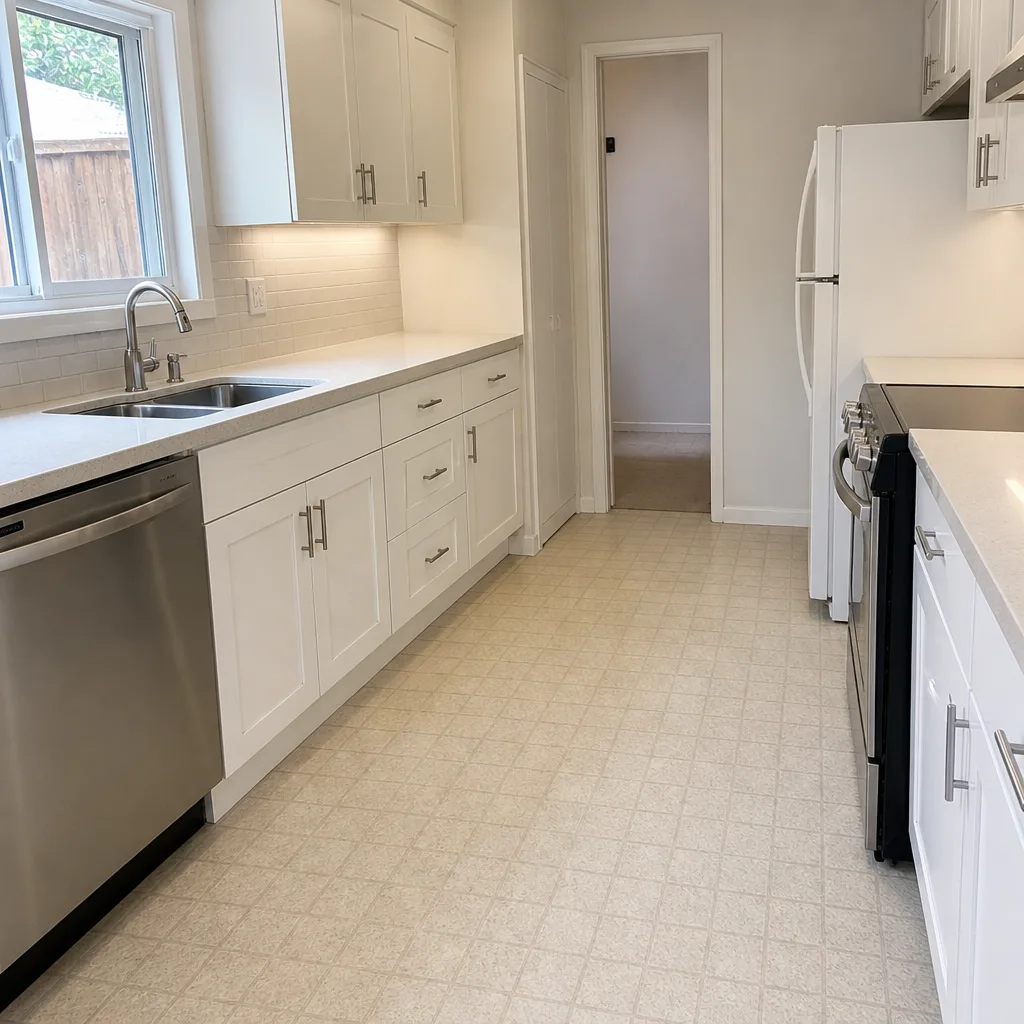 After
When to Call a Professional
If you pressed the floor next to the toilet and it moved, or the shower pan flexed, or your moisture check found an active leak, that’s the moment to bring in a professional. Water damage doesn’t stop at the surface, and the cost of waiting is almost always a bigger, more expensive rebuild. Same if you’re in an older Santa Clarita home still wearing its original shower pan, supply plumbing, or vinyl-over-particleboard floor and you’re planning any change. And if a bathroom wall hides a gas line or high-voltage wiring, don’t open it yourself; that’s work for a licensed trade. Barrett & Sons Construction Santa Clarita offers free estimates in Santa Clarita. Call (833) 762-8116 and we’ll walk the room with you and put the scope in writing.
Frequently Asked Questions
A soft spot in the floor next to the toilet base, which almost always points to a failed wax ring or flange. The wax ring seals the toilet to the drain, and when it fails, water works its way into the subfloor for months. Press with your thumb on both sides of the toilet base; if the floor gives, get it looked at before it spreads.
Step across the whole shower pan, heel first. A pan that flexes, pops, or sounds hollow has lost its mortar bed or cracked its liner, and water is likely escaping into the framing underneath. If your Santa Clarita home was built in the 1980s or 1990s and still has its original shower pan, it’s worth a professional check even if it feels solid, because pan materials from that era have a known failure timeline. Call (833) 762-8116 for a free estimate if you’re seeing any of those signs.
Cosmetic staining lifts when you scrub with a stiff brush and a proper grout cleaner; active mold keeps returning because moisture is feeding it from behind the tile. If a grout line looks wet a day after cleaning, or the tile around it feels loose, treat it as a waterproofing problem behind the finish, not a cleaning problem. A moisture check on the wall will confirm it.
If the remodel moves plumbing, adds or converts a shower, or changes the layout, generally yes. The permit and inspection process is one of the best quality checks you get, because the inspector signs off on the waterproofing and rough-in before tile goes on. We pull permits on every eligible job and get the inspections signed.
Not without your approval in writing. If we open a wall and find a caused-by-something-we-couldn’t-see fix, like a failed shower pan seam, you get a written change order with the exact cost before we touch it. Every scope, every allowance, and every price change is in writing before the work moves. Call (833) 762-8116 to schedule a free estimate.
Not a real one. Pressing the floor, checking the shower pan, and metering the walls is how a bathroom gets priced honestly, because hidden water damage is what moves a job from a cosmetic refresh into a rebuild. A free walkthrough is the only way to know which budget category you’re actually in. Estimates are free; call (833) 762-8116.
The Bottom Line
Bathroom remodel disasters are rarely surprises. They’re a soft floor, a flexing pan, a musty smell, or a grout line that won’t come clean, all of which showed up weeks or months before the homeowner called anyone. Read the room the way we read it: press the five spots, smell the cabinet, look at the ceiling below the floor, and check what’s behind the tile. If you’re in an older Santa Clarita home still wearing 1980s or 1990s original materials, treat it as a check-the-pan moment, not a panic. Get a walkthrough that presses and meters before you sign a scope, and insist on a written change-order process. That’s how the budget you were quoted is the budget you pay.
Barrett & Sons Construction is the owner-operated, name-on-the-truck alternative to phone quotes that change at the door. Our crew members are background-checked and uniformed, and we back every completed job with the written 90-Day Done Right Promise. Tom Barrett publishes his name, address, and license number, and a live person answers the phone, so you can look it up before you sign anything. Call (833) 762-8116 for a free estimate in Santa Clarita. Free second opinion on any written estimate, no trip charge inside the county, and our permanent 10% Senior & Veteran discount are standing offers.
Written by the team at Barrett & Sons Construction Santa Clarita.