
Last updated November 16, 2026
 Bathroom remodeling
 Kitchen remodeling
 Home additions & ADU
 Roofing
 Windows & doors
 Driveway & pavers
 Fence
Free written scope consultation - allowances, timeline, and change-order rules on paper before a single trade is scheduled
DIY vs Professional Bathroom Remodeling: What’s Safe to Do Yourself
Painting a bathroom vanity is a great Saturday project. Moving the drain two feet to the left without a permit is how you find out what unpermitted work costs when you go to sell your house. We’ve walked into plenty of Santa Clarita bathrooms where a weekend DIY tile job looked fine on the surface and hid a slow leak that had been feeding a subfloor for two years. That’s the split this guide draws: which parts of a bathroom remodel are forgiving of a learning curve, and which parts carry consequences that last twenty years. By the end you’ll know, trade by trade, what you can pull off yourself and what deserves a licensed crew.
Quick Answer
Demo, painting, and basic fixture swaps are safe for a handy homeowner to do themselves. Tile is a maybe that depends on your layout. Plumbing rough-in, electrical GFCI work, and the waterproofing membrane behind your tile are the three jobs you should not take on without a license and a permit, because a mistake in any of them causes damage that doesn’t show up until long after the job is “done.” In Santa Clarita, plumbing and electrical changes in a bathroom require permits, and those permits are what protect your home’s resale value.
Styles & brands we work with
- Kitchen remodeling
- Bathroom remodeling
- Home additions & ADU
- Roofing
- Windows & doors
- Driveway & pavers
- Fence
Table of Contents
- The Trade-by-Trade Breakdown
- Demo: The Forgiving First Step
- Plumbing Rough-In: The Permit Question in Santa Clarita
- Electrical and GFCI: The Gray Zone
- Waterproofing: Almost Never a DIY Job
- Tile: Depends on Your Layout
- The Real Cost Comparison
- Tools Worth Owning vs. Tools Worth Renting
- Common Mistakes to Avoid
- When to Call a Professional
- Frequently Asked Questions
The Trade-by-Trade Breakdown
Not all trades carry the same risk. Here’s how we think about a bathroom remodel, ranked from “go for it” to “put the tools down and call someone.”
- Demo and hauling: Low risk. Physically hard, but mistakes are cosmetic and cheap to fix.
- Painting and finish work: Low risk. Worst case, you repaint.
- Fixture swaps (faucet, shower head, toilet on an existing drain): Moderate. Doable, but a cross-threaded supply line can flood a cabinet.
- Tile: Moderate to high, depending on layout. Simple square-set walls are one thing. A herringbone shower niche with a linear drain is another.
- Electrical and GFCI: High. Open wiring behind a wet wall is dangerous and requires a permit.
- Plumbing rough-in: High. Moving a drain or supply line is where unpermitted work starts.
- Waterproofing membrane: Highest. A failed membrane is invisible until the damage is already underneath your floor.
If you’re planning a larger structural change, like taking out a wall to expand the bathroom or adding a whole new bath, that’s a different scale of project and belongs in the same conversation as Home Additions & ADU in Santa Clarita.
Demo: The Forgiving First Step
Demo is the best DIY dollar you’ll spend. If you’re comfortable with a pry bar, a utility knife, and a shop vac, you can probably strip a 5×8 bathroom down to the studs in a weekend. Contractors bill real money for this labor, and it’s mostly muscle and patience, not skill.
Here’s what to do it safely and cleanly:
- Shut off the water and power first. Find the supply shutoffs under the sink and the main, and kill the bathroom circuit at the breaker panel. Label the breaker while you’re at it.
- Protect the rest of the house. Plastic sheeting over the doorway, a tarp down the hallway, and a box fan in the window. Dust travels further than you think.
- Remove fixtures in this order: toilet, sink/vanity, shower trim, then tile and drywall.
- Cut drywall in manageable pieces. Score it, snap it, and haul it out in pieces you can actually carry. Rent a dumpster rather than storing debris in the driveway for three weeks.
- Watch for surprises. Old homes in Newhall and Canyon Country sometimes hide water damage or past patchwork behind the tile. If you find soft wood, stop and get it looked at.
Two things we always tell homeowners doing their own demo: wear a proper respirator (not the cheap dust mask), and don’t demolish anything you’re not sure is load-bearing. If it turns out something structural needs to change, that’s the moment to call us, not keep swinging the sledgehammer.
Plumbing Rough-In: The Permit Question in Santa Clarita
Here’s where most online DIY guides go wrong. They’re written for states with looser rules, and they’ll breeze past the permit question as if it’s fine to move a drain whenever you feel like it. In Santa Clarita and across Los Angeles County, moving or adding a plumbing drain, supply line, or vent requires a permit and an inspection.
What that means in practical terms:
- Moving a toilet or shower drain requires a permit. The drain has to slope correctly and vent properly, and an inspector will check both before the drywall goes back up.
- Adding a second sink or relocating the vanity drain requires a permit.
- Replacing a faucet or a toilet on the existing drain generally does not. Same for swapping a shower head.
- Any gas line work (if you’re adding a spa tub or a gas fixture) is permit-only and absolutely not DIY.
Why does this matter? Two reasons. First, unpermitted plumbing work is a disclosure item when you sell a Santa Clarita home, and buyers and their inspectors will find it. Second, plumbing mistakes don’t announce themselves. A slightly wrong slope in a shower drain means water pools, slowly, for years. We’ve opened floors in Saugus that looked fine from above and had a subfloor that was basically compost underneath.
The permit inspector works for you, not for us. That’s why we like him. Every eligible Barrett & Sons job gets permits pulled and inspections signed, because we’ve seen too many homeowners burned by a previous contractor who told them permits were optional.
Electrical and GFCI: The Gray Zone
Electrical in a bathroom is trickier than it looks on YouTube. The rules exist because wet hands and metal fixtures and electricity don’t mix. Here’s the honest breakdown:
- Safe enough: Replacing a light fixture with an identical one on the existing circuit, swapping a switch plate, replacing a bathroom fan motor on the existing wiring.
- Gray zone: Replacing a GFCI outlet with a brand-new GFCI in the same box. It’s honestly not that hard, but if you get the load/line wiring backwards or skip the ground, your bathroom outlet is a shock hazard and won’t protect you the way it should.
- Not DIY: Adding a new outlet, moving a circuit, installing a dedicated bath fan line, or any work inside the panel. California requires a permit for a lot of electrical work, and bathrooms fall into that category more often than not.
The shorter version: if you’re touching wires that aren’t already terminated to an existing fixture, get a licensed electrician and get it inspected. A new GFCI in a Santa Clarita bathroom runs somewhere in the $150 to $250 range installed, and that’s a small price to pay versus getting shocked every time you plug in a hair dryer.
Waterproofing: Almost Never a DIY Job
This is the single most important section in this guide. The waterproofing membrane behind your tile and shower walls is the difference between a 20-year bathroom and a 5-year one. It is also the trade most likely to fail silently.
Here’s what we mean. A wrongly installed liquid-applied membrane or a poorly sealed cement board joint won’t leak on day one. It leaks a little on day two, a little more in month three, and somewhere around year three a homeowner in Valencia notices the tile grout cracking and doesn’t connect it to the soft spot in the adjacent hallway floor. By the time it’s visible, the repair is no longer a membrane repair, it’s a subfloor repair.
Waterproofing needs to be:
- Applied to a properly prepped substrate, not over drywall or unprimed cement board
- Layered to the manufacturer’s specified thickness, not just “looks covered”
- Tied correctly into the pan, curb, and corners with the correct reinforcing mesh
- Flood-tested before tile goes up
None of that is impossible for a patient homeowner willing to follow the spec sheet to the letter. But the consequences of getting it wrong are the most expensive in the entire bathroom. If you’re going to pick one part of the job to hand off, hand off this one.
Tile: Depends on Your Layout
Tile is the trade most DIYers underestimate. Not because it’s impossible, but because the layout determines the difficulty more than the technique does.
Tile that’s reasonable DIY: Square-set 12×24 tile on a flat wall, over a simple straight shower. The cuts are simple, the layout is forgiving, and a modest weekend warrior can get a clean result.
Tile that’s not reasonable DIY: Anything with herringbone, chevron, hexagon, or large-format pieces over 24 inches. Anything with an in-line or linear drain. Any curbless shower. Any layout with a niche, a mosaic band, or an interesting pattern that requires cutting across the pattern.
Also consider the wet saw. A quality wet saw that can handle large-format porcelain is $600 to $1,200 to buy, and $50 to $100 per day to rent. For a single bathroom, renting is usually smarter than buying, and by the time you’ve rented it twice and spent a weekend practicing, the labor cost of a tiler who’s done thousands of showers starts to look less like a luxury and more like a shortcut to a better result.
If tile is one piece of a bigger plan, our team thinks through the whole sequence at the estimate stage so no trade steps on another. You can see how that works on our Barrett & Sons Construction Santa Clarita home page.
The Real Cost Comparison
People want the honest math. Here’s how we’d frame it for a small-to-mid bathroom remodel in the Santa Clarita area, 2026 pricing. These are ranges to help you budget, not a quote. Every job is different, and we do free written estimates so you’re comparing apples to apples.
- DIY demo and hauling: You save roughly $1,200 to $2,500 in labor. Absorb costs: dumpster rental, respirators, gloves, cleanup time.
- DIY interior painting after demo: You save roughly $500 to $900. Absorb costs: paint, primer, rollers, tape, and a couple of weekends.
- DIY waterproofing membrane: You save roughly $800 to $1,600. Absorb costs: materials, and a very high chance of a hidden failure. This one isn’t cheaper when it goes wrong.
- Repairing a failed DIY membrane: $4,500 to $12,000+ depending on how much subfloor and framing it reached, because now you’re paying for the shower to be rebuilt, the floor replaced, and sometimes the adjacent hall floor too. This is the number homeowners don’t plan for.
- Unpermitted work disclosure at sale: Hard to put a fixed number on, but it routinely costs homeowners thousands in negotiated credits, and occasionally it stalls a sale.
The pattern is consistent. Demo and paint save real money with almost no downside. Waterproofing and rough-in look like a savings until they’re not. There’s a reason “In Natomas, we regularly see spring failures due to…” style stories get passed around in contractor circles: bad waterproofing is the most expensive DIY money you can spend.
Tools Worth Owning vs. Tools Worth Renting
Homeowners ask us constantly whether a tool is worth buying. Here’s our plain take:
Worth owning:
- Pry bar set ($25 to $50)
- Multi-tool with carbide blade (the oscillating kind, $60 to $120)
- Utility knife and blades
- Level, framing square, and tape measure
- Respirator (not the cheap mask), safety glasses, work gloves
- Shop vac
Worth renting:
- Wet saw (per day, not per year)
- Tile saw blade for the specific tile you’re installing
- Rotating hammer drill if you’re removing cement board from a slab
- Dumpster, not a tool, but the same principle
Not worth renting for a one-time job:
- Liquid membrane sprayer (technique matters more than the tool)
- Specialty drain-setting kits
- Floor grinder (leave that to the pros; the dust control is a whole system)
There’s a pattern here. If a tool belongs to the trade, renting it for a weekend doesn’t teach you the trade. Renting a wet saw is fine. Renting a sprayer for a waterproofing membrane is a way to make a hidden mistake faster.
Common Mistakes to Avoid
- Demoing past the studs without a plan. Once tile is off, you can’t undo it. Have a licensed plumber or electrician out to eyeball the wall before you commit.
- Skipping the permit because “it’s just moving the drain.” In Santa Clarita, that’s a permit trigger. Ask any realtor who has lost a sale to an unpermitted bathroom.
- Waterproofing over the wrong substrate. Cement board isn’t waterproof, drywall isn’t waterproof, and neither has any business behind a shower.
- Using construction adhesive behind a membrane. We’ve seen it more than once. The membrane fails; the adhesive holds it in place while the water finds a path.
- Buying the cheapest GFCI on the shelf. It’ll still protect you, but a $9 unit in a bathroom that gets used 20 times a day lasts about as long as you’d expect. Spend the extra $15.
- Hiring whoever is cheapest without checking a license. The name and license number should be published before the contract is signed. Ours is on every estimate for a reason. Look it up before you sign anything.
- Starting the tile before the waterproofing has been tested. A 24-hour flood test is the single cheapest insurance policy in the bathroom. Do it.
When to Call a Professional
If your project involves any of the following, call a licensed contractor with a permit-puller’s track record: moving or adding a drain or supply line, changing the electrical layout, any new waterproofing, a tile layout with any complexity, a structural opening, or a bathroom that hasn’t been opened up in 20+ years. Those are the moments where “I’ll save money” turns into “I’ll be pulling it back out next spring.”
We’ve structured plenty of Santa Clarita bathroom remodels as partnerships: the homeowners do their own demo, painting, and finish work they’re comfortable with, and our crew handles plumbing, electrical, waterproofing, and tile so the parts that have to be right the first time actually are. Every eligible job gets permits pulled and inspections signed; every scope change lands in a written change order before it happens; and every completed job is backed by the written 90-Day Done Right Promise. If something isn’t right, one call brings us back to make it right.
Barrett & Sons Construction Santa Clarita offers free estimates in Santa Clarita. Call (833) 762-8116 and a live person will pick up, day or night.
Frequently Asked Questions
Yes, bathroom demo is the safest DIY step in the whole project. Shut off the water and power first, protect the surrounding rooms, and rent a dumpster instead of letting debris stack up. The main risk is finding hidden water damage behind the tile, so have a licensed pro look at anything soft before you go further.
Yes. Moving or adding a drain, supply line, or vent in a bathroom requires a permit and inspection in Santa Clarita, and it’s the number one trigger for an unpermitted-work problem at resale. Replacing a faucet or toilet on the existing drain generally doesn’t require one. Call (833) 762-8116 for an honest answer about your specific job.
Repairing a failed shower membrane in the Santa Clarita area typically runs $4,500 to $12,000+, depending on how much subfloor and framing the leak reached. That’s dramatically more than having it done correctly the first time, which is why we recommend waterproofing be the first trade handed to a licensed crew.
It depends on the layout. Simple square-set tile on a flat wall with a straight shower is manageable for a careful homeowner. Herringbone, large-format, curbless, or any layout with a niche or linear drain is where DIY results start to show. If the layout is at all interesting, get a tiler.
Not at Barrett & Sons unless you ask for a scope change, and if that happens, you’ll see it in a written change order before any work proceeds. We don’t do invoice surprises. That’s a policy, not a slogan. Call (833) 762-8116 for a free written estimate.
Yes, and we’ve done this on many Santa Clarita jobs. Homeowners who want to save on painting and light demo can do those themselves while our crew handles plumbing, electrical, waterproofing, and tile. That split keeps the savings real without risking the parts that cost the most to redo.
The Bottom Line
The right question isn’t “can I do this myself?” It’s “which parts of this project are forgiving of a learning curve, and which parts have consequences that last 20 years?” Demo and paint are forgiving. Plumbing rough-in, electrical, and waterproofing are not. Tile sits in the middle and depends on your layout. If you’re in Santa Clarita and you’re eyeing a bathroom remodel, the smart money is on doing the finish work yourself and handing off the trades that have to be right the first time. That’s the split we’ve built for homeowners who want to save money without risking their home’s value.
Ready to price it out? Call (833) 762-8116 for a free written estimate. We’ll pull the permits, put the scope in writing, and back the work with the 90-Day Done Right Promise. While you’re thinking through exterior projects too, our Driveway & Pavers in Santa Clarita and Fence Installation in Santa Clarita pages are worth a look, and if your bathroom project grows into new space, so is Home Additions & ADU in Santa Clarita.
Written by the team at Barrett & Sons Construction Santa Clarita.
See the difference
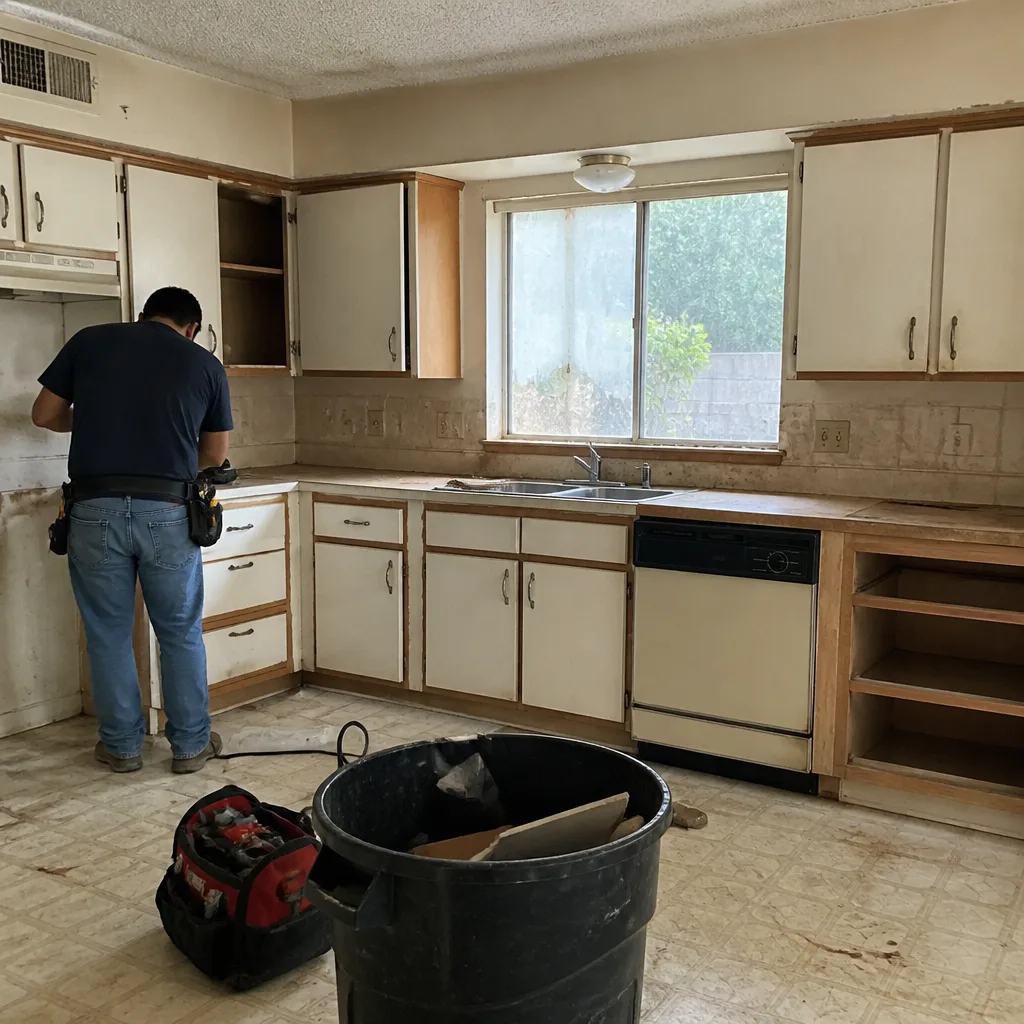 Before
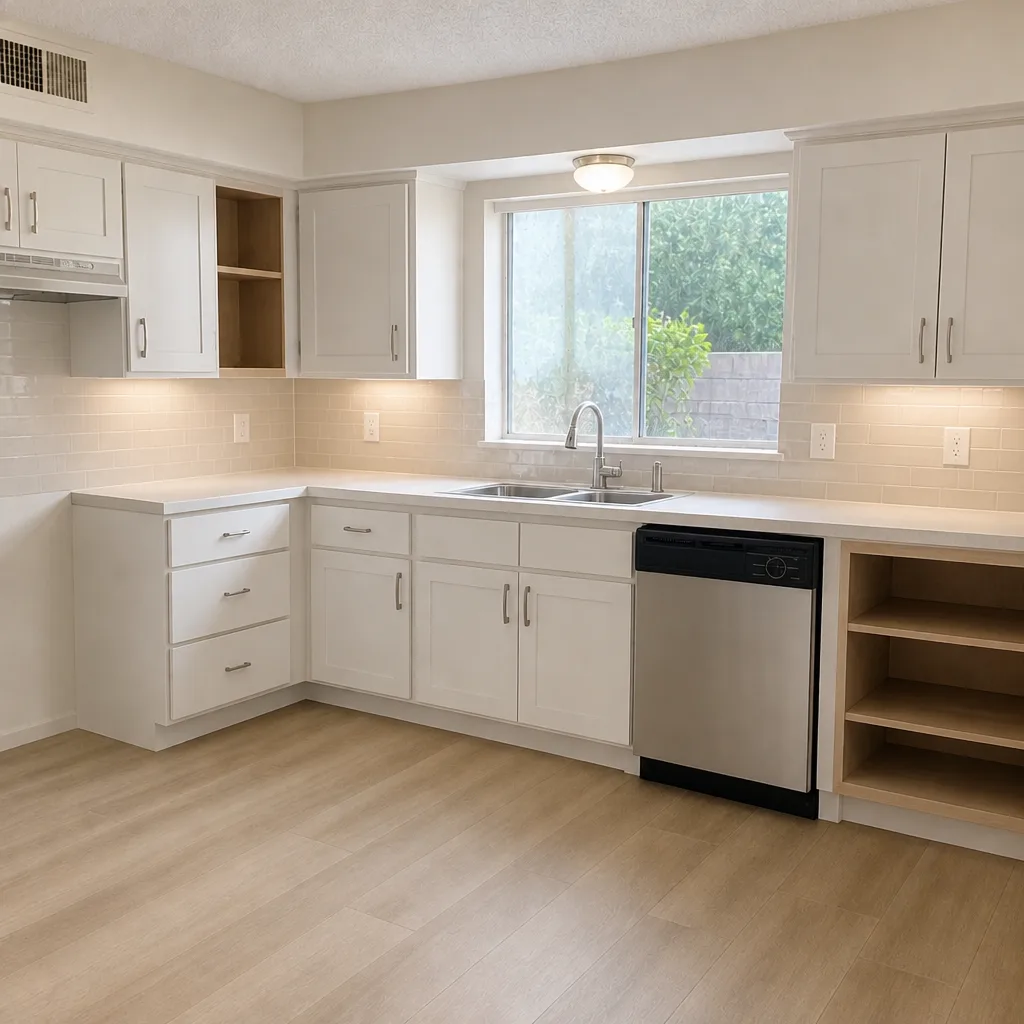 After
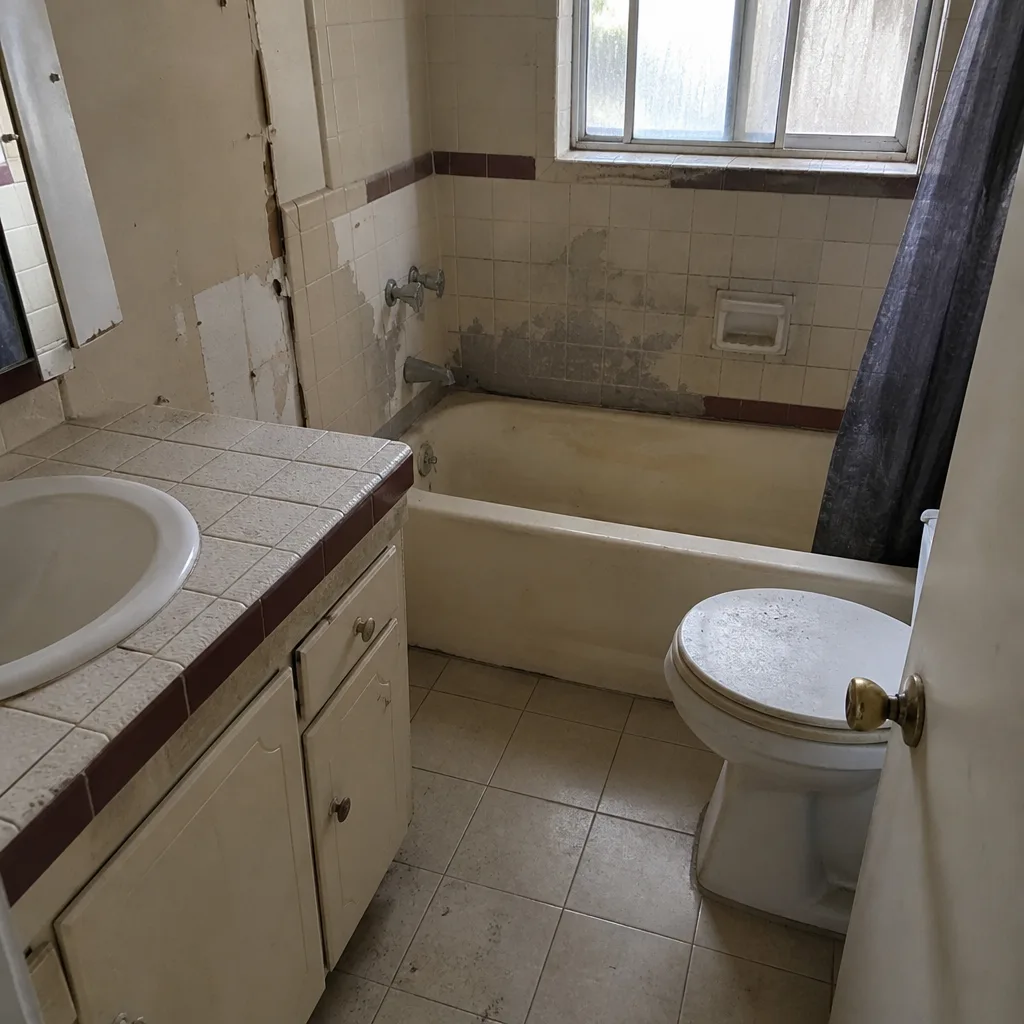 Before
 After
 Before
 After