
Last updated November 16, 2026
 Bathroom remodeling
 Kitchen remodeling
 Home additions & ADU
 Roofing
 Windows & doors
 Driveway & pavers
 Fence
Free written scope consultation - allowances, timeline, and change-order rules on paper before a single trade is scheduled
Bathroom Remodeling Troubleshooting: Common Problems and How to Fix Them
Grout cracking where the tile meets the tub isn’t a grout problem. It’s a movement joint problem, and re-grouting it without installing a proper caulk joint means it will crack again within a year. We’ve seen this same callback pattern across Santa Clarita for years: the visible symptom gets patched, the root cause stays put, and the homeowner pays twice. Most of the bathroom problems that send people searching for answers trace back to one of three root causes – a substrate or mortar issue, the wrong product at a joint that’s designed to move, or a waterproofing or ventilation failure that takes six to eighteen months to show itself. This guide covers how to tell them apart, which fixes you can handle yourself, which need a licensed trade, and which are quietly getting worse while you wait. If you’re in Santa Clarita and weighing a repair against a redo, this is the page to read before you touch a caulk gun.
Quick Answer
Most bathroom remodel problems – cracked grout lines, hollow or loose tile, a door that stopped latching, mold at ceiling corners – are symptoms of three root causes: a substrate or mortar that wasn’t right at installation, the wrong product used at a movement joint, or a failed waterproofing membrane or undersized exhaust fan. Re-caulking a tub surround is a homeowner fix. A shower pan that’s leaking, a slow drain from a bad trap, or water hammer after new fixtures needs a licensed trade. Anything that means water is getting behind the tile gets worse, not better, if you leave it.
Styles & brands we work with
- Kitchen remodeling
- Bathroom remodeling
- Home additions & ADU
- Roofing
- Windows & doors
- Driveway & pavers
- Fence
Table of Contents
- Grout Cracking at Movement Joints: Why It Happens and What Actually Stops It
- Lippage, Hollow Tile, and What Your Substrate Is Telling You
- Water Intrusion Behind the Shower Wall
- Ventilation Problems That Show Up Six to Eighteen Months Later
- Plumbing Issues That Surface After the Remodel
- Door and Trim Problems Caused by Humidity Changes
- Which Problems You Can Fix and Which Need a Licensed Trade
Grout Cracking at Movement Joints: Why It Happens and What Actually Stops It
Grout is rigid. The joint where tile meets a tub, a shower base, a wall corner, or a different substrate is designed to move – and it does, every time someone steps into the tub or the framing shifts with the seasons. When grout gets packed into that joint, it has nowhere to go. It cracks. Sometimes in the first week, sometimes the first winter.
Re-grouting the seam at the tub isn’t a repair. It’s a repeat appointment. The fix is to remove the grout from that joint entirely – back to a clean, dry channel – and fill it with a flexible, mold-resistant 100% silicone caulk, not a latex or siliconized acrylic product. Silicone stays flexible and holds up to the standing water that collects at the tub deck.
Here’s what proper caulking at a movement joint involves:
- Scrape or cut out the old grout and caulk down to a clean joint. A utility knife and a grout saw both help.
- Vacuum the joint and wipe it with denatured alcohol. Silicone won’t bond to dust or a damp surface.
- Fill the joint with 100% silicone caulk rated for wet areas. Press it in with a caulk tool or a wet finger.
- Cure it at least 24 hours before the shower or tub gets used.
The mistake we see most in Santa Clarita is a well-meaning grout job over a joint that has no business being grouted. If the seam at your tub cracked within the first year of a remodel, that’s not wear and tear – that’s the wrong product at a joint that has to move. A note for homes in the Valencia and Stevenson Ranch areas with slab-on-grade bathrooms: seasonal ground movement shakes that joint a little more than a raised foundation home, so silicone caulk saves you a lot of callbacks.
Lippage, Hollow Tile, and What Your Substrate Is Telling You
Lippage is the step between two tiles – one edge sitting proud of its neighbor. A tiny bit is tolerable on a floor; more than about a credit card’s thickness is a trip hazard and a sign something underneath is wrong. Hollow tile is worse. Tap across the floor or wall with the handle of a screwdriver. A sharp, dead sound instead of a solid one means the mortar didn’t bond, and that tile is going to pop loose.
Both problems point to the same root cause: the substrate. Tile needs a flat, stable, deflection-free surface. On a wood subfloor, that means a proper backer board or membrane over framing that meets deflection requirements for the tile size. On a slab, it means the slab is flat and free of cracks that telegraph upward. Skipping the substrate and going straight to mortar is how you get hollow tile in eighteen months.
- Hollow at the edge of the room only: often a perimeter mortar coverage issue – fixable without tearing up the whole floor.
- Hollow in the field of the floor: usually a bonding failure across the substrate. Plan on removing and resetting those tiles.
- Lippage with no hollow sound: may be a mortar-bedding problem under one tile, or a warped tile from the factory. Check the tile itself with a straightedge.
- Cracked tiles running in a line: the substrate is moving under them. Replacing the tile without addressing the movement underneath is a temporary fix.
In our experience, the tile failures we get called to look at in Canyon Country and Newhall come down to a substrate that didn’t get the attention it needed at install, not bad tile. Correcting a field of hollow tile is a floor tear-out. It’s a real cost, so get it looked at early. You can look up what a full bathroom floor redo involves in our Barrett & Sons Construction Santa Clarita home page.
Water Intrusion Behind the Shower Wall
Water behind the shower wall is the most expensive problem on this list, and the one that hides longest. The tile and grout are not waterproof. The waterproofing membrane behind them is. When the membrane wasn’t installed correctly – no pre-slope under a pan liner, a skipped curb detail, a corner that wasn’t sealed – water finds its way behind the tile and stays there.
Watch for these signs:
- Grout that turns dark and stays dark long after the shower dries
- Soft or crumbly drywall or baseboard on the wall opposite the shower or below the bathroom
- Musty smell that doesn’t clear when the exhaust fan runs
- Bubbling paint or loose trim near the shower
- A ceiling stain on the floor below
If you have any of these, stop using the shower and get it inspected. Water behind the wall rots the framing and can invite mold inside the cavity. A shower pan that’s leaking requires a licensed trade to tear out and rebuild – a homeowner caulking the outside of the shower does nothing when the failure is behind the waterproofing.
Here in Santa Clarita, the swings between a dry, hot summer and cooler, wetter winters put real stress on a shower assembly. The tile and grout expand and contract more than they would in a mild coastal climate, and a marginal membrane gets tested faster. A properly sloped pan and a continuous membrane – installed and inspected before tile goes on – are what hold up. This is one place a permit and an inspection genuinely earn their keep. The inspector catches the waterproofing before it’s buried, and a customer is better off for it.
Ventilation Problems That Show Up Six to Eighteen Months Later
This is the one that catches people off guard. Six to eighteen months after the remodel, mold appears at the ceiling corners. Paint peels above the shower. The bathroom always feels a little damp. The cause is almost always the exhaust fan – either it was the right fan for the old layout and the wrong fan for the new one, or it was undersized from the start.
A fan needs to move enough air to clear the room’s moisture in a reasonable time. When a remodel added square footage, a second shower head, a freestanding tub, or a larger shower, the fan that was fine for the original bathroom stops keeping up. It doesn’t fail loudly. It just runs and never quite clears the humidity.
What to check:
- Run the fan and hold a tissue to the grille. If it won’t hold, the airflow is weak.
- Confirm the fan vents to the outside, not into the attic. Venting into an attic dumps the moisture where it rots the roof framing instead.
- Check the duct run – a long, flexible, sagging duct behind the fan cuts airflow hard.
- Look at the fan’s rated CFM against the room’s square footage and the number of fixtures. If a bigger bathroom was left with the old fan, it’s undersized.
An undersized fan needs to be replaced, not cleaned. A fan that vents into an attic needs to be re-routed to the roof or wall. Both fixes are modest compared to the damage that persistent moisture does to the ceiling and framing over time. In Saugus and other parts of the Santa Clarita Valley where homes sit under a hot sun, an attic that traps shower moisture from a bad fan is a recipe for a mold call.
Plumbing Issues That Surface After the Remodel
New fixtures and fresh tile expose plumbing problems that were already there or were introduced during the work. Three show up more than any others.
Slow drains from a bad trap. A drain that runs slow right after the remodel usually means a trap with the wrong slope or a vent that isn’t connected right. A trap should hold water and still drain fast; when it has a shallow or backslope, it drains slowly or gurgles. This is a licensed plumber’s job, not a drain-cleaner job.
Supply valve failures from disturbed galvanized lines. Older homes in the valley can have galvanized supply pipe. When new fixtures go in and the lines get shut off, drained, and turned back on, the old pipe can fail at the valve or a joint. A leak at a supply valve right after a remodel is a warning sign – the pipe is telling you it’s at the end of its service life.
Water hammer after new fixtures. That bang in the wall when you shut the tap off comes from a quick-closing valve with no air chamber or arrestor to absorb the pressure. A single banging fixture can often be fixed with a water-hammer arrestor at the connection. Hammer across the whole system usually means the original air chambers have filled with water, and a plumber needs to address it before it eats the pipe joints.
None of these are homeowner fixes if you’re not comfortable with water supply and drain work. Shut the water off and call a licensed plumber. If your bathroom is also in line for a full redo, our Bathroom Remodeling in Santa Clarita page lays out the full scope so the plumbing gets handled while the walls are open instead of after.
Door and Trim Problems Caused by Humidity Changes
A newly tiled bathroom changes its humidity behavior. Before the remodel, the drywall and old surfacing soaked up some of the moisture. After, tile and grout send more of it straight into the air. A bathroom door that stops latching, swells at the top, or drags on the threshold six months after a remodel is a humidity problem, not a hardware problem.
Wood moves with moisture. If the door and trim were installed before the room’s humidity had settled, or without a proper seal on all six sides of the door, the wood takes on moisture and swells. Paint failure on the trim and door jamb follows the same path – moisture pushing through from behind a poorly sealed coat.
What proper installation prevents:
- Acclimation. Door slabs and trim should sit in the finished room long enough to reach the room’s moisture level before they’re hung. Hanging a door straight from a cold truck into a newly tiled bathroom invites a callback.
- Sealing all six sides. Every edge of the door and trim should get painted or sealed – top and bottom included. Unsealed bottom edges wick moisture from the floor.
- Moisture-rated paint and proper priming. Trim in a bathroom needs a bathroom-rated finish, not a general-purpose flat.
If a door has already swollen, check the humidity first: run the fan longer, fix the undersized fan if that’s the real issue, and give the wood a few weeks to settle before you plane or shim anything. Most of the time the door is fine once the room dries out. If it’s still binding after that, the frame or the door was hung out of square.
Which Problems You Can Fix and Which Need a Licensed Trade
Sort every problem into one of three buckets before you touch anything.
Homeowner-fixable. Re-caulking a tub or shower surround with 100% silicone. Replacing a loose towel bar anchor. Touching up paint. Running the exhaust fan longer or swapping a weak grille cover. Adding a water-hammer arrestor to one fixture. Cleaning a slow drain that turns out to be hair, not a trap.
Licensed trade required. Rebuilding a shower pan or re-doing the waterproofing membrane. Replacing a bad trap or a failing supply line. Replacing an undersized exhaust fan that vents into the attic. Electrical work inside the bathroom. Anything that means opening a wall to get at framing or a membrane.
Waterproofing or structural failure – get it looked at now. Dark, persistent grout lines. Soft drywall or baseboard behind or below the shower. A ceiling stain below the bathroom. Cracked tiles running in a line. Any of these means water or movement is active. Left alone, the repair cost climbs every month.
If you’re staring at more than one item on that third list, you’re likely looking at a partial or full remodel rather than a patch, and it’s worth getting a written scope before you commit. The same discipline applies to the exterior work around the house – our Driveway & Pavers in Santa Clarita page follows the same permit-and-written-scope approach, and the Fence Installation in Santa Clarita and Home Additions & ADU in Santa Clarita pages apply it too, because a bathroom that shares walls and framing with the rest of the house deserves the same standard.
Common Mistakes to Avoid
- Re-grouting a movement joint. Grout at the tub or shower base will crack again within a year. It needs flexible silicone, not grout, and no amount of careful application changes that.
- Caulking over a leaking shower pan. If the water is behind the membrane, the caulk on the surface does nothing. You’ll spend money and still have a leak.
- Leaving the old exhaust fan in place after a bigger bathroom. A fan sized for the old layout won’t clear moisture in Santa Clarita’s hot summers and cooler wet winters – you’ll get mold at the ceiling corners and peeling paint above the shower.
- Skipping the substrate detail to save money. Hollow tile, cracked tiles, and lippage trace back to the backer board or membrane. Cutting that corner shows up within two years.
- Installing doors and trim before the room’s humidity settles. Hanging a door straight from the truck into a freshly tiled bathroom is a swelling and sticking callback waiting to happen. Acclimate and seal all six sides.
- Not getting an inspection on the waterproofing before tile goes on. You can’t see the membrane after it’s tiled. The inspection is the only chance anyone gets to catch a failure before it’s buried. Every eligible job should have a permit and a signed inspection, period.
- Believing a verbal quote. A price change that isn’t on a written change order is a surprise waiting for a date. Get allowances and scope changes in writing before a single nail moves.
See the difference
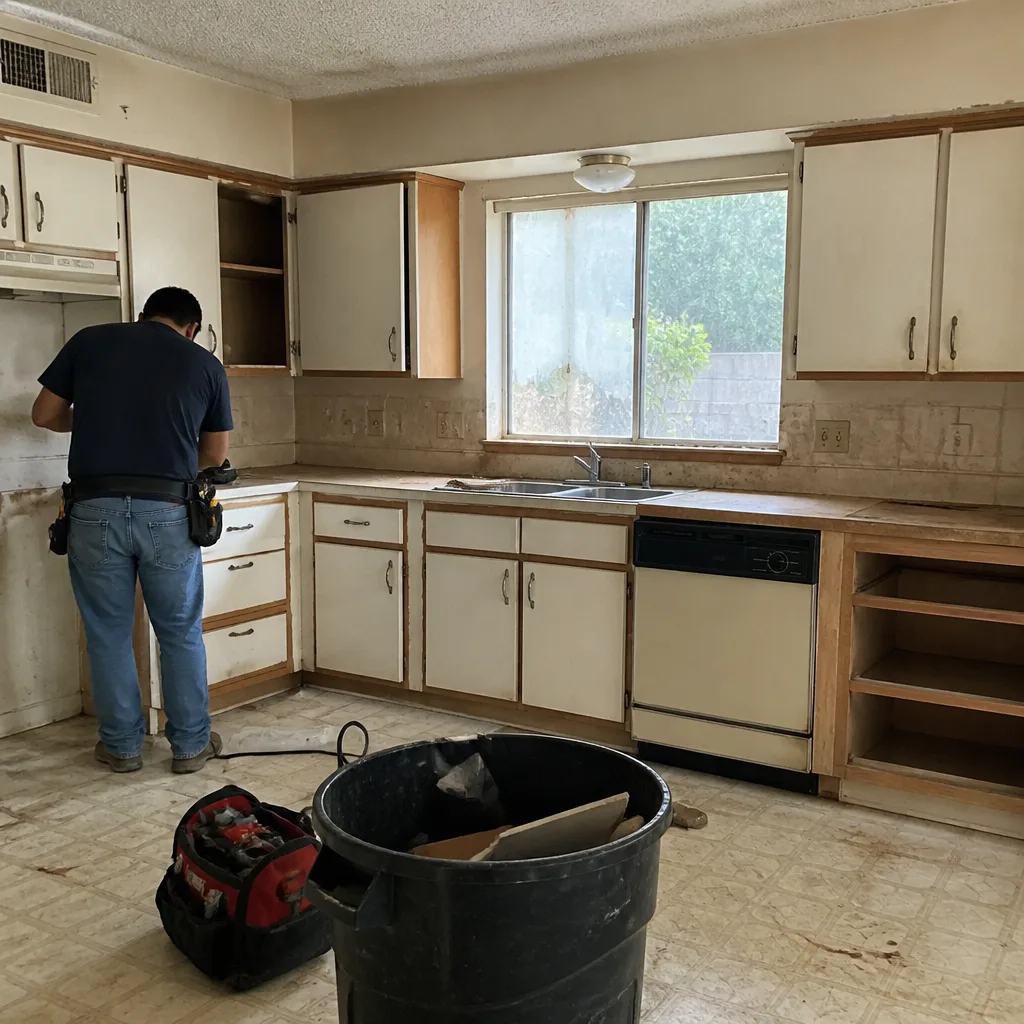 Before
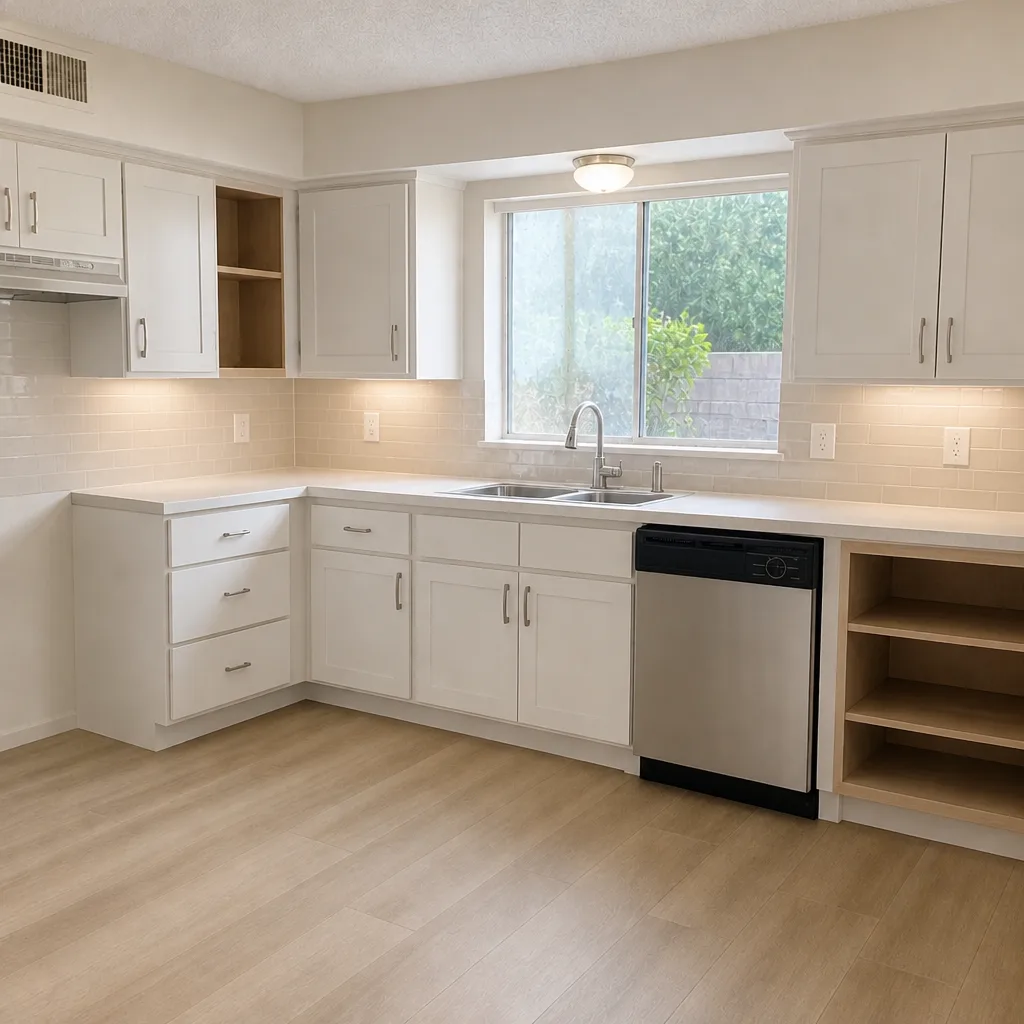 After
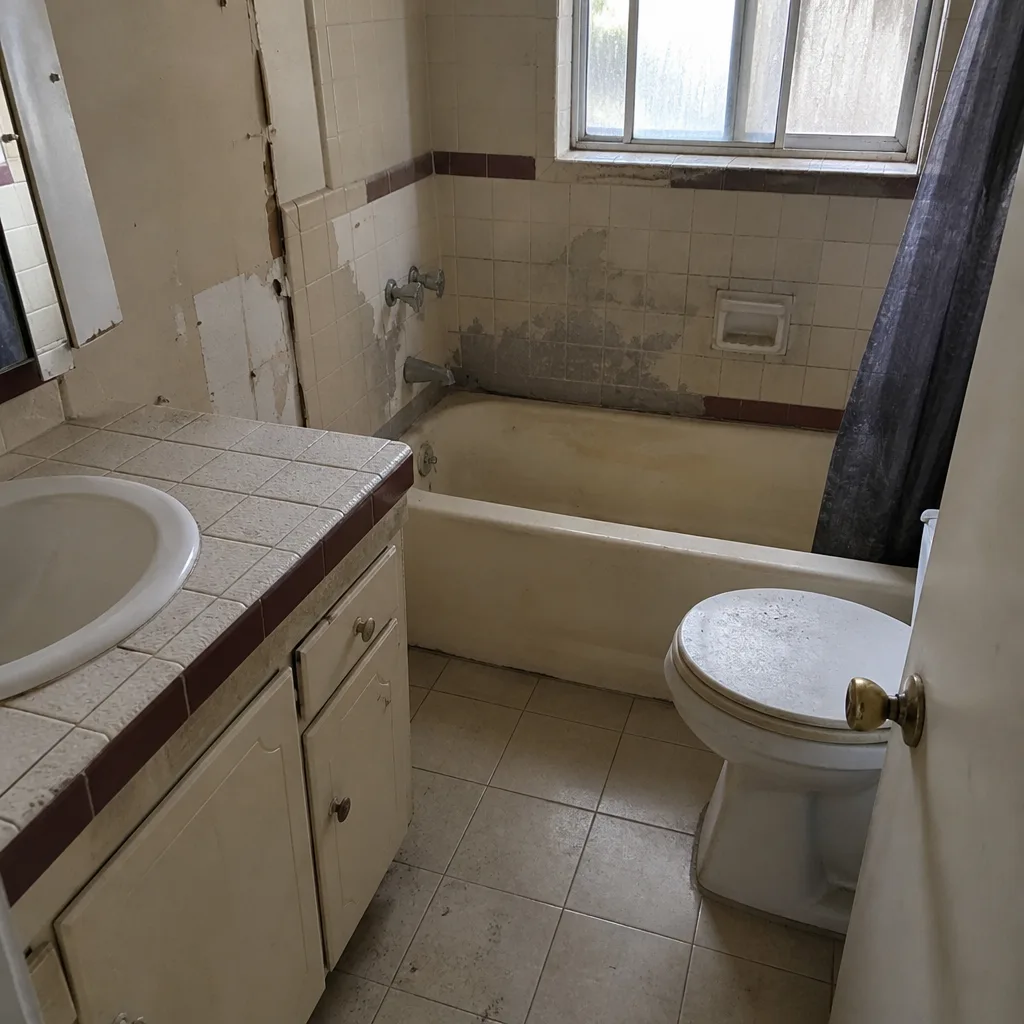 Before
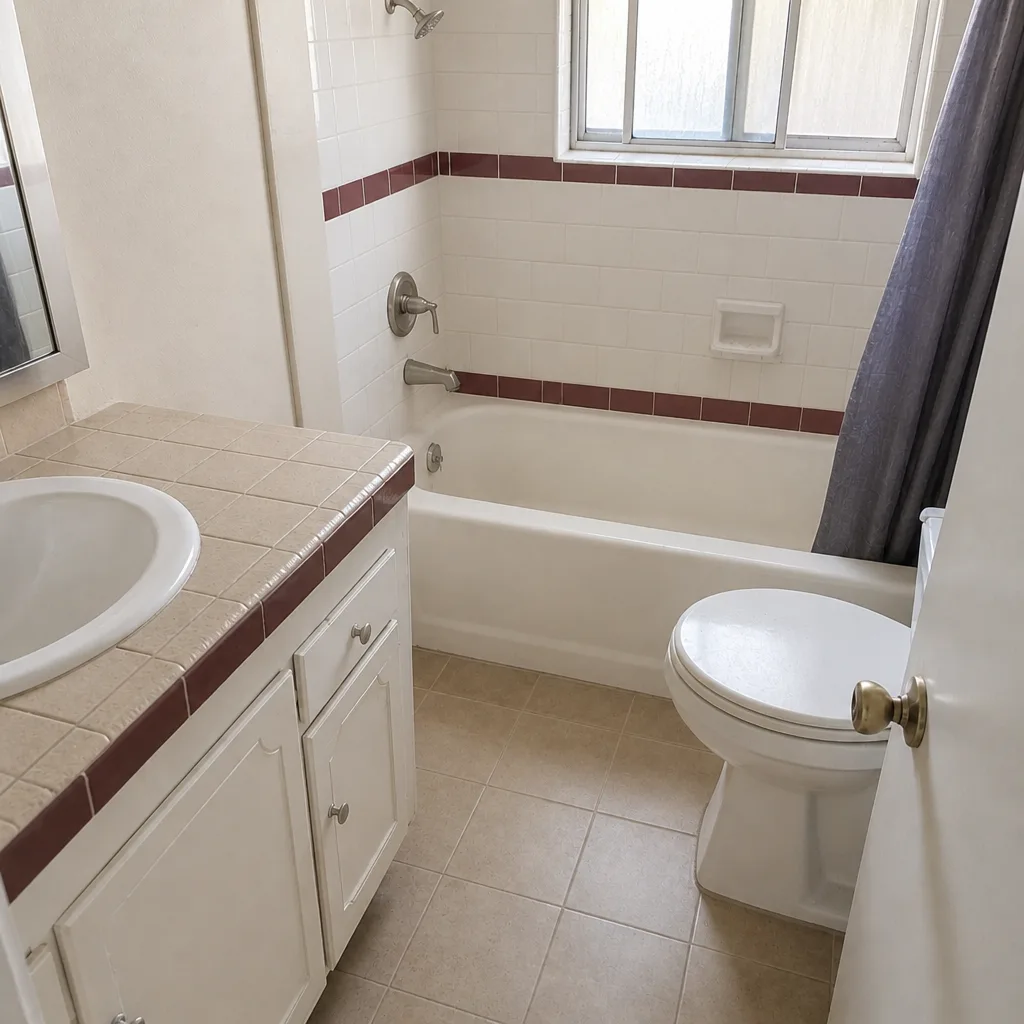 After
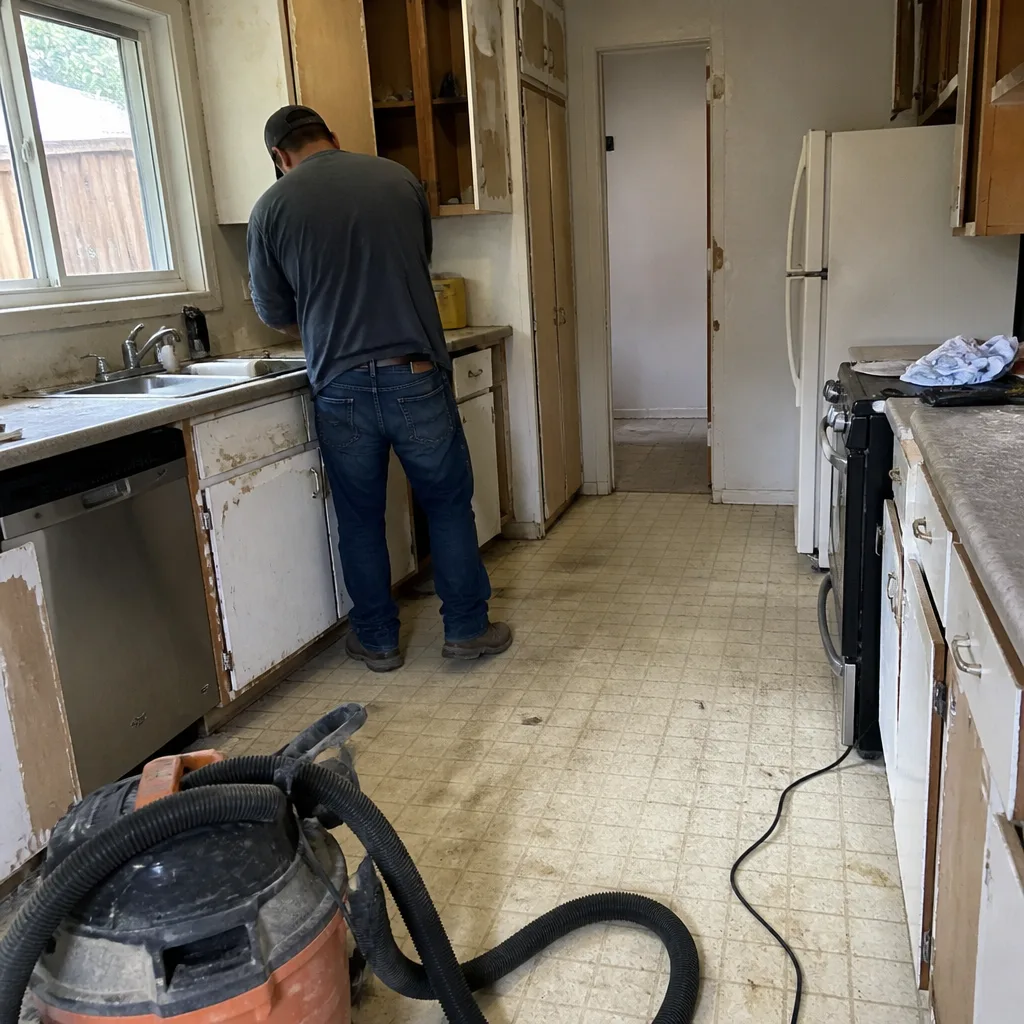 Before
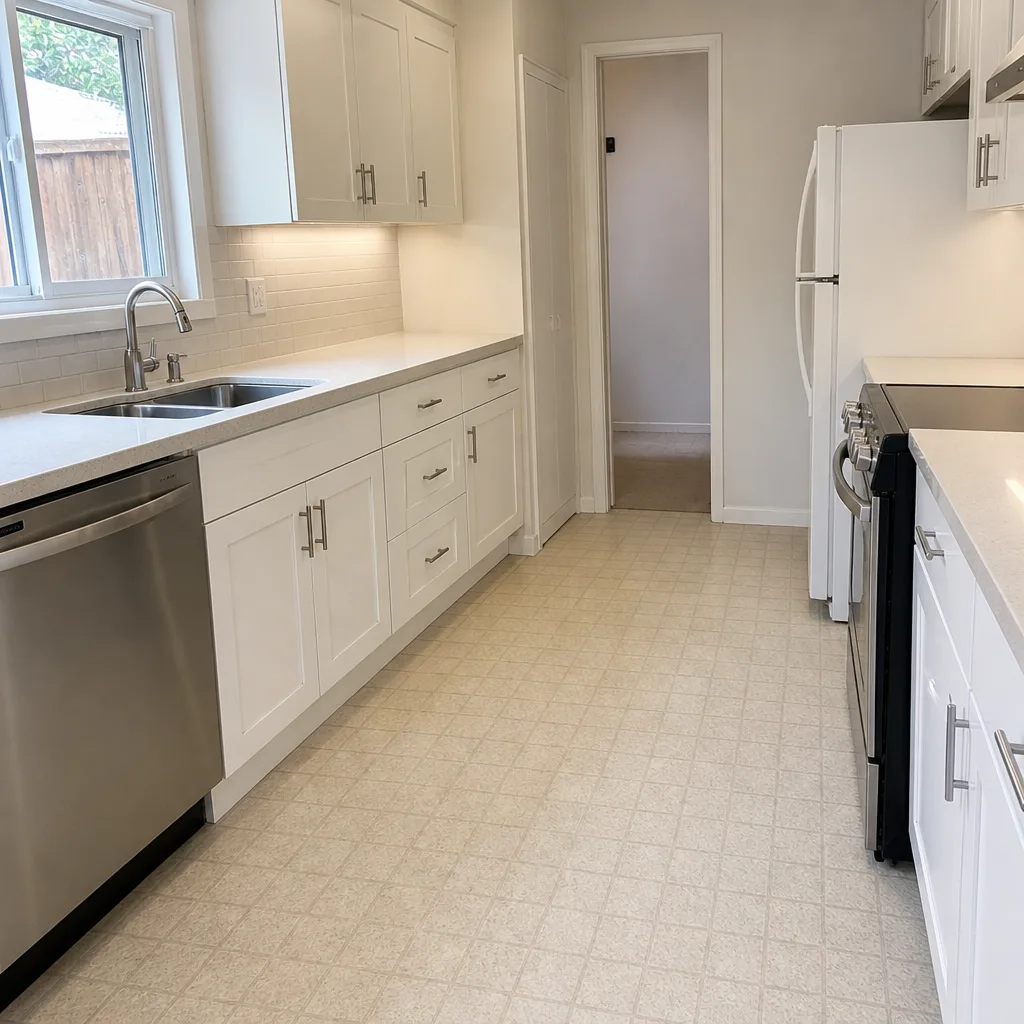 After
When to Call a Professional
Call when the problem means water is getting where it shouldn’t. Grout that stays dark, soft drywall below the shower, a ceiling stain on the floor below, or a shower pan that leaks – those need a licensed trade, not a patch. Call when the exhaust fan no longer clears the room or vents into the attic. Call when a door has swollen and plane-and-shim hasn’t fixed it, and the room’s humidity is already under control. Call when you’re looking at three or more items that need more than a caulk gun.
Barrett & Sons Construction Santa Clarita offers free estimates in Santa Clarita – call (833) 762-8116. A live person answers, day or night, and if you’re not sure whether you’re looking at a patch or a redo, we’d rather spend the estimate showing you the difference than have you spend the money twice. Every eligible job gets a permit pulled and an inspection signed, every scope and allowance and change order is in writing before the work happens, and every completed job is backed by our 90-Day Done Right Promise. If it’s not done right, you make one call and we come back and make it right.
Frequently Asked Questions
Because that joint is designed to move, and grout is rigid. When grout gets packed into a movement joint at the tub, it has nowhere to go and cracks. The fix is to cut the grout out and fill the joint with a flexible, mold-resistant 100% silicone caulk, not grout and not siliconized acrylic. If a Santa Clarita bathroom had this seam re-grouted and it cracked again, the joint was never the problem – the product at the joint was. Call (833) 762-8116 for an exact quote on getting it done right – estimates are free.
The signs are dark grout that stays dark after drying, a musty smell that doesn’t clear when the fan runs, soft drywall or baseboard behind or below the shower, bubbling paint near the tile, or a ceiling stain on the floor below. If you see any of these, stop using the shower and get it inspected – water behind the tile rots framing and can mean mold inside the cavity. A shower pan that’s failing needs a licensed trade to rebuild, not a surface patch. Call (833) 762-8116 for a free estimate if you’re in Santa Clarita and want a straight answer.
The exhaust fan is undersized or venting into the attic. A remodel that added square footage or a second shower head often leaves the old fan unable to clear the moisture, and the problem shows up six to eighteen months later as mold at ceiling corners and peeling paint above the shower. The fix is a properly sized fan that vents to the outside. In Santa Clarita’s hot summers and cooler wet winters, an undersized fan gets tested hard, so this one is common. Call (833) 762-8116 – a permit and inspection on the re-vent is written into the scope before work starts.
A trap with the wrong slope, a shallow trap, or a vent that isn’t connected right. A bad trap drains slowly or gurgles because it can’t hold water and pull air correctly. This is a licensed plumber’s job. It’s not a drain cleaner’s job, and it’s not something a homeowner should open up. Call (833) 762-8116 for a free estimate if you’re in Santa Clarita and want it looked at properly.
That’s water hammer, and it comes from a quick-closing valve with no air chamber or arrestor to absorb the pressure. One banging fixture can often be fixed with a water-hammer arrestor at the connection. Hammer across the whole system usually means the original air chambers have filled with water, and a plumber needs to address it before it loosens pipe joints. Call (833) 762-8116 for an exact quote – estimates are free.
Re-caulking a tub surround with 100% silicone is a homeowner-fixable job if the joint is clean, dry, and the underlying membrane isn’t failing. It’s worth doing yourself. But if the seam has cracked more than once, or if you see soft drywall, a musty smell, or dark grout that stays dark, there’s likely a waterproofing failure underneath and caulk won’t fix it. Call (833) 762-8116 for a free estimate and a second opinion on any written estimate you’ve already received.
The Bottom Line
Most bathroom remodeling problems in Santa Clarita trace back to three root causes: a substrate that wasn’t right at install, the wrong product at a movement joint, or a failed waterproofing or ventilation detail that took months to show. Re-caulking a tub surround is a homeowner fix. A leaking shower pan, a bad trap, a failing supply line, or an undersized fan that vents into the attic needs a licensed trade. The third category – water behind the wall, cracked tiles running in a line, a ceiling stain below the bathroom – gets worse every month you wait. Get it looked at early.
Call Barrett & Sons Construction Santa Clarita at (833) 762-8116 for a free estimate. We’ll tell you which bucket your problem falls in, put the scope in writing, pull the permit, and stand behind the work with our 90-Day Done Right Promise. Our crews have up to 28 years of experience, and we answer the phone ourselves.
Written by the team at Barrett & Sons Construction Santa Clarita.