
Last updated November 16, 2026
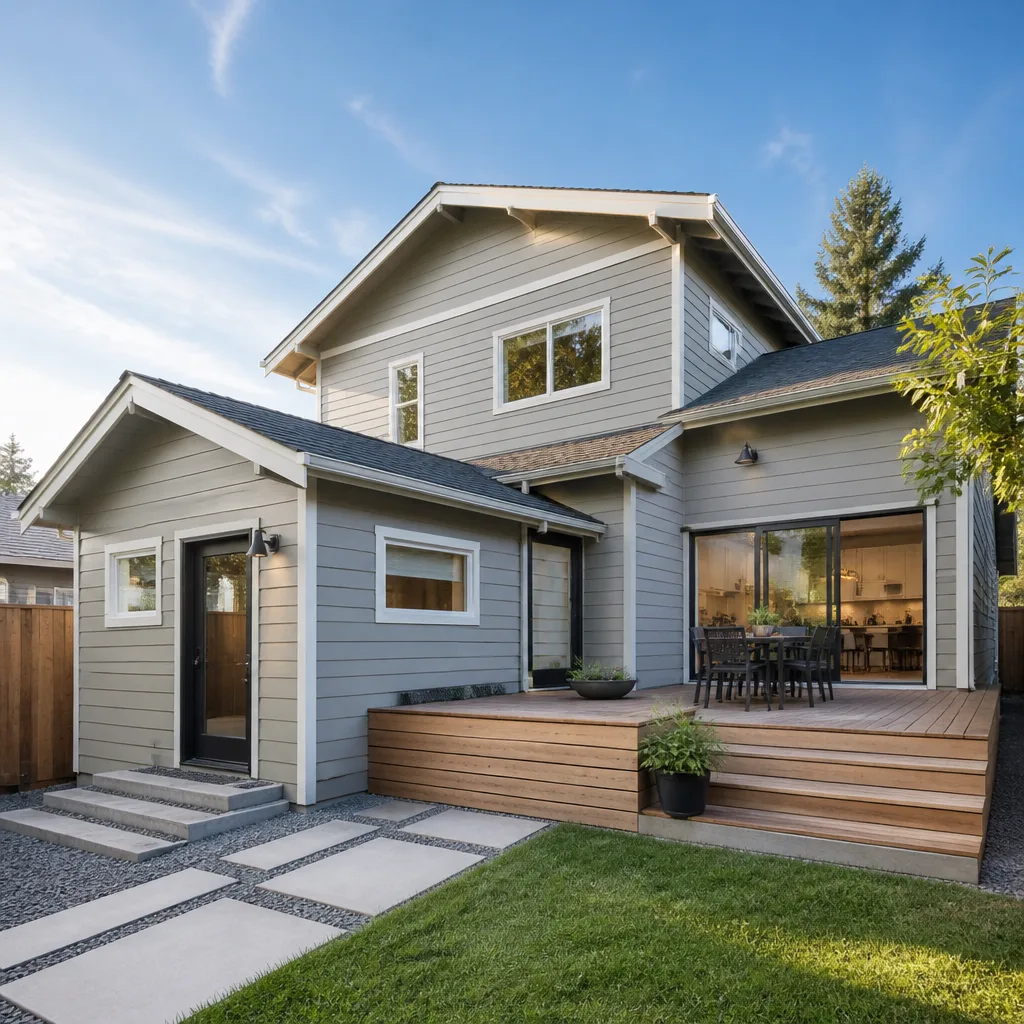 Home additions & ADU
 Kitchen remodeling
 Bathroom remodeling
 Roofing
 Windows & doors
 Driveway & pavers
 Fence
Free written scope consultation - allowances, timeline, and change-order rules on paper before a single trade is scheduled
The Complete Home Additions & ADU Guide for Santa Clarita Homeowners
Here’s the part most ADU guides skip: the rules that decide what you can build depend on which government you answer to, and in Santa Clarita that answer changes block by block. A lot in Saugus might sit inside city limits, while a parcel off San Francisquito Canyon Road falls under Los Angeles County unincorporated jurisdiction. Those two paths carry different setbacks, different fee schedules, and different review timelines, all before you draw a single line. Add hillside grading on a Stevenson Ranch slope and an HOA overlay in a gated community, and you’ve got a planning puzzle that no national guide was written for.
This guide walks you through what actually shapes an addition or ADU in Santa Clarita: how to find out whose rules govern your address, the five main unit types and what each really costs you in money and complexity, the utility connection line item that surprises nearly everyone, the HOA limits that California law sets, and a realistic all-in budget for the Santa Clarita market. We’ve spent years pulling permits and sitting through inspections on these jobs, so we’ll write it the way we’d explain it across a kitchen table.
Quick Answer
Whether you can build an ADU or addition in Santa Clarita depends first on jurisdiction: the City of Santa Clarita governs parcels inside city limits, while Los Angeles County unincorporated rules apply to some surrounding parcels, and each has its own setbacks, fees, and review path. Detached and attached ADUs, garage conversions, junior ADUs, and new-construction additions are all generally allowed on a typical single-family lot, with realistic all-in costs in Santa Clarita running roughly $120,000 to $350,000 depending on type, site conditions, and utility work. Confirm jurisdiction and your lot’s zoning before you hire a designer.
Styles & brands we work with
- Kitchen remodeling
- Bathroom remodeling
- Home additions & ADU
- Roofing
- Windows & doors
- Driveway & pavers
- Fence
Table of Contents
- City of Santa Clarita vs. LA County: which rules govern your address?
- The five ADU types on a Santa Clarita single-family lot
- Utility connections: the line item that surprises homeowners
- The HOA wrinkle: what they can and can’t regulate
- What a home addition or ADU really costs in Santa Clarita
- Permits, inspections, and the sequence that keeps you out of trouble
- Common mistakes to avoid
- Frequently asked questions
City of Santa Clarita vs. LA County: Which Rules Govern Your Address?
The single most important thing you’ll do before planning a Santa Clarita addition is confirm which agency has permitting authority over your parcel. Get this wrong and you can spend thousands on design work that never gets reviewed by the right office. Santa Clarita sits mostly within city limits, but a meaningful number of parcels in the surrounding canyons and rural edges fall under Los Angeles County unincorporated jurisdiction. Each authority has its own application forms, its own plan-check process, and its own fee structure.
Here’s the quickest way to find out, in order:
- Check your property tax bill or deed. Look for the “tax rate area” or jurisdiction notation. Many bills state the taxing jurisdiction outright.
- Enter the address in the LA County Assessor’s property search. The record usually lists the jurisdiction and unincorporated status.
- Call the City of Santa Clarita planning counter. Give them the APN (assessor’s parcel number) – not just the street address. They’ll confirm in minutes whether they are the authority.
- If the parcel isn’t theirs, call LA County Regional Planning. Ask specifically whether the parcel is in an unincorporated area and which community standards district or specific plan applies.
Why this matters so much: setbacks, height limits, lot coverage, parking requirements, and even the fees can differ between city and county rules. The one piece of good news is that California’s statewide ADU law overrides local rules in favorable ways for most sites – things like reduced setbacks and allowing ADUs on lots where local zoning would otherwise bar them. But you still need to know who’s reading your plans. When the plan-check comments come back, they’ll come from one office, and your architect needs to answer that office. This is one reason we insist on written scope from the first meeting and pull every eligible permit on our projects – the inspector works for you, not for us, and that’s exactly the point.
The Five ADU Types on a Santa Clarita Single-Family Lot
California law now allows most of these on a typical single-family lot in Santa Clarita, provided you’ve sorted out your jurisdiction and zoning. Each type carries honest trade-offs in cost, complexity, and how much of your yard you keep.
Detached ADU. A standalone structure in the backyard, usually 600 to 1,000 square feet. It’s the most flexible type and typically the most expensive per square foot because you’re building everything from foundation to roof fresh, plus a separate utility run. On a flat Saugus or Canyon Country lot, this is often the cleanest path. On a hillside parcel in Stevenson Ranch, site work can add meaningfully.
Attached ADU. Added onto the existing house, sharing at least one wall. Often simpler to permit and slightly cheaper per square foot than detached, but you’ll be living next to the construction, and tying into the existing structure requires careful structural work. If your existing foundation has issues, this is where they surface.
Garage conversion. Converting existing garage space, which saves you the foundation and shell cost. Fastest and least expensive path – but you’ll lose parking, and you’ll need to plan for replacement parking depending on jurisdiction rules. Many Santa Clarita homes have the ideal footprint for this. The main surprise is usually the utility and insulation work, since garages were never built to living standard.
Junior ADU (JADU). A unit up to 500 square feet carved out of existing space inside the main house, typically a converted bedroom or attached to a bathroom. Cheapest of the five and doesn’t require a separate utility connection in most cases. The trade-off is privacy and size – it works best for a family member or a long-term renter, not a premium short-term rental.
New-construction addition. Not an ADU proper, but a genuine living-space addition to the main house. It’s the option homeowners choose most when the goal is more room for the family rather than a separate income unit. Scope, permits, and cost depend heavily on whether you’re extending a single story, adding a second floor, or building over a garage. Our Home Additions & ADU in Santa Clarita page covers how we scope these projects.
Utility Connections: The Line Item That Surprises Homeowners
If we’ve seen one line item blow up a budget mid-project more than any other, it’s utility connection work. Homeowners often budget for construction and design, then get caught by the question: does the ADU get its own meters or share service with the house?
Both are options, and the answer depends on what your local water agency and the utility serving your address will approve. Sharing service is usually cheaper upfront – you tap into the existing electrical panel and water line, sub-meter informally, and skip the connection fees. Separate meters cost more now but simplify billing if you plan to rent the unit, and they can be required in some scenarios. The tricky part is that separate-meter applications often trigger an upgrade to the main panel, which means more work than expected if your house is older and running a modest service.
Three things we tell every Santa Clarita homeowner before they finalize a plan:
- Ask the water agency early. Water service connections in this valley flow through the local water districts, and requirements vary by district. Confirm whether a new connection is required and what the connection fee is – it can run into the thousands.
- Get an electrical load calculation. Before deciding on separate power, have an electrician run the numbers on your current panel. If an upgrade is coming, you want it in the budget, not on the change order.
- Keep it in writing. Every allowance and price change belongs on paper before work proceeds. An allowance that isn’t on paper is a surprise waiting for a date.
We pull the permits and schedule the inspections so the utility work gets signed off by the agency that governs your parcel, not by whoever happens to have a free afternoon. That discipline is what keeps a Santa Clarita ADU from stalling at the finish line.
The HOA Wrinkle: What They Can and Can’t Regulate
Plenty of Santa Clarita neighborhoods sit inside HOAs – the master-planned communities in Valencia and Stevenson Ranch in particular – and HOA rules do apply to ADU projects, but not the way many board members think. California law sharply limits how far an HOA can go in blocking an ADU. An association generally can’t ban ADUs outright or impose requirements that make them effectively impossible to build. What HOAs can do is regulate aesthetics: exterior design, materials, colors, roof style, landscaping, fencing, and where on the lot the unit sits.
That distinction saves months if you handle it right. Step one: read your CC&Rs and any architectural design guidelines before you hire a designer. Step two: submit your design to the architectural review committee early, in parallel with the city or county submittal – not after. Step three: if your board tries to block something the law protects, get a written denial and consult a land-use attorney. In most cases the fight resolves without one, because boards that understand the law usually work with the project once the aesthetics are settled.
The practical benefit of settling HOA questions early is that your materials list and design stay stable. When we build, we use named brands across every trade so the design committee has something specific to review – Kohler and Moen fixtures, for example, are easy to specify and easy to approve. No mystery brands from a van, and nothing to argue about at the design review meeting.
What a Home Addition or ADU Really Costs in Santa Clarita
Construction cost per square foot is a real number, but it isn’t the budget. Here’s the range most Santa Clarita homeowners actually spend, all-in, once design, permits, construction, and utility work are counted:
| Project type | Typical size | Realistic all-in cost |
|---|---|---|
| Junior ADU (JADU) | Under 500 sq ft | $85,000 – $130,000 |
| Garage conversion ADU | 400 – 600 sq ft | $110,000 – $175,000 |
| Attached ADU | 500 – 800 sq ft | $160,000 – $250,000 |
| Detached ADU | 600 – 1,000 sq ft | $200,000 – $350,000 |
| Single-story home addition | 300 – 800 sq ft | $150,000 – $340,000 |
Those ranges cover the major buckets: architectural design and engineering, permit and impact fees, utility connections, framing and shell, finishes, and a contingency. They don’t cover hillside grading, which can add $20,000 to $60,000 on a sloped parcel, or a full electrical panel upgrade. Site conditions move the number more than finish selections do – an honest contractor tells you that before you fall in love with the finishes.
Every price change on a job we run arrives in writing before the work happens. No surprise invoices at the end. If you want a second opinion on a written estimate you’ve already received, bring it in. Written pricing is the only pricing you can argue with, and arguing over paper beats arguing over a phone call.
When you’re ready to plan the whole exterior alongside the addition, our Driveway & Pavers in Santa Clarita page shows how we tie hardscape to the new structure. And for finding your starting point on the parent service, the Barrett & Sons Construction Santa Clarita home page has the full picture of what we do.
Permits, Inspections, and the Sequence That Keeps You Out of Trouble
Every eligible job we run on this scope carries a permit, and every inspection is scheduled and signed before the next phase. The last contractor most customers used told them permits were optional. On an ADU, they are not – and unpermitted work is one of the fastest ways to kill your home’s resale value or fail a refinance appraisal. Here’s the practical sequence that keeps a Santa Clarita project moving:
- Confirm jurisdiction and zoning by APN, city or county.
- Order a survey and site plan – a hillside parcel needs it, and a flat one benefits from it.
- Hire a designer or architect who has worked in this jurisdiction before.
- Submit for plan check with structural engineering included.
- Respond to plan-check comments and revise if needed.
- Pull the building permit and post it on site.
- Schedule inspections: foundation, framing, rough-in electrical and plumbing, insulation, final.
- Utility connections and final sign-off from the water and power agencies.
The whole process favors patience and paperwork. A scope in writing, allowances in writing, change orders in writing – that’s the discipline that turns a long build into a predictable one, and it’s why we won’t start a job without it.
Common Mistakes to Avoid
- Assuming your address is in the city. A surprising number of Santa Clarita-area parcels fall under LA County unincorporated rules. Confirm by APN, because getting it wrong means a rejected submittal.
- Designing before jurisdiction. A designer who doesn’t know whether the city or the county is reading the plans will cost you revisions. Settle jurisdiction first, then hire the designer.
- Forgetting the utility connection line item. Water district connections and electrical panel upgrades can add $15,000 to $40,000. Keep them in the budget, not on the change order.
- Submitting the HOA review after the city submittal. Run them in parallel. If you wait, a board objection can stall a project for months after you’ve already paid for plan check.
- Trusting a per-square-foot number as the whole budget. In our experience designing to a number and then discovering the site work sends the budget up is the most common cause of heartbreak on these projects.
- Skipping the permit. The inspector works for you, not for us. On an ADU, unpermitted work is a liability that catches up with you at sale or refinance.
- Not asking for scope in writing. Allowances that aren’t documented are surprises waiting for a date. Get the written scope before you sign.
Your fence line, driveway, and new hardscape often get sorted alongside an addition. Have a look at our Fence Installation in Santa Clarita page if you’re planning to rework the property line at the same time.
See the difference
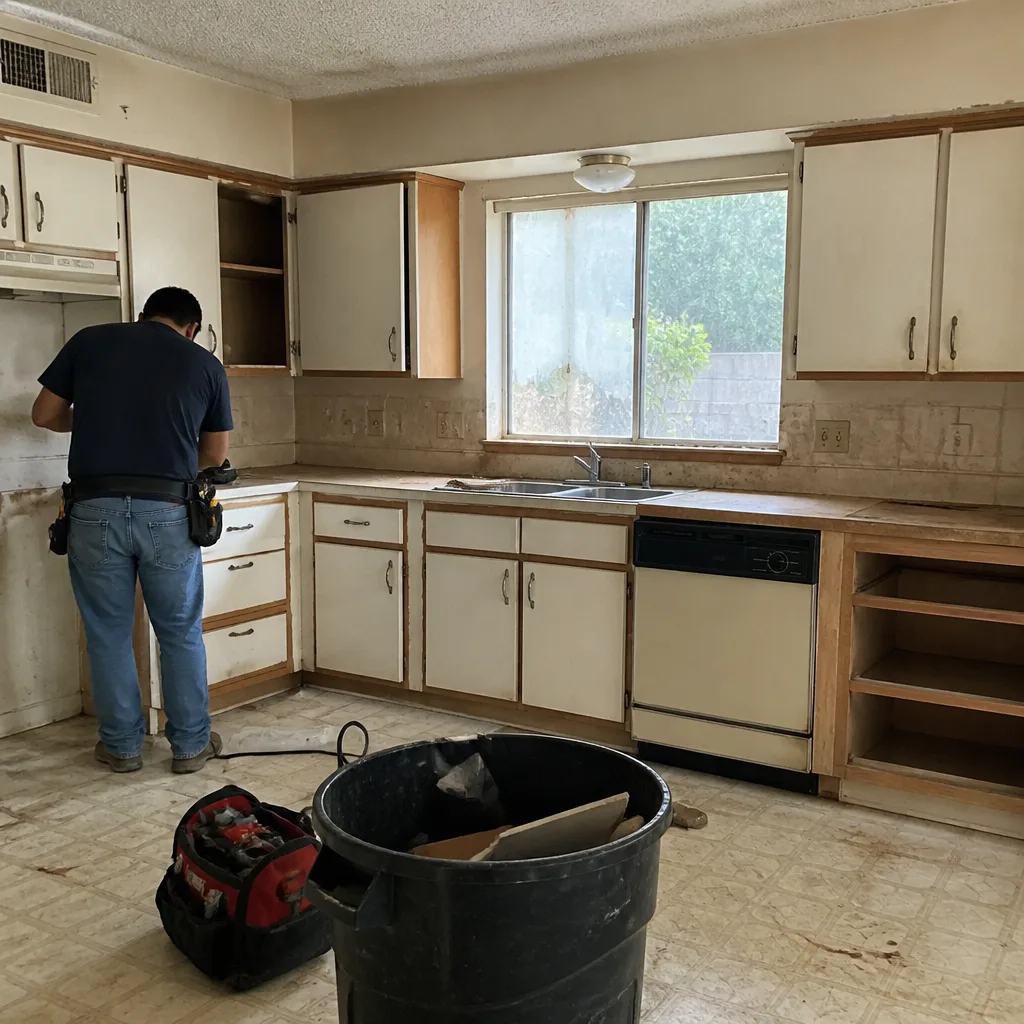 Before
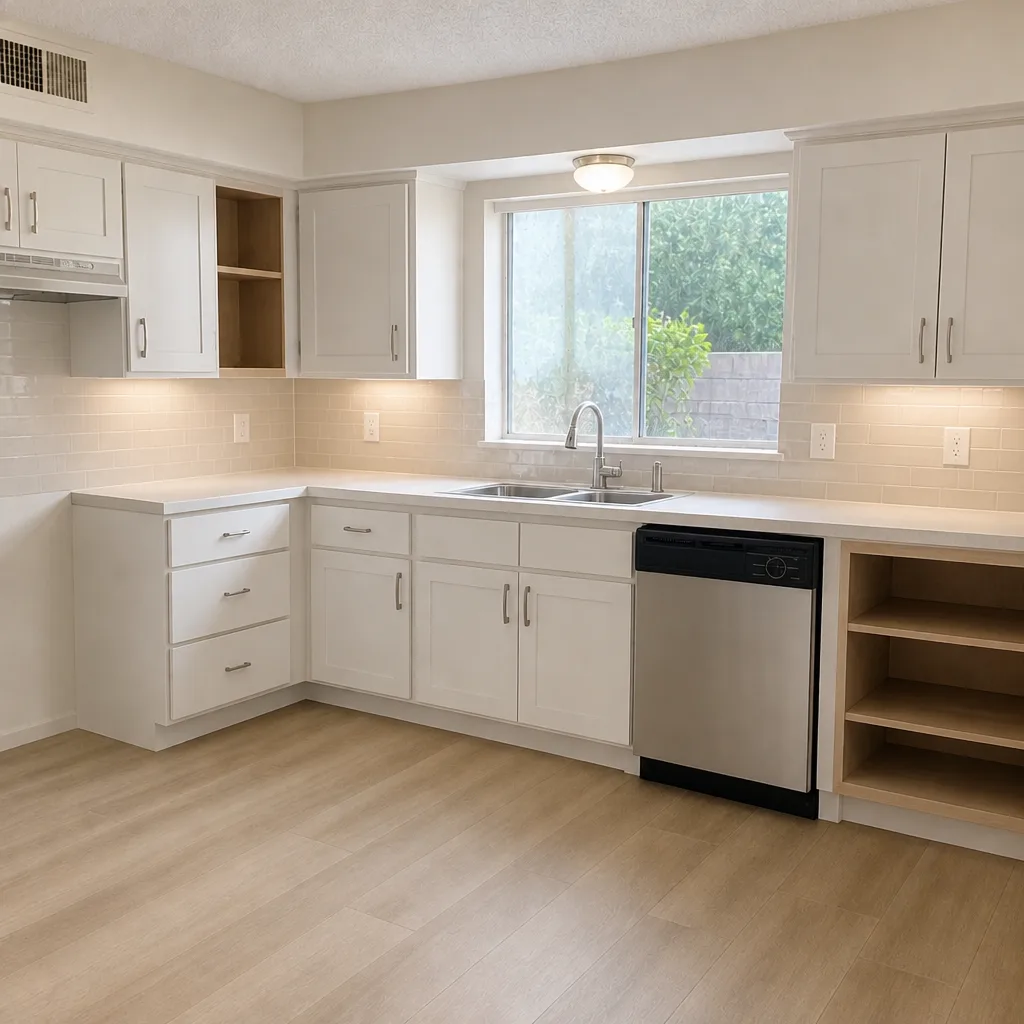 After
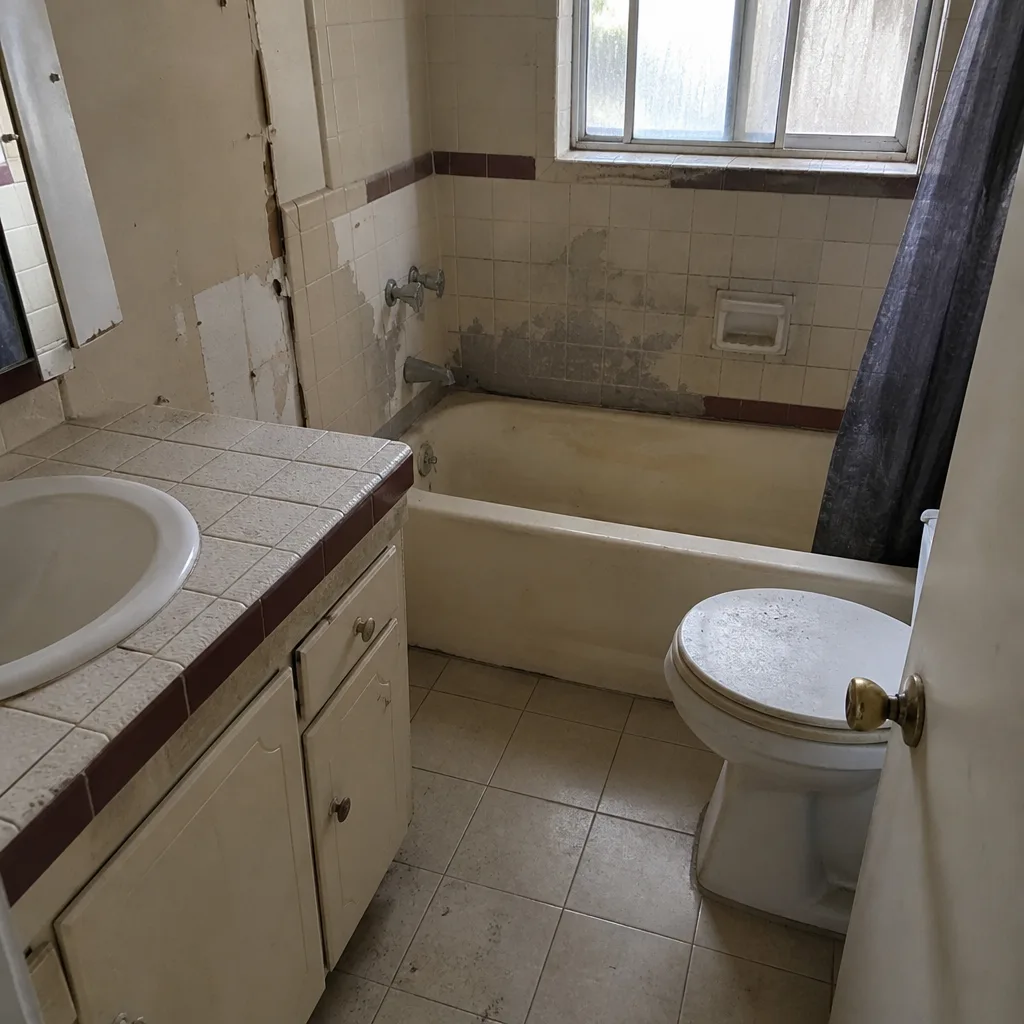 Before
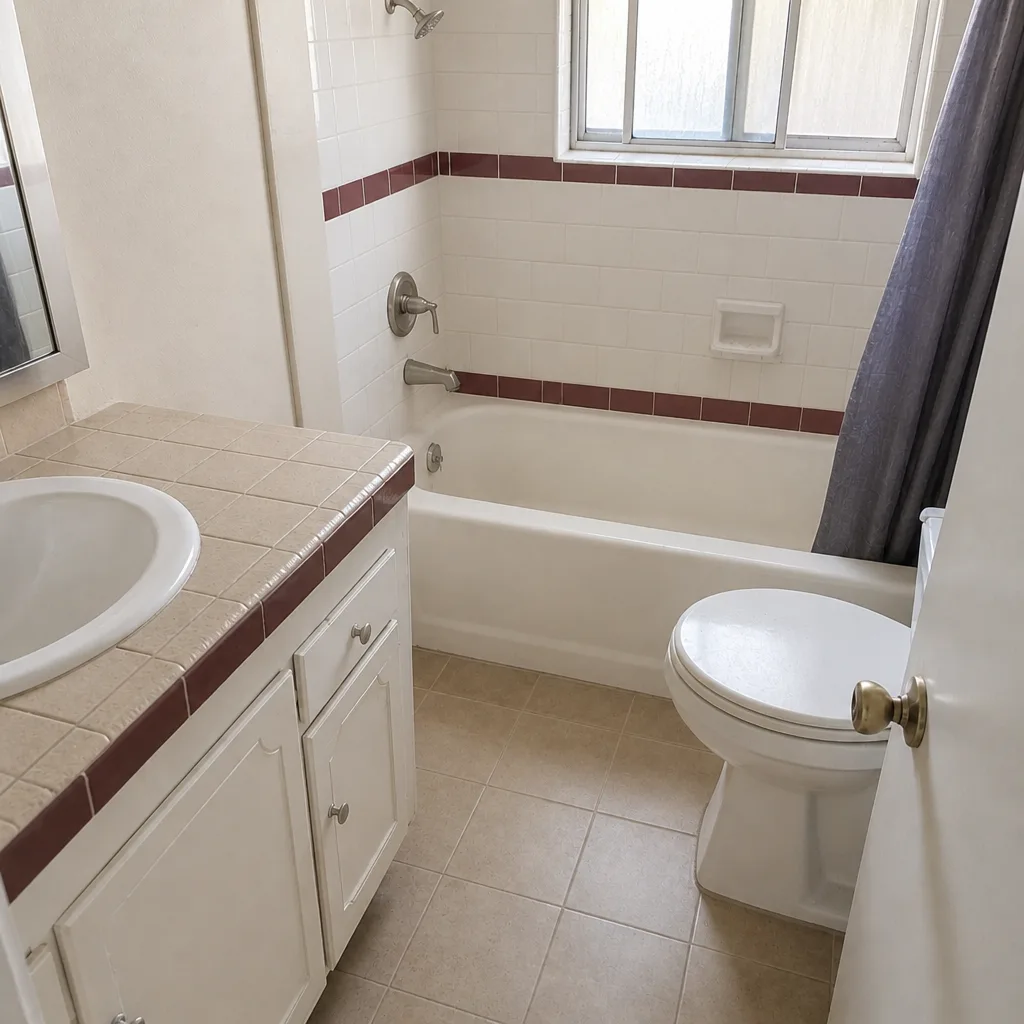 After
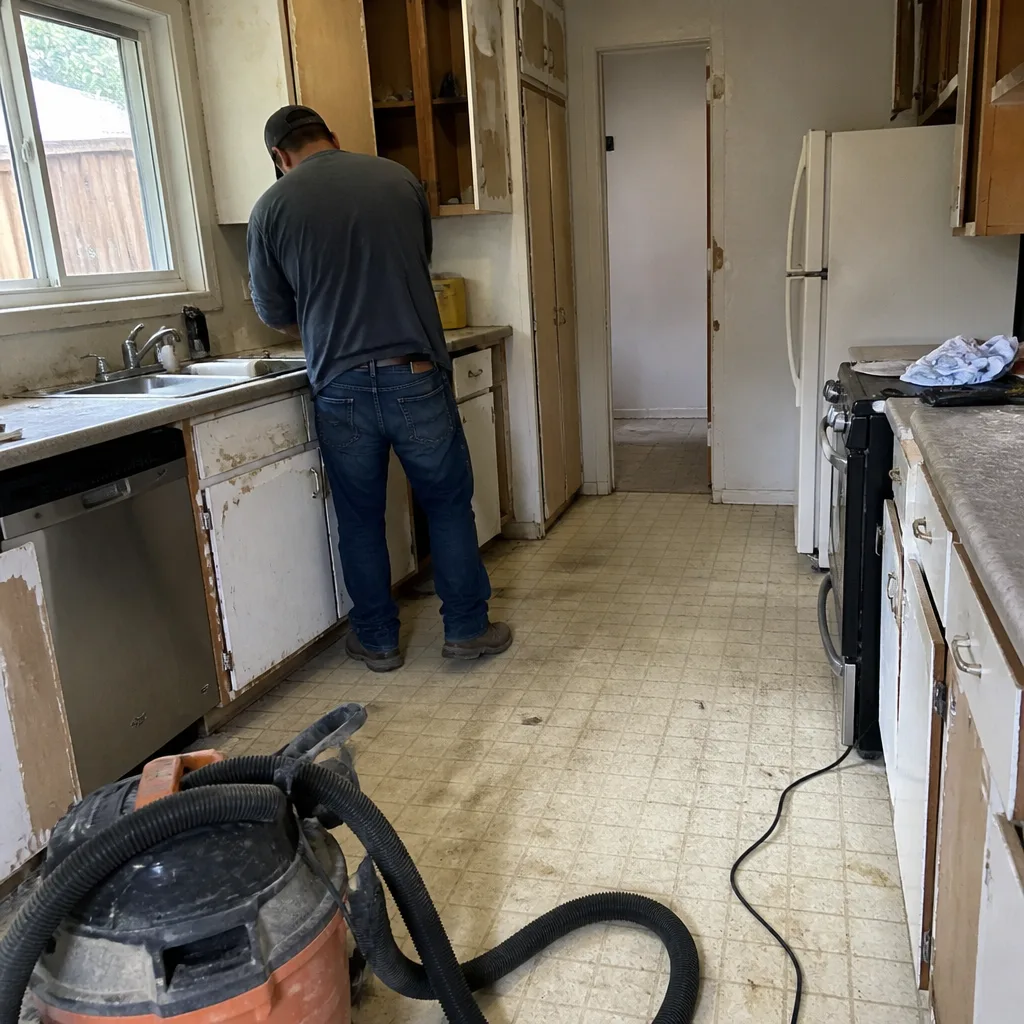 Before
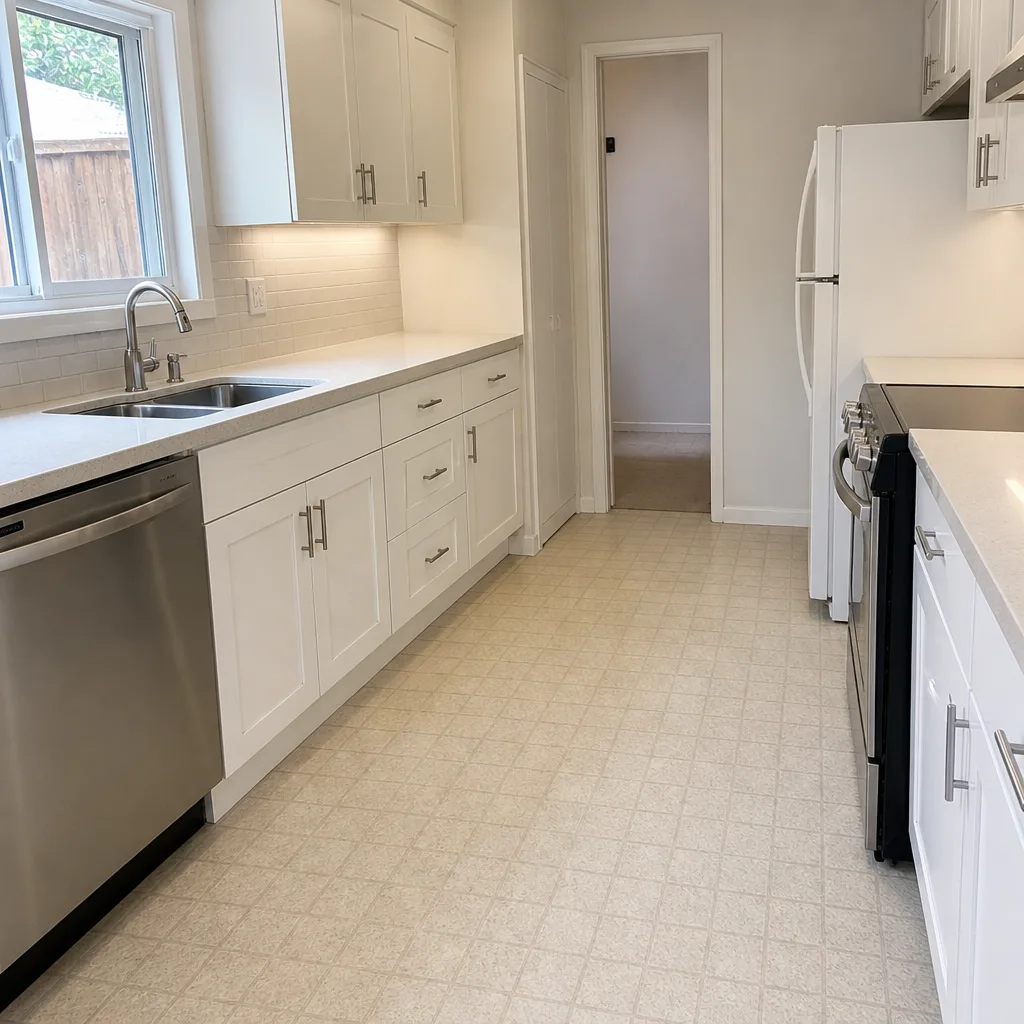 After
When to Call a Professional
Some of this work is genuinely hazardous, and we want to be plain about where the line sits. Let a trained professional handle anything involving structural modifications, electrical panel work, gas line runs to a new unit, or the grading on a sloped parcel. A mistake with a gas line or an undersized electrical service is a safety problem, not a scheduling problem, and the fix often costs far more than doing it right the first time. Get a professional involved when the scope involves removing a load-bearing wall, tying a new structure into an existing foundation, or adding anything electrical beyond a light swap. If you’re simply choosing finishes, you can safely handle that yourself.
Barrett & Sons Construction Santa Clarita offers free estimates on ADU and addition projects across Santa Clarita – call (833) 762-8116 to talk through your address and your goals. You can also bring in a written estimate you’ve already received and get a free second opinion on what it covers and what it doesn’t.
Frequently Asked Questions
Look up your parcel by APN through the LA County Assessor’s property search, then call the City of Santa Clarita planning counter with that APN to confirm. If the parcel isn’t in the city, call LA County Regional Planning and ask whether the parcel is unincorporated and which community standards district applies. Settle this before you hire anyone to design.
An ADU in Santa Clarita typically runs from about $85,000 for a junior ADU to $350,000 for a detached unit, all-in. Those ranges include design, permits, construction, and utility work, but not hillside grading or a full electrical panel upgrade. Call (833) 762-8116 for an exact quote on your lot – estimates are free.
Not outright. California law limits an HOA’s ability to block an ADU, but boards can regulate aesthetics – materials, colors, rooflines, and landscaping. Submit to the architectural review committee early and in parallel with your city or county submittal to avoid a stall.
Not without your written approval. Every scope, allowance, and price change we issue arrives as a written change order before the work happens – no surprise invoices at the end. On jobs that hidden conditions sometimes surface, we document the change and get sign-off before touching anything.
Not always. Many homeowners share service with the main house, but the water district serving your address may require a new water connection, and a separate electrical meter sometimes triggers a panel upgrade. Ask both the water agency and your electrician before the design is finalized.
Plan on four to eight months from design to final inspection, depending on jurisdiction review speed, utility connection lead times, and site conditions. A hillside parcel in Stevenson Ranch or a Canyon Country slope adds time for grading and survey. Call (833) 762-8116 for a realistic timeline on your specific address.
The Bottom Line
Your first decision on any Santa Clarita addition or ADU is jurisdictional, not architectural. Confirm whether the City of Santa Clarita or LA County governs your APN, then read your HOA guidelines, then hire a designer who knows both. Budget for utility connections from the start, plan for the possibility of grading if your lot slopes, and insist on written scope and written change orders before a nail moves. Every eligible job on this scope carries a permit and inspection, and the inspector is your ally, not your obstacle. Barrett & Sons Construction stands behind every completed Santa Clarita project with a 90-Day Done Right Promise. Call (833) 762-8116 to schedule your free estimate.
Written by the team at Barrett & Sons Construction Santa Clarita.