
Last updated November 16, 2026
 Windows & doors
 Kitchen remodeling
 Bathroom remodeling
 Home additions & ADU
 Roofing
 Driveway & pavers
 Fence
Free written scope consultation - allowances, timeline, and change-order rules on paper before a single trade is scheduled
The Complete Windows & Doors Guide for Santa Clarita Homeowners
A window rated for coastal California isn’t automatically right for Santa Clarita. Here in the valley, summer attic temperatures push past 150°F, and a single Santa Ana wind weekend can stress every seal, weatherstrip, and door sweep in the house at once. Most buying guides are written for a generic American homeowner in a generic climate. This one isn’t. Below you’ll find what actually matters here: Title 24 ratings in our climate zone, fire-rated assemblies in the wildland-urban interface, how frame materials behave in 110°F heat, and the permit rules through Santa Clarita’s Building & Safety that decide whether your replacement is legal and insurable. Read it once before you sign anything.
Quick Answer
For window and door replacement in Santa Clarita, you need products rated for Climate Zone 9 under Title 24 (roughly U-factor 0.40 or lower and SHGC 0.25 or lower on most replacements), frames that hold up in extreme dry heat, and – for homes in the wildland-urban interface – ember-resistant assemblies where your neighborhood requires them. Pull the permit through Santa Clarita’s Building & Safety before work starts; skipping it can cost you at resale and can void insurance on a wildfire claim.
Styles & brands we work with
- Kitchen remodeling
- Bathroom remodeling
- Home additions & ADU
- Roofing
- Windows & doors
- Driveway & pavers
- Fence
Table of Contents
- Title 24 in Santa Clarita: What Ratings Actually Apply (Climate Zone 9)
- Wildfire and the WUI: Ember-Resistant Doors and Windows
- Frame Materials in SCV Heat: Vinyl vs. Fiberglass vs. Composite
- Matching Windows to Santa Clarita’s Housing Stock
- Choosing Exterior Doors for Heat, Wind, and Security
- The Santa Clarita Permit and Inspection Process, Step by Step
- What Windows and Doors Cost in Santa Clarita
- Maintenance and Seal Failure: What to Watch Each Year
Title 24 in Santa Clarita: What Ratings Actually Apply (Climate Zone 9)
California’s Title 24 energy code applies the moment you pull a permit to replace windows or doors. Santa Clarita sits in Climate Zone 9 – a hot, dry inland zone – which means the code sets different targets than you’d see on the coast or in the mountains. “Energy Star qualified” alone is not the standard. The installer and the permit inspector are looking at two numbers printed on the NFRC label.
- U-factor measures how fast heat moves through the whole assembly. Lower is better. In Zone 9, most prescriptive replacements need a U-factor around 0.40 or lower. A decent double-pane window with a low-E coating and argon fill usually clears this.
- SHGC (Solar Heat Gain Coefficient) measures how much solar heat the glass lets in. In a hot inland zone like ours, you want this low – around 0.25 or lower – because our problem is cooling load, not heating.
- Air leakage and visible transmittance matter too, but they’re secondary to U-factor and SHGC in Zone 9 compliance.
There’s a wrinkle most people miss: replacements of a small number of like-for-like windows can sometimes fall under an exception, but a full-house window package almost always triggers the prescriptive or performance path. If somebody tells you “you don’t need ratings, you’re just replacing,” ask them to show you the code section. In our experience, the answer is usually that the ratings are required.
Keep the NFRC label. The inspector may want to see it, and it proves compliance if you sell the house. We install Andersen and Marvin lines specifically because their rated assemblies come with the paperwork to match – not mystery brands off a van. If you want the whole remodeling picture, our Barrett & Sons Construction Santa Clarita home page has the wider scope.
Wildfire and the WUI: Ember-Resistant Doors and Windows
Santa Clarita sits substantially within the Wildland-Urban Interface (WUI). That’s the awkward geography where housing meets open brush – the hillsides above Newhall, the canyons off Placerita and San Francisquito, the ridges above Saugus and Canyon Country. In WUI zones, the code changes what you’re allowed to install.
What ember-resistant actually means for openings: a window or door assembly that resists embers and radiant heat long enough for the fire front to pass. That generally means dual-pane glass with tempered or low-e laminated glazing, non-combustible or fire-treated frames, and tight weatherstripping that stops ember intrusion at gaps. A cheap builder-grade sliding door with a sketchy sweep is a hole in the wall when embers blow through.
Which Santa Clarita neighborhoods have mandatory requirements depends on the fire hazard severity zone your property falls into – not on the city as a whole. That’s a parcel-by-parcel determination, and it’s made by the fire authority, not by us. Here’s how to check:
- Look up your parcel’s Fire Hazard Severity Zone designation on the CalFire map.
- Check your Santa Clarita permit packet – WUI requirements are usually flagged there.
- Ask your installer to confirm assembly ratings in writing before ordering.
If you’re in a WUI zone and don’t know, this is one of the cases where we recommend calling the city’s Building & Safety counter before you buy a single door. It’s not worth guessing. A reportable assembly mistake here is a real problem when it’s time to sell.
Frame Materials in SCV Heat: Vinyl vs. Fiberglass vs. Composite
Here’s where the coastal guides fail our valley. Vinyl is the most common frame material in America and a perfectly good product in the right climate. But vinyl expands and contracts more than fiberglass or composite across a wide temperature swing, and Santa Clarita delivers those swings – 110°F in August afternoons, 35°F in January mornings. Over years, that movement works on the seals, sweeps, and weatherstrip, which is where drafts and water intrusion start.
- Vinyl: Lowest cost, low-maintenance, good in most applications. Watch the seal integrity over 10 to 15 years in full-sun exposures on the south and west facades.
- Fiberglass: More dimensionally stable in heat, holds paint and color well, and generally outperforms vinyl in our summer. Pricier.
- Composite/wood-clad: Premium option. Excellent stability and appearance. The best match for a custom or upscale remodel, and the right pick when the house is going to be appraised on finish quality.
A specific thing we see repeatedly: builder-grade vinyl on a south-facing wall in Canyon Country, after roughly 12 to 15 summers, with the weatherstrip literally gooey and the seal failed. That’s not a vinyl-is-bad story; it’s a vinyl-in-the-wrong-spot story. Fiberglass or composite on the hot walls, vinyl on the shaded sides, is a sensible compromise that saves money without cutting corners where it hurts.
We install brands we can look up and point you to by name – PGT is one we quote for thermal performance, and Atlas makes solid glazing units for this market. No off-brand hardware in a house that has to survive 20 more summers.
Matching Windows to Santa Clarita’s Housing Stock
Most of Santa Clarita’s housing was built between the early 1980s and the mid-2000s – big stretches of tract homes in Valencia, Saugus, Stevenson Ranch, and Canyon Country, with a mix of custom builds up in the hills and older single-story homes in Newhall. The style problem is real: the wrong window pick on a 1990s Mediterranean-style tract home looks like two houses stitched together.
What works in this market:
- Match the original mullion pattern and divided-lite layout. A 1989 home with a two-pane slider and a fixed transom usually wants the same silhouette.
- Match the original frame profile across the facade. If you replace the front windows and not the side windows, the mismatched corners show from the curb.
- Match the trim color to the house’s palette, not just the other windows. Warm cream for the Mediterranean builds, cooler white for the Spanish-revival and later tract homes.
- Don’t upgrade a single window to a full-grid premium and leave the rest. The whole facade has to read as one house.
A piece of practical advice we’ve given our whole lives: if you can afford it, plan the whole facade of the house in one phase, even if you install over two seasons. The visual consistency is worth more than the cost savings of splitting the job.
Choosing Exterior Doors for Heat, Wind, and Security
Exterior doors take more punishment in Santa Clarita than most people realize. Between the summer heat drying out wooden slabs and the Santa Ana wind pushing against every entry, an underbuilt door will start sticking, warping, and leaking within a few years. The three specs that matter most here:
- Insulated core. Steel or fiberglass doors with a solid foam or composite core hold their shape in the heat far better than a hollow or solid-wood slab. They also perform against Title 24.
- Proper weatherstripping and a tight sweep. This is the difference between an ember-resistant door and a hole in the wall. It’s also the first thing to fail.
- Reinforced lock block and a solid frame. Santa Clarita home break-ins are usually through the entry door and its hardware. A steel or fiberglass slab with a hardened strike plate is genuinely harder to kick in than a wood door.
Fire-rated exterior doors aren’t a decoration upgrade – they’re a WUI requirement in many parcels. If the door between your home and the garage is required to be fire-rated (and it usually is, when the garage shares a wall with a living space), that door needs a specific rating and a self-closing mechanism. Understand that before you order.
The Santa Clarita Permit and Inspection Process, Step by Step
Every eligible window or door replacement in Santa Clarita needs a permit through the city’s Building & Safety division. Replacement of like-for-like windows is covered under the residential prescriptive path, which means the job goes faster than a remodel – but it still needs a permit, an inspection, and a final sign-off. Here’s what actually happens:
- Confirm the scope. Like-for-like replacement, or a change to the rough opening (which is a bigger deal, structurally)?
- Gather the NFRC ratings and product data sheets. These have to match your climate zone.
- Submit a permit application to Santa Clarita Building & Safety, with plans and product specifications.
- Pull the permit before any product is ordered. If the permit comes back with a required adjustment, you don’t want to have already paid for the wrong windows.
- Install, then schedule the inspection. The inspector wants to see the installed assembly, weatherstripping, flashing, and label compliance.
- Get the signed-off final inspection. Keep that paperwork with your home records.
Skipping the permit is a real problem: it can void insurance on wildfire damage, complicate resale, and sometimes trigger a stop-work order with a fine. The permit inspector works for you, not for us – that’s why we like him. Every eligible job we run gets the permit pulled and the inspection signed. If you skipped the permit on a prior job, we can help you sort out the correction. That’s the kind of thing our Home Additions & ADU in Santa Clarita team handles alongside general building work.
What Windows and Doors Cost in Santa Clarita
These are real market ranges we see on quotes in Santa Clarita, not national averages. Your actual cost depends on size, ratings, frame material, wall condition, and access. Prices exclude finish carpentry, which usually runs higher if your stucco or interior trim is damaged.
- Standard vinyl double-hung window, installed: roughly $650 to $1,100 each.
- Fiberglass or composite window, installed: roughly $900 to $1,500 each.
- Wood-clad premium window (Andersen or Marvin), installed: roughly $1,200 to $2,200 each.
- Sliding glass patio door, standard: roughly $1,800 to $3,200 installed.
- Sliding glass patio door, WUI-rated assembly: roughly $2,600 to $4,500 installed.
- Exterior entry door, steel or fiberglass with insulated core: roughly $1,200 to $2,800 installed.
- Garage-to-house fire-rated door: roughly $700 to $1,500 installed.
- Premium-brand upgrade (e.g., PGT thermal units): add roughly 15 to 25 percent over a standard quote.
Triple the numbers if you’re replacing the whole facade on a two-story home, plus the cost of any scaffolding or stucco repair. The scope and the allowances need to be in writing before a single window is ordered. An allowance that isn’t on paper is a surprise waiting for a date. Our written change order policy applies to every job: if scope changes, you hear it from us in writing before it happens.
Maintenance and Seal Failure: What to Watch Each Year
Windows and doors don’t fail all at once. They fail in small, expensive stages – a fogged pane, a sticky slider, a draft in January. Here’s what to check annually as a Santa Clarita homeowner, in your own time, no ladder needed:
- Fog or condensation between the panes. That’s seal failure; the glazing unit needs replacement. It’s not a cheap fix if you wait – the whole assembly may go.
- Drafts at the weatherstrip. Run a hand around every door in January. If you feel air, the weatherstrip is going. Replacing the strip is cheap; replacing the door because the frame rotted isn’t.
- Sticking doors and sliders. In high heat, this can be normal expansion. In cooler weather, sticking usually means the frame or threshold has shifted.
- Water stains inside the wall near a window. That’s a flashing failure at installation. Get it inspected immediately – it damages the drywall and framing fast.
- Ember gaps around doors in WUI zones. Any gap bigger than an eighth of an inch at the sweep should be sealed.
A yearly walk-through of every window and door in September, before Santa Ana season, is the single most useful thing you can do for the assemblies in your house. It’s also the best time to call somebody to look at minor issues before they become replacements.
Common Mistakes to Avoid
- Trusting an “Energy Star certified” label alone. The label doesn’t tell you whether the assembly clears Climate Zone 9’s U-factor and SHGC. Look at the NFRC sticker.
- Skipping the permit to save money or time. It catches up at resale and possibly on a wildfire insurance claim. The permit inspector exists to protect you.
- Putting builder-grade vinyl on the south and west walls. It’s a real problem after a decade of Santa Clarita heat on a hot facade.
- Replacing one window at a time across years. Mismatched frames show from the curb, and the total cost is higher in the end.
- Buying a WUI-zone home and installing a non-rated door. Order the ember-rated assembly; the price gap is smaller than you think.
- Skipping the manufacturer paperwork and NFRC label. Keep every label and data sheet in your home records – the inspector may want it and your future buyer definitely will.
- Believing a verbal quote for a window job. Any scope change or upgrade has to be in writing. Get a written line-item bid with the ratings spelled out, and only then compare prices.
See the difference
 Before
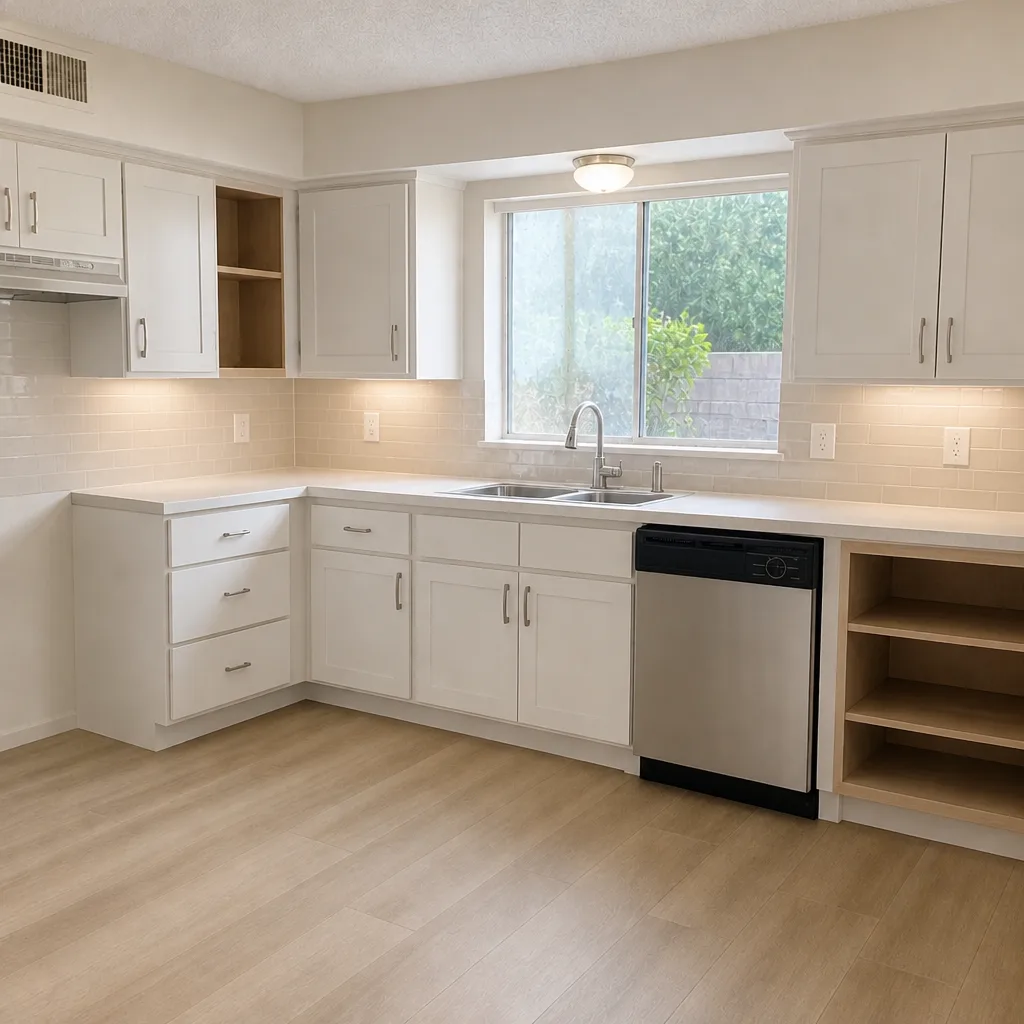 After
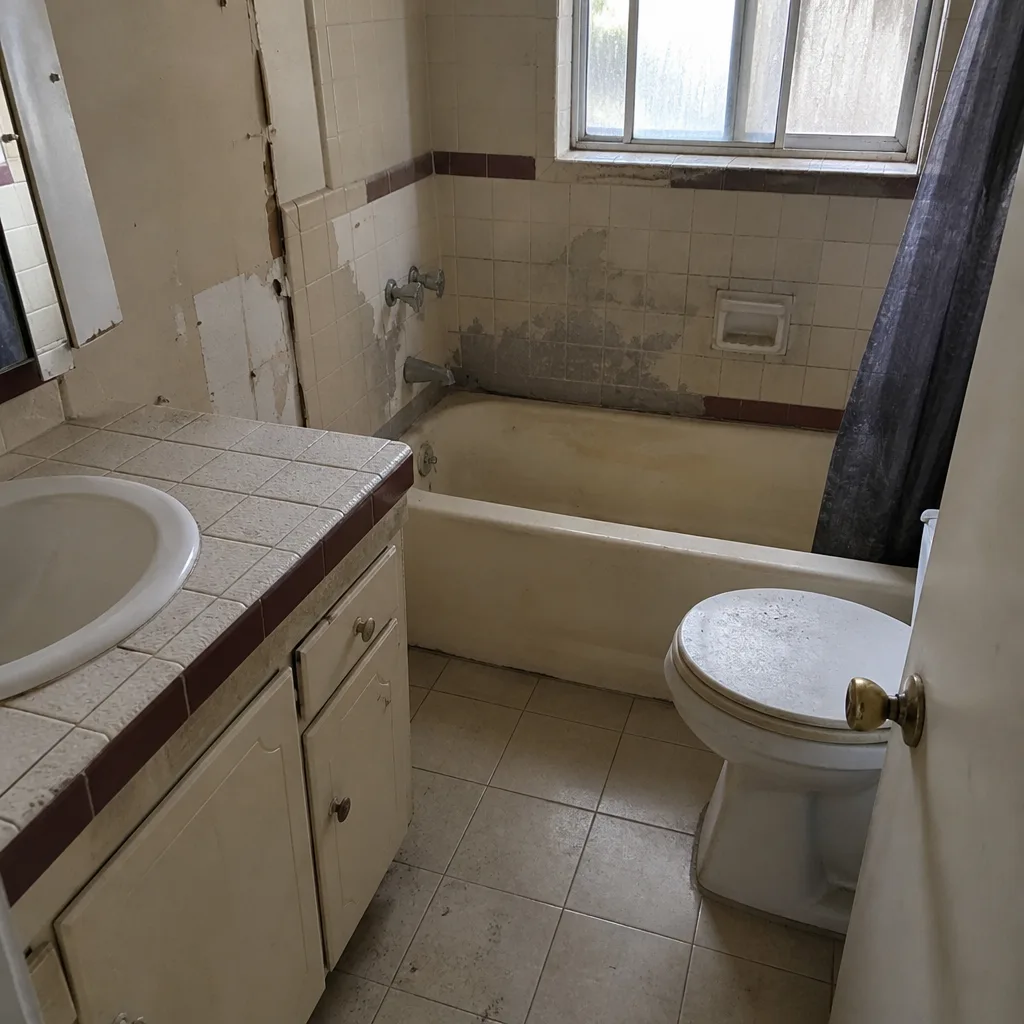 Before
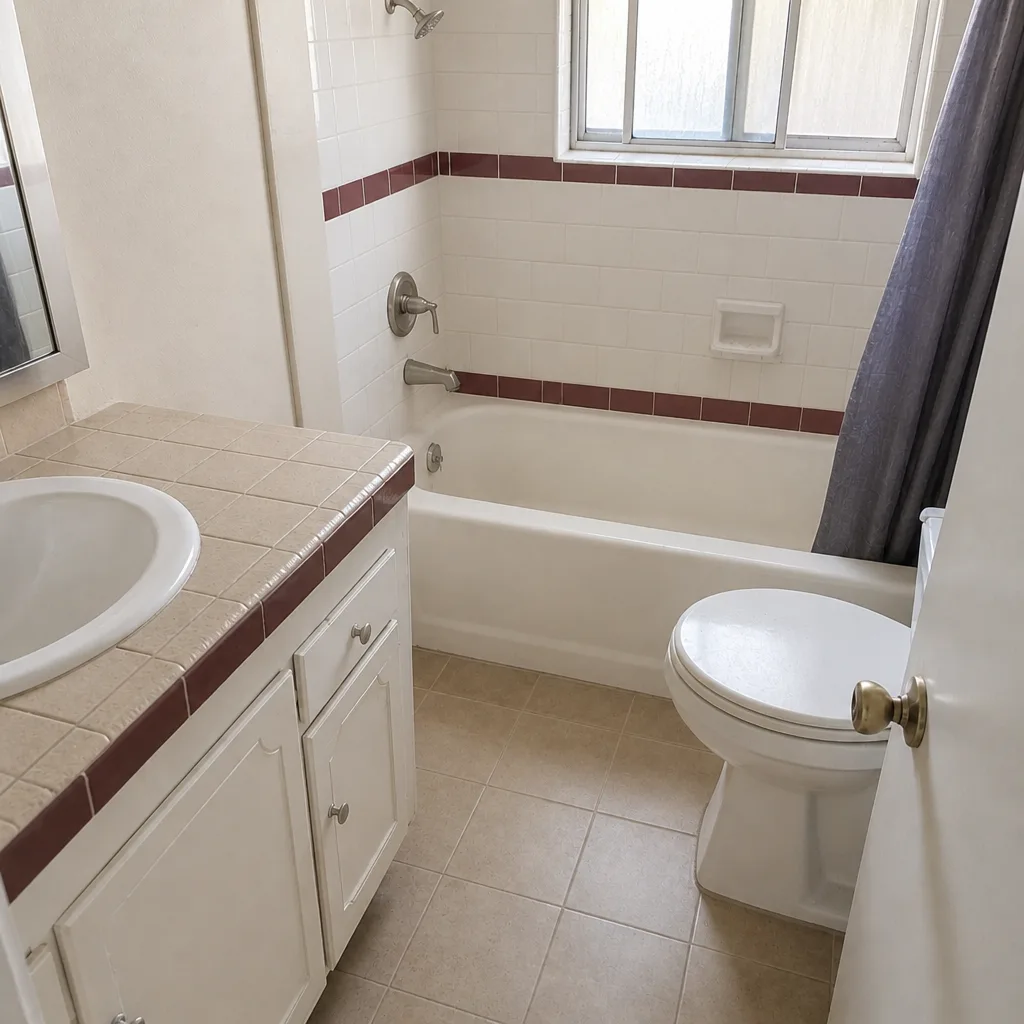 After
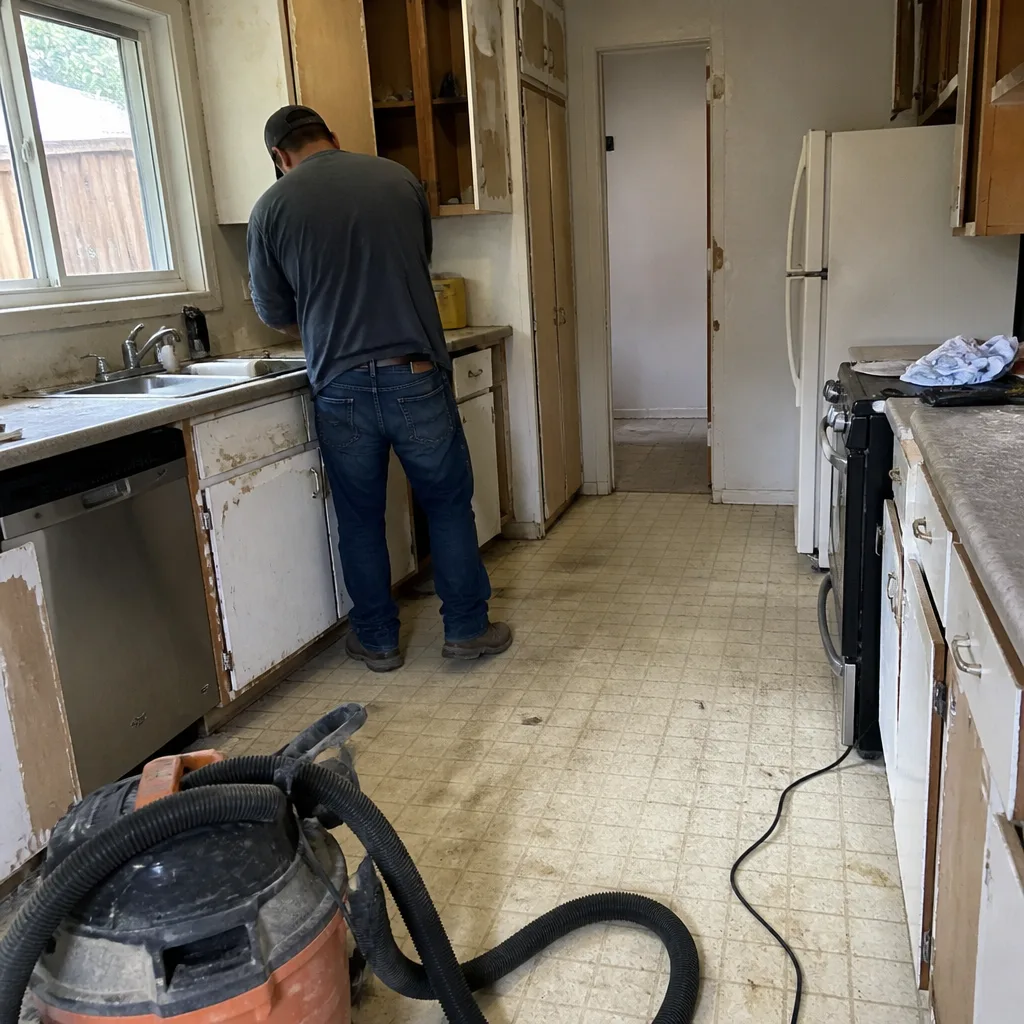 Before
 After
When to Call a Professional
Bring in a trained installer if you’re replacing the whole facade, if you’re in a WUI zone and don’t know your parcel’s requirements, if any window has failed its seal (visible fog between panes), or if a door has started sticking in cool weather – that’s a sign the frame or threshold has moved. Also call if your home is older and may have original single-pane windows you’d want upgraded along the same permit. Windows and exterior doors are structurally part of the envelope, and a bad install damages the frame, not just the glass. Our technicians have up to 28 years of experience, we pull the permit on every eligible job, and every price change arrives in writing before it happens. Barrett & Sons Construction Santa Clarita offers free estimates in Santa Clarita – call (833) 762-8116.
Frequently Asked Questions
Yes. Window and exterior door replacements in Santa Clarita require a permit from the city’s Building & Safety division because they’re part of the building envelope and covered under Title 24. Like-for-like replacement usually moves through the prescriptive path fairly quickly, but the inspection and final sign-off are still required. Skipping the permit can void wildfire insurance coverage and complicate resale. Call (833) 762-8116 if you’d like help sorting out an existing permit issue or a fresh replacement.
For Climate Zone 9 replacements in Santa Clarita, look for U-factor of roughly 0.40 or lower and SHGC of roughly 0.25 or lower on the assembly. Those are the numbers on the NFRC sticker the inspector reads. A double-pane window with a low-E coating and argon fill usually clears them. “Energy Star qualified” is a good baseline but not the standard – check the actual sticker. Call (833) 762-8116 if you want us to look at a quote you’ve already been given.
Not bad – it depends on the wall. Vinyl expands more than fiberglass or composite across wide temperature swings, and Santa Clarita delivers those swings annually, so a full-sun south or west wall will stress the seals more. On shaded walls, vinyl does fine. On hot walls, fiberglass or composite is a better pick for long-term seal integrity. Call (833) 762-8116 for a specs conversation before you order.
That’s a parcel-level question, not a city-wide one. The Fire Hazard Severity Zone designation for your property determines whether WUI-rated windows and doors are required. The hillsides above Newhall, the canyons near Placerita and San Francisquito, and the ridges above Saugus and Canyon Country are the areas where we see it most often, but check your own parcel. Call (833) 762-8116 – we can help you read your permit packet before any product is ordered.
Not without a written change order signed before the scope change happens. We quote line items and allowances in writing – what a change order adds is documented up front, never invoiced at the end. That’s the whole point of getting a line-item bid with the brand names and ratings spelled out. Call (833) 762-8116 to schedule a free estimate in Santa Clarita.
A single-window like-for-like replacement is usually a half-day. A full-house window and exterior door package on a two-story Santa Clarita home is typically 2 to 4 weeks from product delivery to final inspection, depending on whether any interior or exterior finish work is added. The permit approval step in front of it adds calendar time on the front end – which is why pulling the permit before ordering the product matters. Call (833) 762-8116 for a schedule estimate on your specific job.
The Bottom Line
Windows and doors in Santa Clarita are a climate problem first and a design problem second. Get the Title 24 Zone 9 ratings right, understand your WUI obligations before you order, pick a frame that holds up to 110°F summers, match your home’s original architecture, and pull the permit through Santa Clarita’s Building & Safety. Do those five things and the assemblies will hold through twenty more summers. Skip any of them and the fix later is more expensive. Get a written line-item quote with the ratings and brand names spelled out – and get a second opinion if the numbers don’t add up. If you’re going broader on the house, our Driveway & Pavers in Santa Clarita and Fence Installation in Santa Clarita teams handle the exterior envelope too.
Contact
Ready to talk through your window or door project in Santa Clarita? We answer the phone, we quote in writing, and we pull the permit. Call (833) 762-8116 for a free estimate, and we’ll come out, measure, and hand you a written line-item quote – no phone quote that changes at the door. Our published standing offers include a free second opinion on any written estimate, no trip charge inside the county, and a permanent 10% Senior and Veteran discount.
Written by the team at Barrett & Sons Construction Santa Clarita.