
Last updated November 16, 2026
 Bathroom remodeling
 Kitchen remodeling
 Home additions & ADU
 Roofing
 Windows & doors
 Driveway & pavers
 Fence
Free written scope consultation - allowances, timeline, and change-order rules on paper before a single trade is scheduled
Bathroom Remodeling Maintenance Schedule: What to Do and When
Grout sealer costs about $12 and takes 20 minutes once a year. Replacing tile because water got behind it costs $1,500 and counting. The gap between those two numbers is just a missed reminder. Most homeowners treat a new bathroom like a finished product – it’s really a machine with moving water, moving air, and joints that flex every time the season changes. Santa Clarita’s hard water and dry summers stress that machine harder than most places in LA County. What follows is the full post-remodel rhythm we hand our customers at punch-out: what to check at 90 days, what to do each season, and how to log it all so a warranty claim never turns into an argument.
Quick Answer
Maintain a remodeled bathroom on a seasonal rhythm: check caulk, grout, and fixture torque at 90 days after completion, then seal grout and clear aerators and showerheads once a year, inspect caulk joints and the exhaust fan every six months, and keep a written maintenance log of every task and date. In Santa Clarita, the hard water and large swing between summer humidity and winter furnace-dry air mean the annual tasks matter more than they do on the coast.
Styles & brands we work with
- Kitchen remodeling
- Bathroom remodeling
- Home additions & ADU
- Roofing
- Windows & doors
- Driveway & pavers
- Fence
Table of Contents
- The 90-Day Post-Remodel Checklist
- Why Santa Clarita Hard Water Changes the Schedule
- Seasonal Maintenance: Winter vs. Summer
- Settling Cracks vs. Waterproofing Failures
- Your Annual Maintenance Log Template
- Grout, Caulk, and Fixture Care
- Exhaust Fan and Vent Care
- When to Call a Professional
The 90-Day Post-Remodel Checklist
Punch-out day isn’t the finish line. Building materials settle, caulk cures, and fixtures seat themselves over the first three months. What looks perfect the day the crew leaves the job site can develop small gaps by day 90. In our experience, the callbacks we used to make on that first three-month window dropped sharply when we started handing customers a simple checklist. Here’s what to walk through in month three:
- Caulk cure verification. Press a thumb into every caulk bead around the tub, shower pan, and backsplash. Fully cured caulk should feel firm and slightly tacky at the surface – not gummy or soft. If it stays soft, the joint wasn’t dry enough when it was applied, and it needs to be cut out and redone.
- Grout sealing window. New grout needs 3-7 days to fully cure before sealing. If your contractor sealed it, verify the surface beads water instead of absorbing it. If not, seal it at the 90-day mark to be sure the cure is complete.
- Fixture torque checks. Gently test the shutoff valves under the sink, the toilet supply line, and the shower handle. A quarter turn of hand-tight is normal. Anything that wiggles needs attention before it becomes a water leak under the cabinet.
- Door and drawer alignment. Cabinet hinges on vanities loosen over the first weeks as doors are used. Tighten the adjustment screws and re-check the gap.
- Drain flow test. Fill the sink and tub, then drain. Slow draining at 90 days often points to debris that got trapped during construction, not a plumbing problem – but it’s the signal you want early.
- Tile tap test. Tap a coin over the floor and wall tile. A hollow-sounding tile may have a bond failure that needs to be addressed before the warranty window closes.
Do this at 90 days and you’ll catch the small issues while they’re still small. Skip it and the first you hear about a soft caulk joint is a damp smell coming from a cabinet.
Why Santa Clarita Hard Water Changes the Schedule
Santa Clarita’s water runs hard. Parts of the valley see mineral content among the highest in LA County, and that changes the maintenance math. On the coast, a showerhead might go two years before it starts spraying sideways. Here, six to nine months is common. Faucet aerators clog faster. Glass shower doors develop mineral haze sooner than homeowners expect.
What to do about it:
- Soak aerators every 90 days. Unscrew the faucet aerator, drop it in a cup of white vinegar for 20-30 minutes, rinse, and reinstall. This is a five-minute job that keeps flow steady and prevents the pressure buildup that wears out cartridges.
- Descale showerheads every six months. Most modern showerheads detach by hand. A vinegar soak removes the mineral crust that turns a wide spray into a sputtering trickle.
- Wipe glass after every shower. A squeegee takes 15 seconds. It removes the water that deposits minerals, and that single habit can add years to glass clarity.
- Consider a water softener if you don’t have one. This is the single biggest long-term change for a Santa Clarita bathroom. It cuts scaling on every fixture, tile, and showerhead at once.
If you’re still planning the bathroom rather than maintaining it, the materials matter as much as the schedule. Porcelain tile with tight grout lines handles hard water better than natural stone, and a quality faucet cartridge holds up longer to mineral wear than the budget brands. Our Barrett & Sons Construction Santa Clarita home page walks through how we spec materials for the Santa Clarita water conditions, and it’s worth reading before you sign a bid.
Seasonal Maintenance: Winter vs. Summer
Santa Clarita has a split personality – dry and hot with low humidity in summer, then cold mornings and dry furnace air in winter. That range stresses a bathroom in two different ways, and the maintenance tasks shift accordingly.
Winter: heating effects on caulk joints
Furnace air drops indoor humidity in a Santa Clarita home from around 40% to as low as 15-20%. Caulk joints shrink. Grout lines open slightly. If you notice a small gap at the tub surround in January that disappears by March, that’s not a defect – it’s the dry air pulling the joint. Keep an eye on it, and if the gap stays open, re-caulk with a silicone sealant rated for kitchen and bath. A cheap humidifier in a dry home can reduce the seasonal swing and take pressure off every caulk line.
Summer: humidity effects on exhaust fan motors
Summer here is dry on the surface, but bathroom fans see the opposite problem – long hot showers push moist air through a fan that’s running all summer, and condensation collects in the housing and the duct run. Every June and July, listen to the fan. A rattle, a slow startup, or a fan that no longer clears steam from a mirror within about five minutes means moisture isn’t leaving the room and mold is next. Clean the fan grille every six months and check that the exterior flap on the roof or wall vent opens freely.
The seasonal maintenance rhythm at a glance
- Spring: Inspect caulk joints, clear the exhaust vent flap, deep clean grout and reseal if it’s been a year.
- Summer: Check exhaust fan performance, wipe glass daily, descale showerheads in June and July.
- Fall: Reverse the winter prep – test caulk joints under furnace air, check for settling at corners, clean aerators.
- Winter: Watch caulk and grout for gaps, keep indoor humidity moderate, check that supply lines aren’t freezing in an exterior wall if your vanity is on one.
Settling Cracks vs. Waterproofing Failures
Every bathroom will show a hairline crack somewhere by year two. The trick is knowing which cracks are normal and which ones mean water is getting behind the wall. Here’s the distinction we use on site:
- Normal settling cracks are thin, straight, run along a grout line or caulk bead, and don’t darken. They usually appear at inside corners or where two different materials meet – tile to drywall, tub to floor. Clean them out and re-caulk or re-grout. Problem solved.
- Waterproofing failures tend to be jagged, branch inward from a corner or the shower pan edge, and darken over time. If a crack looks wet or has a darker line beside it, water is getting behind the tile. Stop using the shower until it’s assessed – continuing to use it can make a $200 re-grout into a $2,000 repair.
- Loose tile is the other warning sign. A tile that moves when you press it, or sounds hollow when tapped, has lost its bond. That’s usually a sign that moisture is saturating the substrate underneath.
- Soft or stained drywall below the bathroom, on the ceiling underneath, or in the garage is the clearest signal that something behind the wall is leaking. Address that immediately.
If you’re not sure which kind you’re looking at, take photos every month and compare. Settling cracks stay put. Water damage grows.
Your Annual Maintenance Log Template
A simple written log is the least glamorous maintenance tool you’ll ever use, and the most valuable one when a warranty claim comes up. If you can show a contractor – or a national warranty company – a dated record of regular maintenance, the conversation goes very differently. Here’s the log template we recommend, on a single sheet taped inside the vanity or kept in a folder:
- Date of each task (month/day)
- Task performed – caulk inspection, grout seal, aerator clean, fan check, etc.
- What you found – condition notes, cracks, changes
- Action taken – re-caulked, sealed, called for service
- Who performed it – homeowner, contractor, plumber
- Cost – so you can see what a managed bathroom costs over ten years
- Photos – a dated photo of any crack or issue that concerned you
Two things make this log worth keeping. First, most manufacturer warranties on tile, grout, shower valves, and exhaust fans are voided if regular maintenance isn’t documented. Second, a maintenance log is proof that you took reasonable care – which matters if a contractor, insurer, or buyer ever asks. A one-page template on the inside of the vanity door costs nothing and answers the question before it’s asked.
Grout, Caulk, and Fixture Care
The five most common bathroom maintenance tasks sit in this section because they’re the ones that prevent the expensive callbacks. Here’s a quick reference:
- Grout cleaning: Monthly. Use a pH-neutral cleaner – not vinegar on cement-based grout, which is mildly acidic and slowly eats the grout surface. A soft brush and warm water on an ongoing basis is the entire job.
- Grout sealing: Annually on walls and shower floors, more often in a high-use shower. A penetrating sealer (not a topcoat) beads water so it never soaks in.
- Caulk inspection: Every six months at the tub, shower pan, and backsplash. Replace any caulk that’s cracked, mildewed, or lifting at the edge.
- Faucet cartridge care: Whenever the handle feels stiff or the flow drops. Mineral buildup in Santa Clarita’s water wears cartridges faster than in most of the state – a $15 cartridge swap beats a $250 valve rebuild any day.
- Toilet seal check: Once a year, look at the base of the toilet for any sign of moisture. A failing wax ring is cheap to fix and expensive to ignore.
If you’ve been thinking about the next project around the house while you’re on top of this bathroom, our team also handles the Driveway & Pavers in Santa Clarita work, and the Fence Installation in Santa Clarita projects you see going up on the same properties. Belgard and Bufftech products go up on those jobs and hold up the same way your bathroom will once you have a rhythm around it.
Exhaust Fan and Vent Care
The exhaust fan is the single most ignored piece of a bathroom remodel. It runs every time you shower, and if it stops pulling air properly, moisture stays in the room, mold starts behind the tile, and the paint on the ceiling peels. Here’s how to keep it working:
- Vacuum the grille every six months. Lint and dust clog the grille and reduce airflow more than most people realize.
- Test the airflow with a tissue. Hold a piece of tissue against the grille while the fan is running. It should hold flat. If it droops, the fan is weak or the duct is blocked.
- Check the exterior vent flap. A stuck or blocked roof/wall flap won’t vent moist air properly. This is one of the most common reasons a “new” fan seems to stop working.
- Listen for rattle or slow startup. Bearings wear out. A fan that’s louder than it was a year ago is telling you it’s time for replacement. Most bathroom fans last 8-12 years.
- Run the fan 15-20 minutes after a shower, not just during. This is the biggest single hygiene habit for a bathroom – it lets the room dry out fully.
If you’re adding a bathroom or moving fixtures in a Santa Clarita remodel, the fan sizing and duct run need to be specced for the room. Our Home Additions & ADU in Santa Clarita team handles that ventilation design as part of larger projects, so the fan and duct aren’t an afterthought tacked on at the end.
Common Mistakes to Avoid
- Sealing grout too soon. New grout needs 3-7 days to fully cure before sealing. Seal it on day two and you trap moisture under the sealer, and it will peel away in months.
- Using vinegar on cement-based grout. It’s fine on a showerhead, terrible on grout. The acid slowly dissolves the surface and shortens the life of every joint.
- Ignoring Santa Clarita’s hard water. Coastal homeowners can go a year without touching an aerator. Here, quarterly is the right rhythm. Skipping it wears out cartridges and shows up as a leak far from the source.
- Re-caulking over old caulk. The new bead sticks to the old one for about a month, then fails. Cut the old bead out entirely, clean, dry, and start fresh.
- Skipping the exhaust fan. A bathroom fan is cheap to clean and expensive to replace – and a failed fan often takes paint and drywall with it.
- Not writing down what you did. A whole-bathroom warranty will not survive a claim without a dated maintenance log. Even a napkin with scribbled dates helps. A proper log helps more.
- Treating a wet crack as settling. If a crack darkens or grows, stop using the shower and get eyes on it. Ignoring a waterproofing failure over six months turns a $200 repair into a full bath surround rebuild.
See the difference
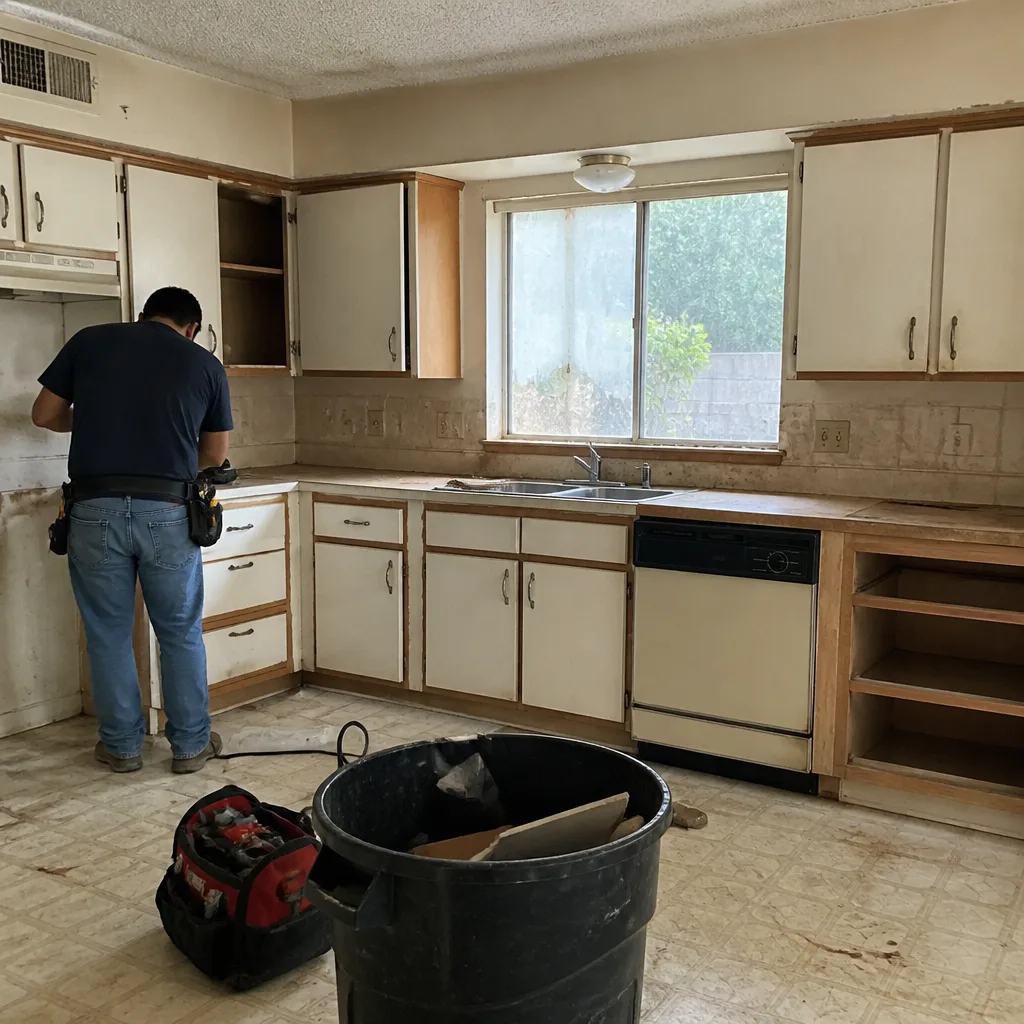 Before
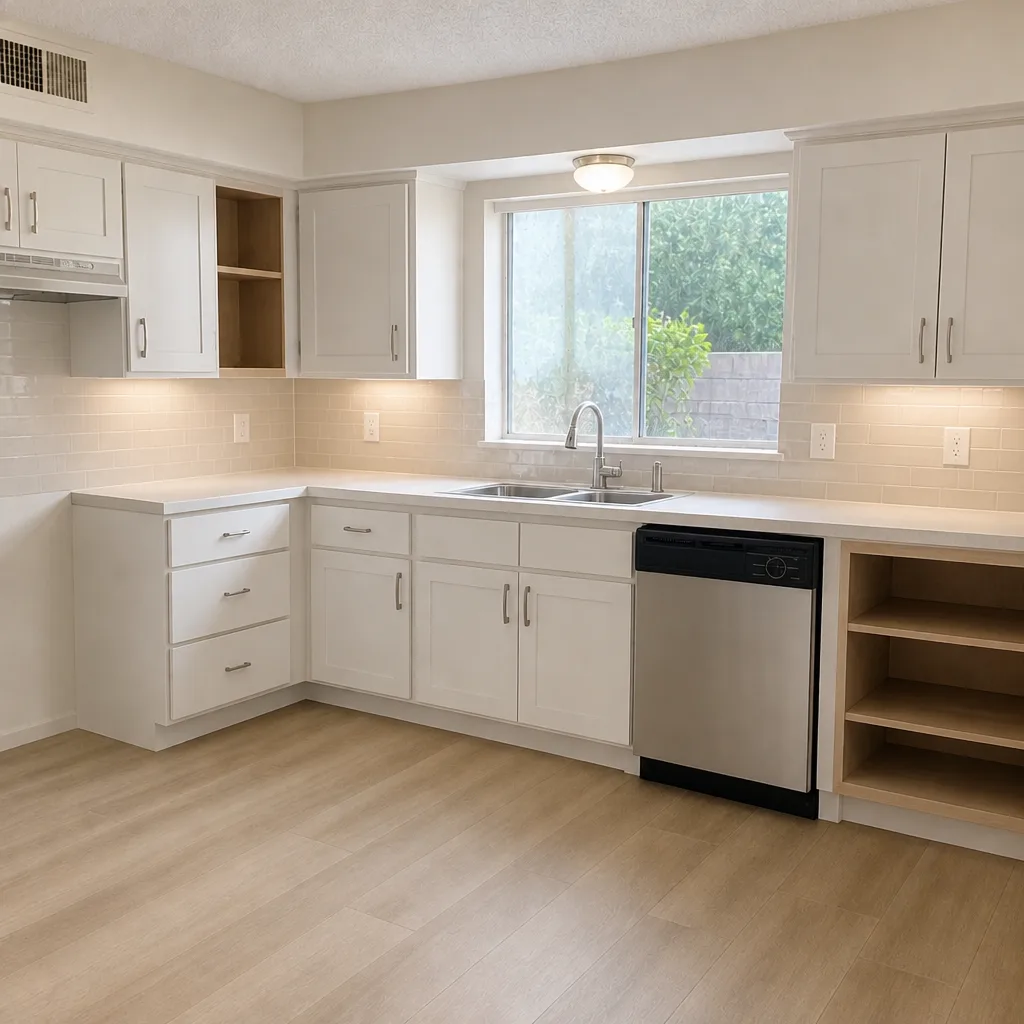 After
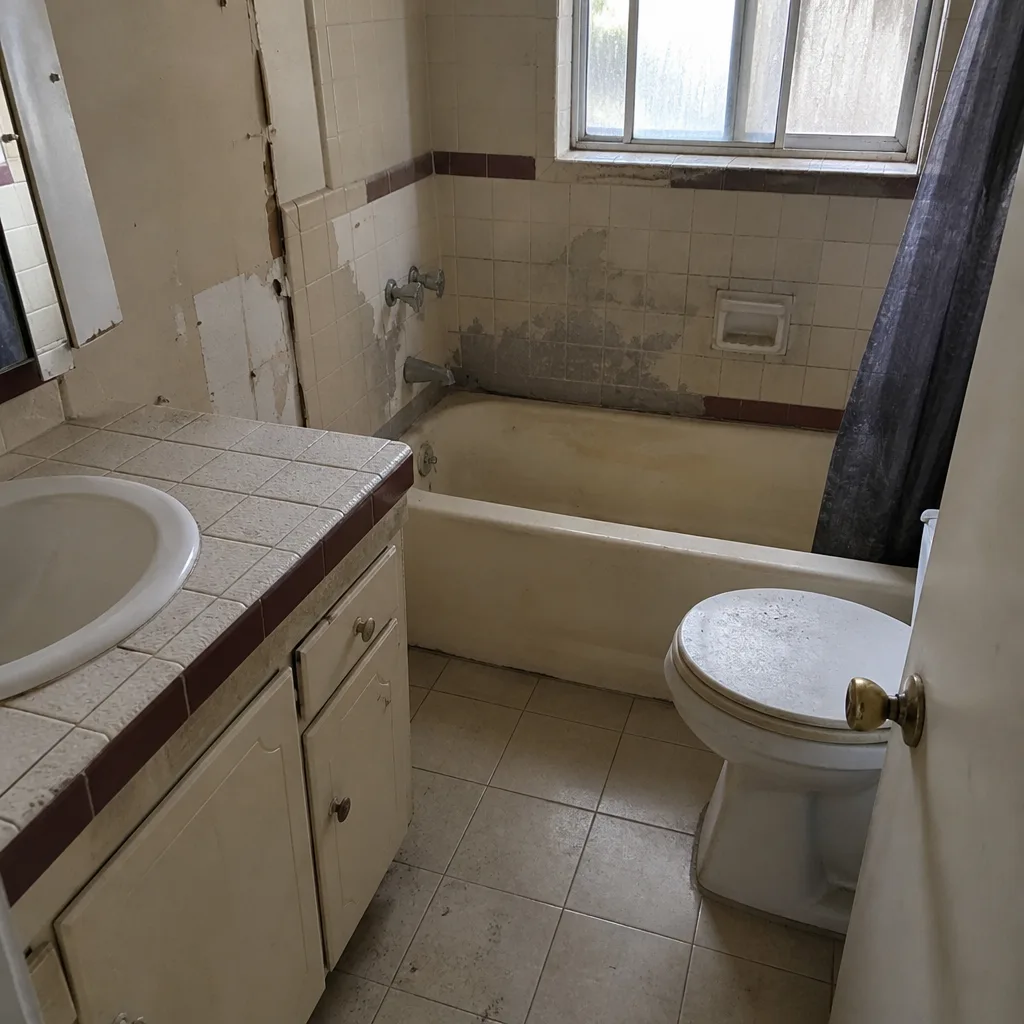 Before
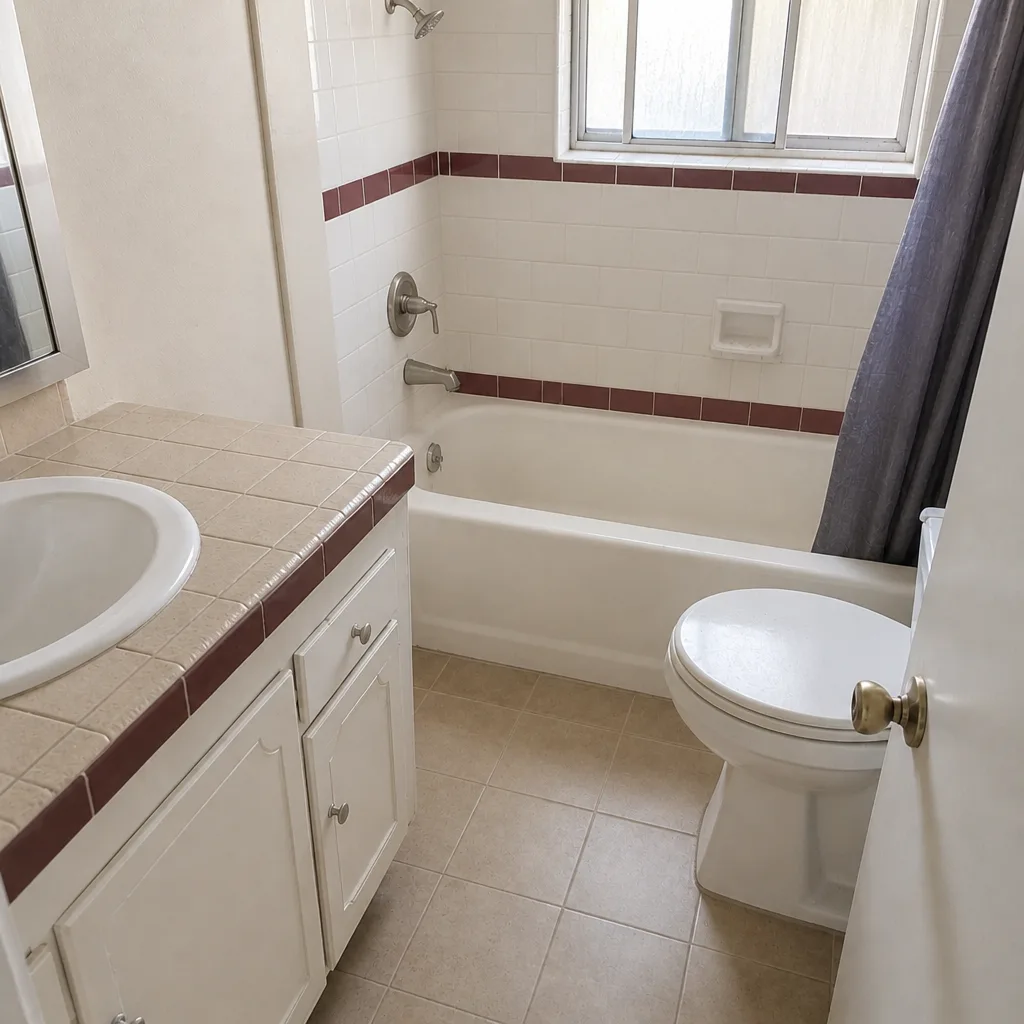 After
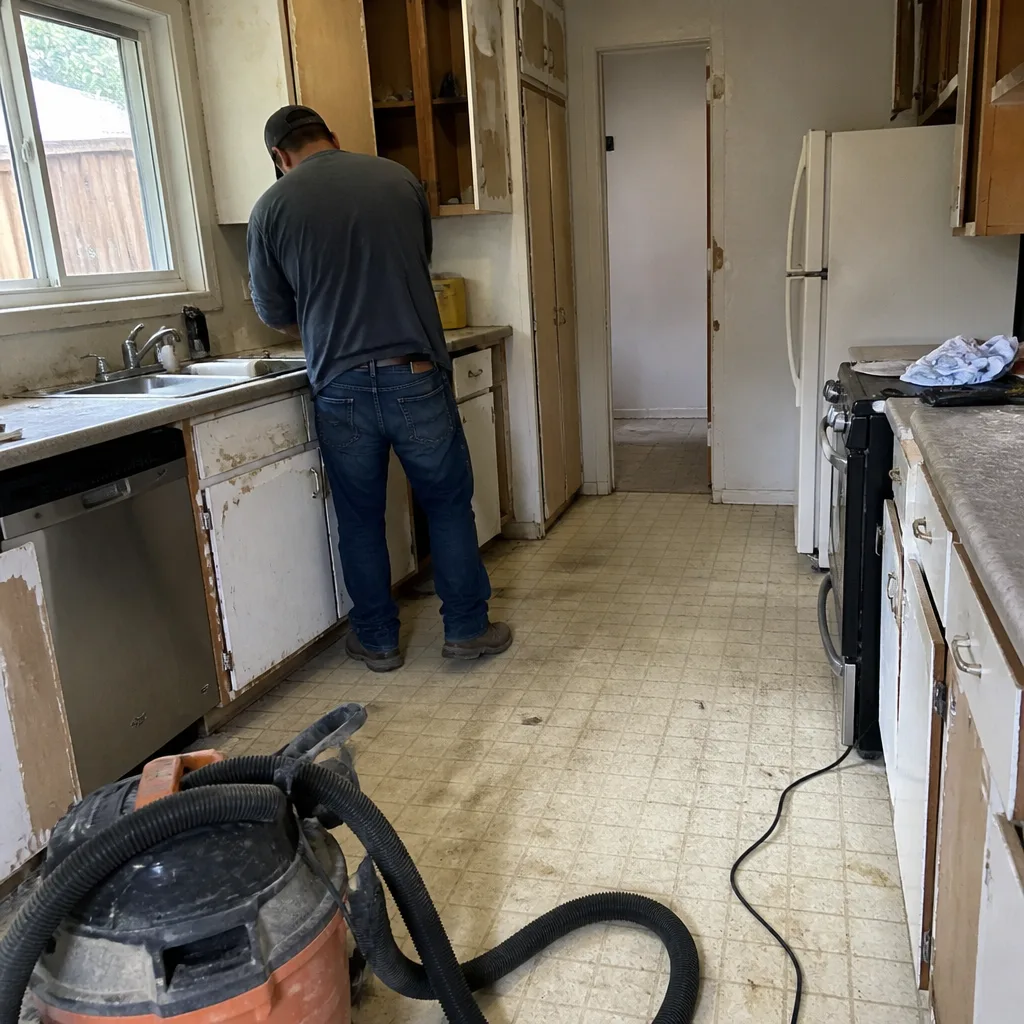 Before
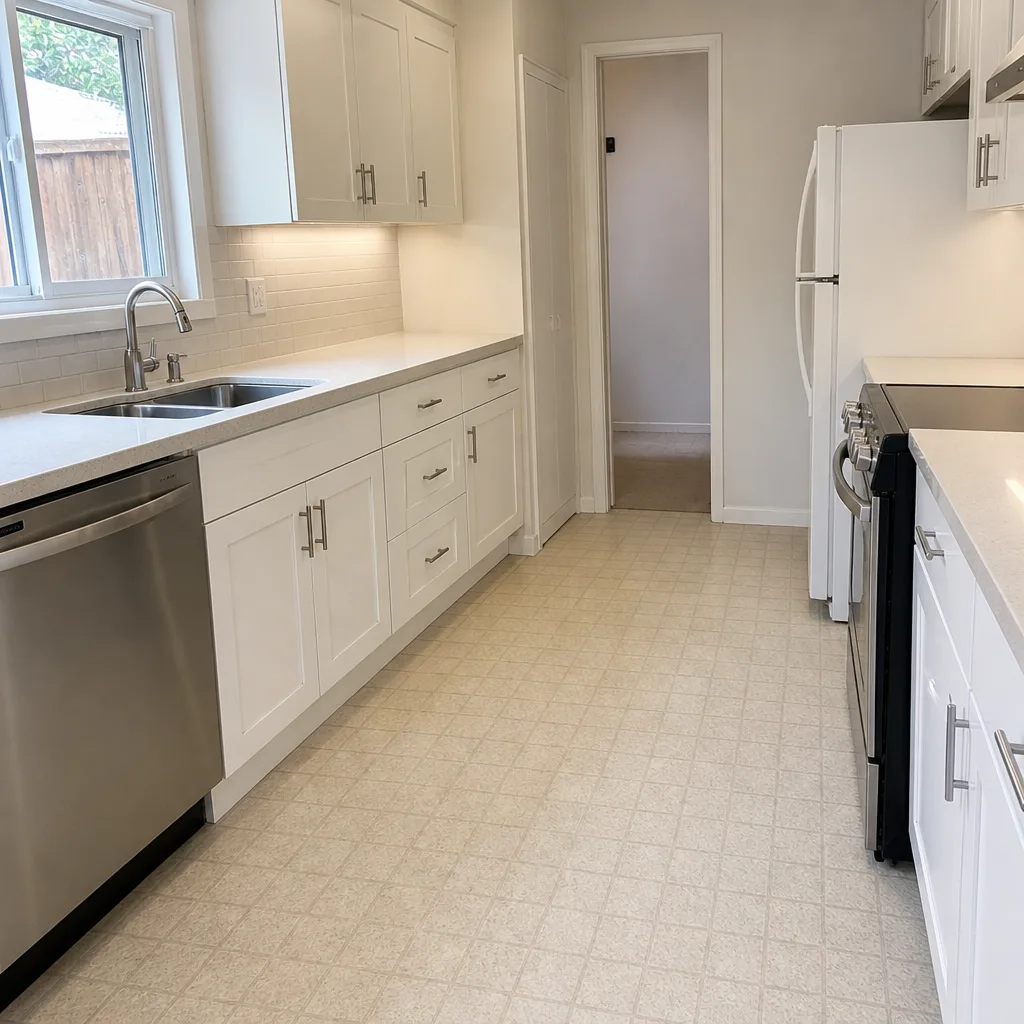 After
When to Call a Professional
Most of this schedule is homeowner work. But there are specific scenarios where the right move is a phone call, not a YouTube search. Call us if a tile is loose or hollow-sounding, if a crack in the grout or caulk line darkens or keeps growing, if you see water stains on the ceiling below the bathroom or the garage wall, if the shower valve is leaking behind the wall, or if the exhaust fan no longer clears a mirror within five minutes. Those signs point to something behind the surface – and the longer you wait, the more expensive the fix gets. We offer free estimates in Santa Clarita, and every job we take on comes with our written 90-Day Done Right Promise. If you want a contractor to walk the bathroom and tell you what’s actually wrong before you spend a dime, pick up the phone.
Frequently Asked Questions
Seal grout once a year in a standard shower, and every six months in a heavily used family shower. Santa Clarita’s hard water carries more minerals than coastal water, which dulls sealer faster and stresses grout lines. If water no longer beads on the grout, it’s time to reseal. Call (833) 762-8116 for a free estimate if you’d rather have a professional walk the job.
Normal settling cracks are hairline, straight, run along a joint, and don’t discolor. Water-damage cracks are wider, jagged, grow over time, and often darken or feel damp. If a crack darkens or spreads, stop using the shower and get it assessed. Call us for a free second opinion on any written estimate you’ve received – the phone line is open 24/7.
Santa Clarita water has higher mineral content – some of the highest in LA County – so calcium and magnesium deposits build up on showerheads and aerators much faster than in coastal homes. Descale with a vinegar soak every six months, and clean aerators every 90 days to keep them clear. If you’re on a well or an older municipal line, consider adding a softener.
Yes. Winter furnace air is very dry and shrinks caulk joints, so watch for seasonal gaps that reappear by spring. Summer humidity collects in the exhaust fan housing and duct, so listen for rattles and check the exterior flap. Both seasons land on the same six-month inspection – just with different things to look at.
Some manufacturer warranties on tile, grout, shower valves, and exhaust fans require documented maintenance. The Barrett & Sons 90-Day Done Right Promise covers workmanship on our side, but a written log makes any warranty conversation – with us, a manufacturer, or an insurer – much simpler. Keep a single sheet with dates, tasks, and photos, and save it.
It depends on how far it spread and how quickly you caught it. A single-tile crack repair or re-caulk job runs a few hundred dollars, while a full shower surround rebuild runs into the thousands. The difference is almost always how fast the issue was caught. Call (833) 762-8116 for a free estimate – the inspection visit is no-obligation, and the written quote will be itemized before any work moves forward.
The Bottom Line
A remodeled bathroom only stays finished if you work a maintenance rhythm around it. Check caulk, grout, and fixtures at 90 days. Then commit to the annual tasks: grout seal, aerator clean, showerhead descale, fan check, and a written log entry every time. In Santa Clarita, hard water and the dry furnace-to-summer-humidity swing push those tasks to a faster cadence than coastal homes – roughly a year of maintenance for every two years of neglect elsewhere. Twelve dollars of sealer and twenty minutes once a year is the whole ask. Skip it, and the $1,500 callback waits for a date. Keep the log, follow the schedule, and the bathroom you paid for will still be the bathroom you have in year twenty.
Ready for a Second Set of Eyes?
If your bathroom is coming due for a maintenance walk or you want an honest look at a crack that worried you this week, call Barrett & Sons Construction Santa Clarita at (833) 762-8116 for a free estimate. Every job we take on includes permits pulled and inspections signed where they’re required, written change orders before any scope moves, and our written 90-Day Done Right Promise backing the work. A live person answers the phone 24/7 – not a call center. Ask anyone on your street, or look up the license number yourself.
Written by the team at Barrett & Sons Construction Santa Clarita.