
Last updated November 16, 2026
 Bathroom remodeling
 Kitchen remodeling
 Home additions & ADU
 Roofing
 Windows & doors
 Driveway & pavers
 Fence
Free written scope consultation - allowances, timeline, and change-order rules on paper before a single trade is scheduled
How Long Does Bathroom Remodeling Take? Timelines and What to Expect
Tile can’t be grouted until thinset cures. Thinset can’t go down until the waterproofing membrane cures. The membrane can’t go on until the backer board passes inspection. Chain four of those together and “it’ll be a week” becomes a month – not because anyone was slow, but because chemistry doesn’t negotiate. Most contractors hand you a number and hope you don’t ask how they got it. This guide shows you the sequencing logic behind a realistic bathroom remodel timeline in Santa Clarita, so you can read a schedule instead of just accepting one. You’ll learn where the real days go, which gaps are unavoidable, and which short quotes are hiding a shortcut.
Quick Answer
A full gut bathroom remodel typically takes 4 to 8 weeks of working time, and a cosmetic refresh (flooring, vanity, fixtures) runs 1 to 2 weeks. In Santa Clarita, add 3 to 7 days for city permit review and inspection scheduling on a full remodel. A quote of “10 days” for a full gut is almost always planning to skip waterproofing cure time, rough-in inspections, or both.
Styles & brands we work with
- Kitchen remodeling
- Bathroom remodeling
- Home additions & ADU
- Roofing
- Windows & doors
- Driveway & pavers
- Fence
Table of Contents
- The phase-by-phase timeline of a bathroom remodel
- Why cure and dry times drive the calendar
- How Santa Clarita permit inspections add real days
- Cosmetic remodel vs. full gut: which one do you actually have?
- Material lead times and why they’re decided at the quote
- Red flags in a contractor’s timeline
- How to read a schedule before you sign
The Phase-by-Phase Timeline of a Bathroom Remodel
A bathroom isn’t one project. It’s seven small projects in strict order, and each one waits on the one before it. Here’s how the phases stack up on a typical full gut remodel in Santa Clarita. Working days exclude weekends and inspection wait time.
- Demo and haul-away: 1 to 2 days. Tear out tile, vanity, toilet, tub or shower, and drywall down to studs. This is the phase where hidden rot or old plumbing reveals itself, and it’s the single most common source of timeline drift.
- Rough-in plumbing and electrical: 2 to 4 days. New supply lines, drain moves, GFCI outlets, exhaust fan wiring. Done to current code, which in an older Santa Clarita home often means bringing 1970s-era drain lines up to today’s standards.
- Rough-in inspection: 1 to 5 days of calendar wait. The city inspector signs off before anything gets covered up. You cannot skip this and expect to pass final.
- Insulation, drywall, and backer board: 3 to 5 days. Drywall mud needs time between coats, and cement backer board goes up in wet areas.
- Waterproofing: 1 to 2 days, plus cure. A bonded membrane like a Schluter system or a liquid-applied membrane needs its full cure window before tile touches it.
- Tile setting and grouting: 3 to 6 days. Thinset cures 24 hours before grout; grout cures before the shower gets used. Large-format tile and intricate patterns push this longer.
- Fixtures and finish: 2 to 4 days. Toilet, vanity, sink, faucet (a Grohe or Sterling fixture installs clean but still takes a set), mirrors, trim, paint, final inspection.
Add it up and a full gut lands at 4 to 8 weeks. The wait days aren’t filler. They’re the load-bearing structure of the whole schedule.
Why Cure and Dry Times Drive the Calendar
Ask why a bathroom takes weeks and most homeowners hear “materials.” The honest answer is cure time, and it’s the part of the schedule nobody can compress. You can add a crew member. You can’t add a second clock to thinset.
- Drywall mud needs roughly 24 hours between coats, and you’re looking at two to three coats on a new wall.
- Waterproofing membrane cure runs 12 to 24 hours for liquid-applied products, longer in a humid room.
- Thinset cures 24 hours before grout, and 48 to 72 hours before the tile sees foot traffic.
- Grout needs its own cure before sealing, and sealing needs to happen before the shower’s first use.
- Silicone and caulk at joints need a full set before water hits them, or the seal fails in a season.
In our experience, the projects that run late aren’t the ones with slow crews. They’re the ones where somebody tried to grout the same afternoon they set tile, then had to tear out a failing shower pan two months later. In Santa Clarita’s dry heat, materials cure fast in summer and slower in the cooler valley mornings, so a good schedule builds a cushion that flexes with the season rather than a fixed number that doesn’t.
Here’s the reframe that matters: each day of cure time is a day the job is being done right. Rushing past it doesn’t save you a week later. It costs you one.
How Santa Clarita Permit Inspections Add Real Days
Permit scheduling is the part of a timeline most contractors gloss over, and it’s exactly where a “three-week” quote falls apart. Santa Clarita requires permits for structural, plumbing, and electrical work – including moving a drain, adding a circuit, or reconfiguring a shower. Each inspection is a distinct appointment on the city’s calendar, and the job can’t proceed until it passes.
A full gut remodel usually needs at least two inspections: a rough-in inspection after plumbing and electrical are exposed, and a final inspection when everything’s closed up. Realistic waits run 1 to 5 days per inspection, more around busy periods. That’s days a contractor can’t bill and often doesn’t plan for.
Here’s the part that separates an experienced crew from a wishful one. A contractor who knows the Santa Clarita inspection rhythm calls for the rough-in inspection the day the plumbing is roughed, not the day after, and doesn’t schedule tile until that sign-off is in hand. They also know that a final inspection catches what a rushed job hides – improper venting, missing GFCI protection, a shower pan that fails a flood test. The permit inspector works for the homeowner, not the contractor, and a good contractor treats that as a feature.
We pull permits and sign off on inspections on every eligible job. When a contractor tells you permits are optional for a bathroom remodel, that’s not a shortcut. It’s a liability you’ll inherit.
Cosmetic Remodel vs. Full Gut: Which One Do You Actually Have?
The single biggest timeline variable isn’t the contractor. It’s the scope, and most homeowners underestimate what they’re asking for. Here’s how the two categories break down.
Cosmetic Remodel (1 to 2 Weeks)
- Flooring replacement over existing subfloor
- New vanity, sink, faucet, and mirror
- Toilet swap
- Fresh paint and new lighting
- No plumbing or electrical moves, no tile tear-out in the shower
A cosmetic refresh usually skips the rough-in inspection entirely because no plumbing or wiring is being relocated. It’s a weekend-and-a-half of work spread over two weeks, and there’s no cure-time chain to negotiate.
Full Gut Remodel (4 to 8 Weeks)
- Everything down to studs
- Relocated plumbing or drains, new electrical circuits, new exhaust fan
- New shower or tub with a full waterproofing system
- Tile floor and walls
- Two inspections, rough-in and final
How do you know which one you have? Ask yourself if you’re moving water or wire. If the answer is yes, you’re in gut territory and the weeks are structural, not padding. If the shower or tub stays put and the layout doesn’t change, you’re probably in cosmetic range.
One honest note for older Santa Clarita homes: a 1960s or 1970s bathroom often looks cosmetic until demo opens the wall, and there’s galvanized plumbing or undersized drain line behind the tile. In our experience, that’s the single most common “cosmetic remodel turned full gut” moment in the valley. It lands at week one, not week four, and a contractor who warns you about it up front is being straight. A Barrett & Sons Construction Santa Clarita home walkthrough will tell you which category your bathroom actually falls into before you commit to a number.
Material Lead Times and Why They’re Decided at the Quote
You can build the perfect schedule and still lose two weeks because the tile showed up late. Material lead times are the hidden timeline variable, and the honest contractors account for them at the quote stage – not when the installer is standing in an empty bathroom.
Custom vanities are the big one. A stock vanity cabinet installs in a day. A made-to-order unit can run 6 to 10 weeks from order to delivery, and it doesn’t care how fast your tile crew is. Specialty or large-format tile can stretch 2 to 4 weeks if it’s not in local stock. Premium fixtures carry their own lead time – a Grohe or Sterling fixture generally ships quickly, but a special-order piece can add days.
That’s why a schedule built before the fixtures are ordered isn’t a schedule. It’s a guess. Here’s what to ask a contractor before they quote:
- Which materials are on a lead time, and what’s the current estimate?
- Does the schedule front-load the long-lead items so the rest of the job can proceed?
- What’s the buffer if a tile shipment slips?
- Are we ordering stock or custom on the vanity?
- Who owns the ordering and the tracking?
The materials we work with are ones you can look up and check lead times on yourself, which is the point. A contractor who names Schluter for waterproofing or Andersen for windows puts their reputation on a product that’s verifiable – not a mystery brand off a van. We set lead times in writing so nobody’s hoping a shipment shows up on the right Thursday.
Red Flags in a Contractor’s Timeline
A schedule that’s too fast is more dangerous than one that’s a little slow. Here’s what to watch for when a contractor hands you a number.
- “We can do it in 10 days.” For a full gut, that means skipping the waterproofing cure, the rough-in inspection, or both. A shower that fails because the membrane never set is a repair you’ll pay for twice.
- No mention of permits or inspections. If the timeline has no inspection days in it, the job isn’t being permitted. You’ll inherit the liability when you sell.
- No cure time anywhere in the schedule. If every day is a work day and no day is a wait day, the schedule was written to look good, not to work.
- A price-change promise without a written change order. The allowance that isn’t on paper is a surprise waiting for a date. A verbal “we’ll figure it out” is how a quote becomes a bigger bill.
- No material lead-time plan. If nobody asks about your vanity before the quote, the timeline is fiction.
- A start date that keeps sliding. If the crew can’t lock your start date, the finish date is a fiction too.
- No named brands and no written warranty. A contractor who won’t put the warranty in writing is telling you how they handle problems.
One more Santa Clarita-specific flag: a contractor who doesn’t ask about your home’s age. In older neighborhoods where 1970s plumbing is common, a schedule that doesn’t leave room for the “surprise behind the wall” day is a schedule that will blow past its date. We plan for that day. The ones who don’t are the ones who text you a revised number at week three.
How to Read a Schedule Before You Sign
A real bathroom remodel schedule is a document, not a promise. It should show you phases, not just a start date and an end date. Here’s what a schedule you can trust looks like.
- Phase breakdown with day counts. Demo, rough-in, inspection, drywall, waterproofing, tile, finish. Each with a real number.
- Inspection days marked separately. Not folded into “work days.” If they’re invisible, they weren’t planned.
- Cure and dry gaps shown. The days where nothing happens and everything is setting. Those should be visible.
- Material order dates at the front. What gets ordered the week you sign, and what ships when.
- A contingency line. A real schedule has a buffer, because demo finds what demo finds.
- Written change-order process. Scope in writing, allowances in writing, price changes in writing before work moves.
Ask to see a sample schedule before you commit. A contractor who can’t show you one is either making it up as they go or hiding that they are. Either tells you something about the finish date you haven’t been promised.
Common Mistakes to Avoid
- Accepting a timeline without a phase breakdown. A number with no phases behind it is a guess. Ask what happens in week two, and watch whether the answer is specific.
- Forgetting the permit wait. Santa Clarita inspections take real days. A quote that pretends they don’t is a quote that will run long.
- Ordering materials after demo starts. A custom vanity ordered at week one of a four-week job is the number one way a kitchen or bath timeline slides a month. Order at signing.
- Choosing the shortest quote. The 10-day bid for a full gut is often the most expensive job in the end, because you’re paying to fix the shortcut later.
- Skipping the written change order. Every scope change, every allowance tweak, every price change should arrive in writing before work proceeds. If it’s verbal, it’s a surprise waiting for a date.
- Not asking about the home’s age. In older Santa Clarita neighborhoods, galvanized plumbing or a failing drain can turn a cosmetic job into a gut. Ask the contractor to check before you commit.
- Trusting a warranty you can’t read. A warranty should be on the contract in plain language, not buried in fine print. Ours is the 90-Day Done Right Promise – if it’s not done right, we come back and make it right, one call.
See the difference
 Before
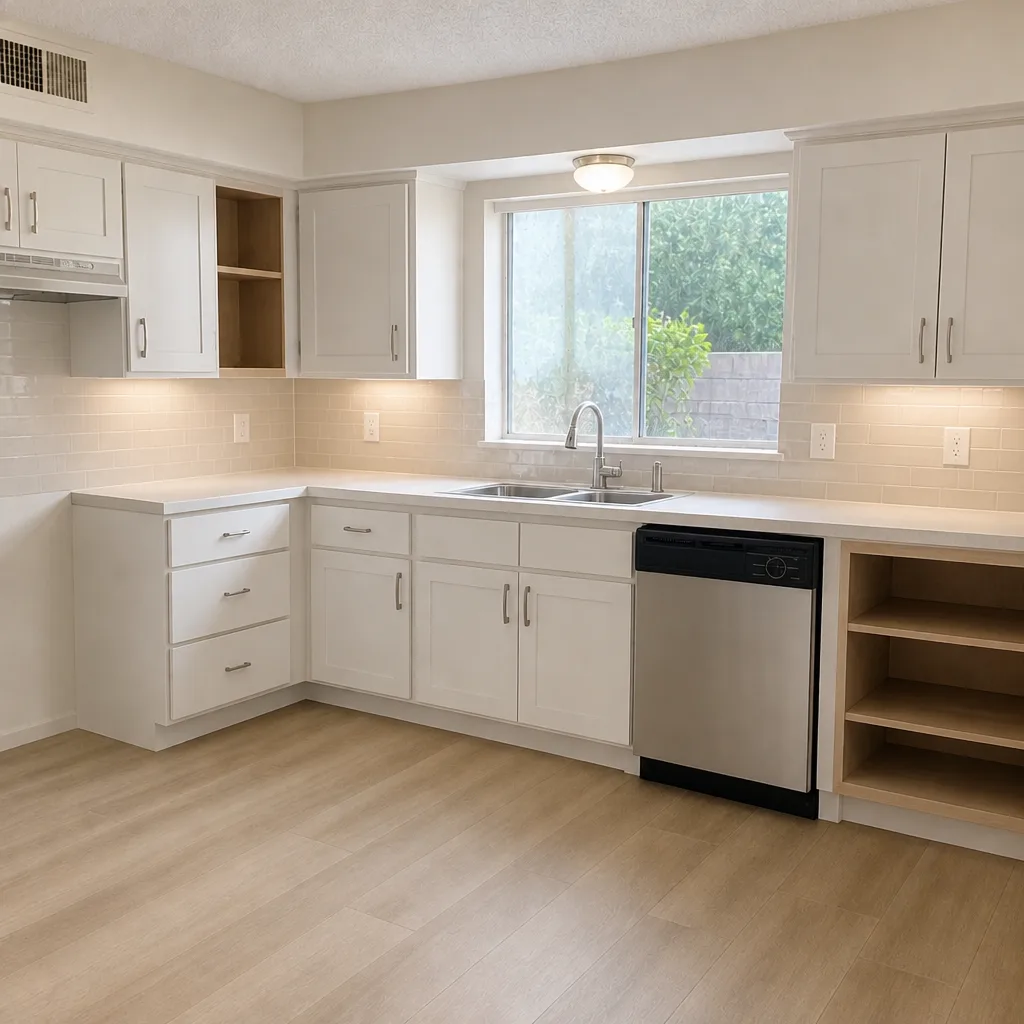 After
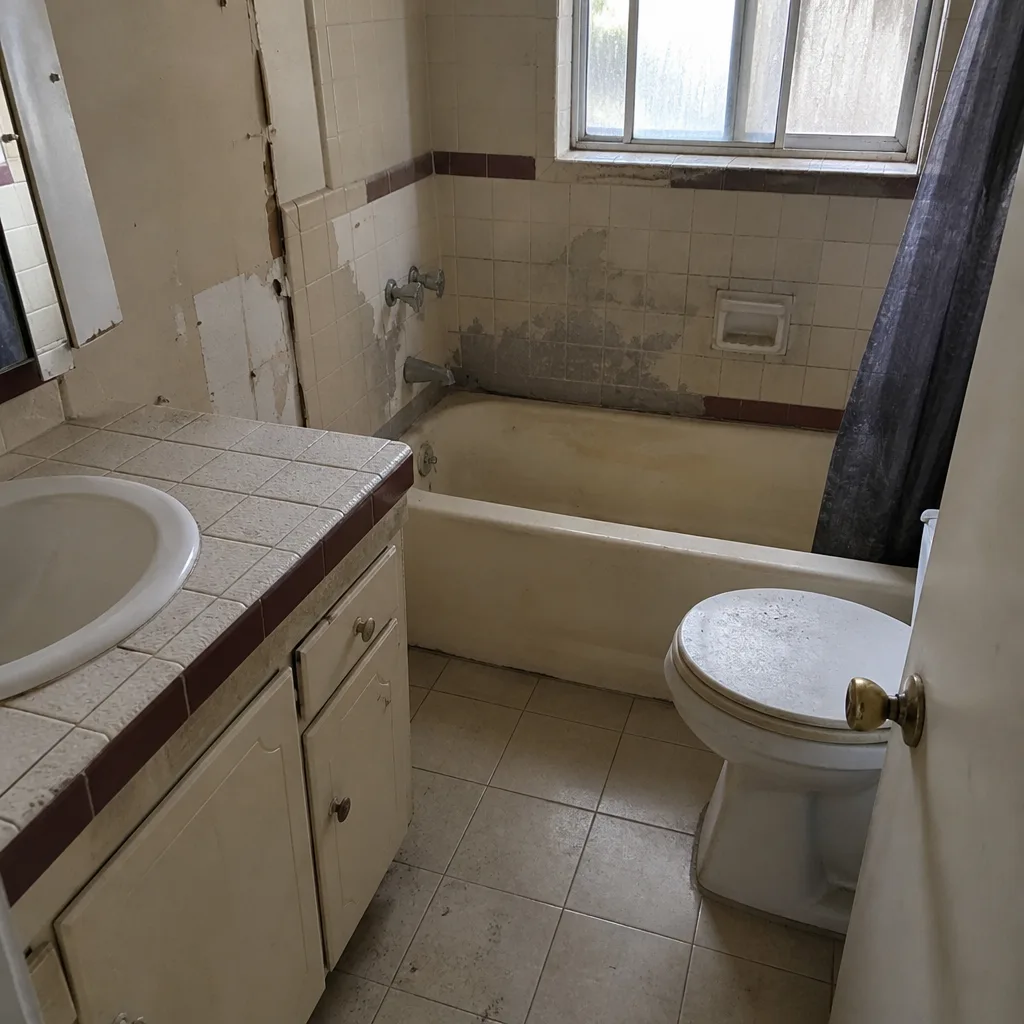 Before
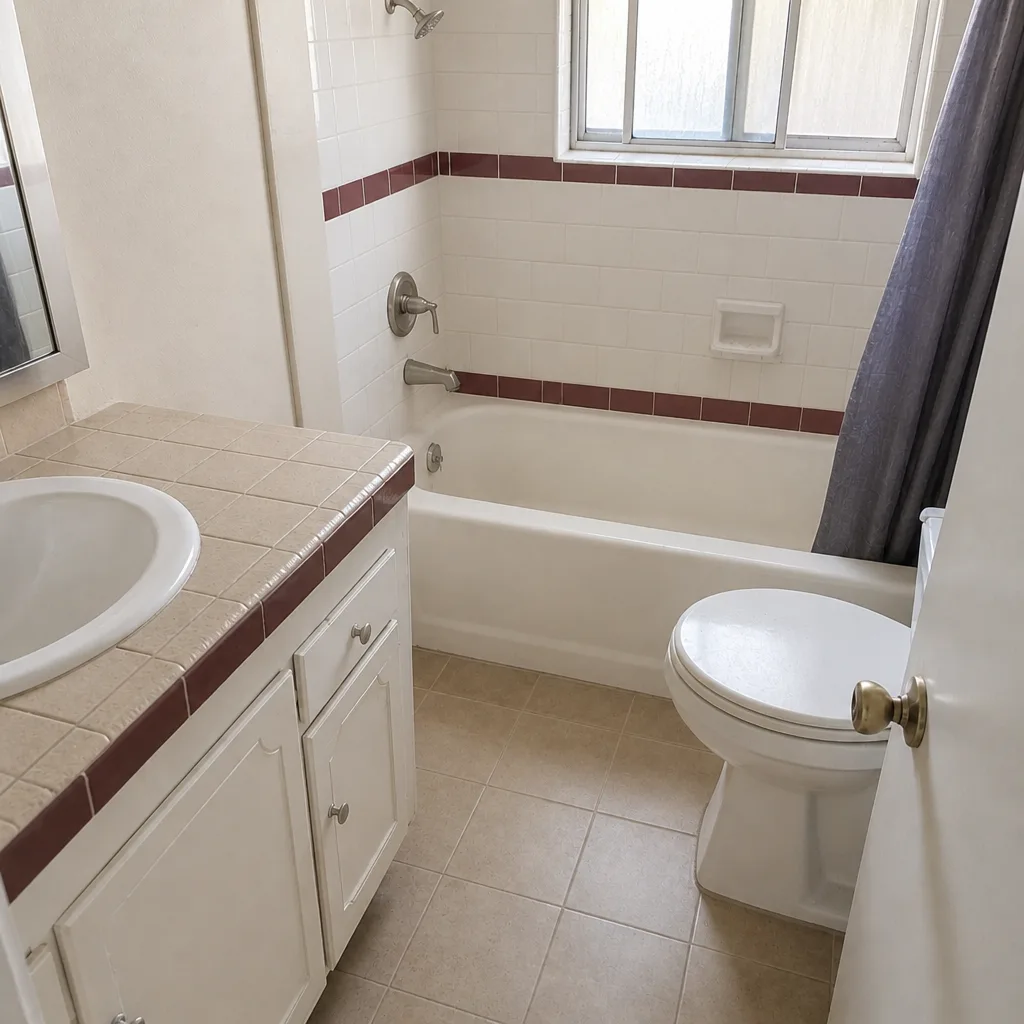 After
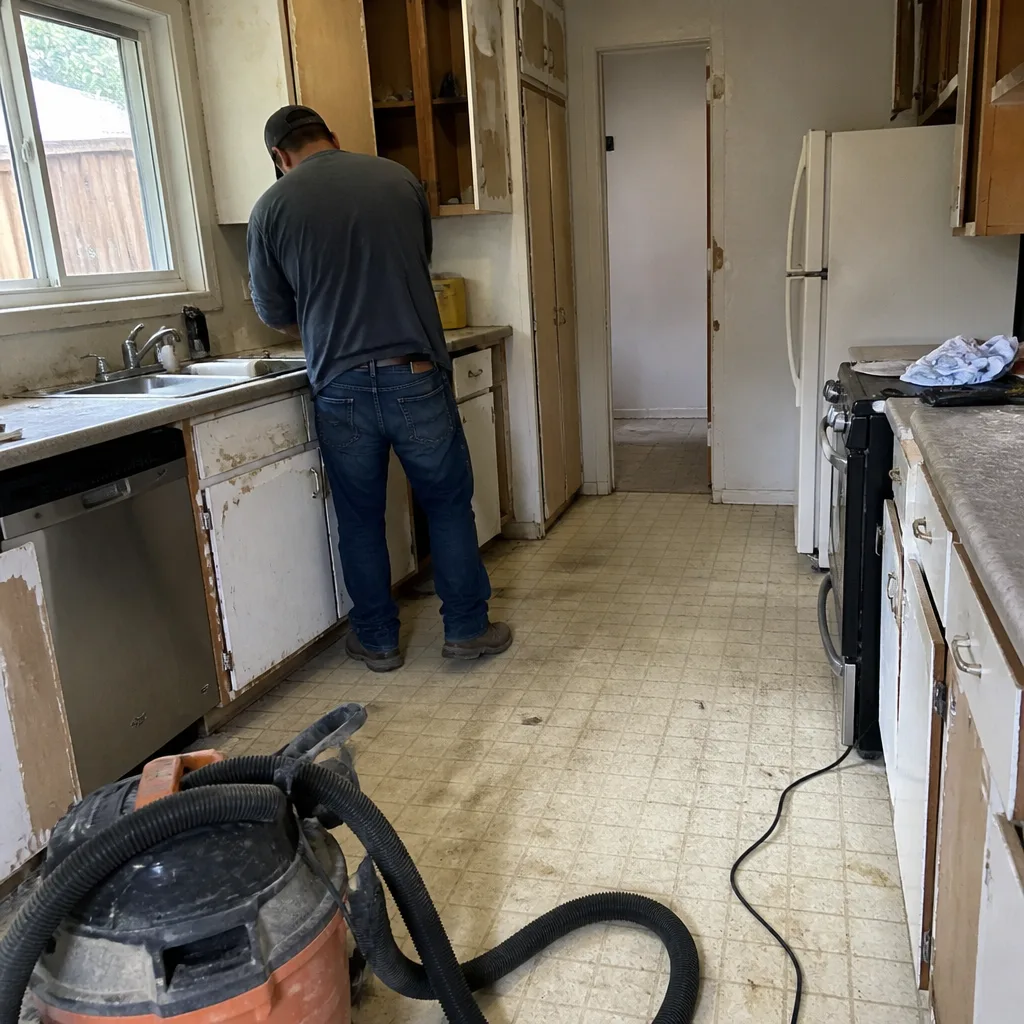 Before
 After
When to Call a Professional
Some jobs are a weekend project. A bathroom remodel that touches plumbing, electrical, waterproofing, or tile over a shower is not one of them, and it’s not the place to learn. Here’s when it’s time to call.
Call a professional when you’re moving a drain or adding a circuit, because that work is inspected and warrantied and dangerous to get wrong. Call when you’re waterproofing a shower, because a failed membrane means tearing tile out at month six. Call when your home is older and you don’t know what’s behind the wall, because demo day is not the time to find out. And call when a contractor gives you a timeline with no cure days, no inspections, and no written change orders in it – that’s not a schedule, it’s a trap. Barrett & Sons Construction Santa Clarita offers free estimates in Santa Clarita – call (833) 762-8116. We’ll walk the bathroom with you and tell you straight whether it’s a cosmetic job or a full gut.
Frequently Asked Questions
A full gut bathroom remodel in Santa Clarita typically takes 4 to 8 weeks of working time, plus 3 to 7 days of permit review and inspection scheduling. A cosmetic refresh – flooring, vanity, fixtures, no plumbing moves – runs 1 to 2 weeks. Call (833) 762-8116 for an exact quote based on your scope – estimates are free.
Because some schedules include cure time and inspection days and some don’t. A 10-day quote for a full gut is skipping waterproofing cure or the rough-in inspection, or both. The shorter number isn’t faster work; it’s a schedule with the load-bearing days taken out. Ask to see a phase-by-phase schedule before you sign.
Yes. Any remodel that touches plumbing, electrical, or structural work requires a permit and at least a rough-in and final inspection. We pull the permit and sign off on inspections on every eligible job. If a contractor says permits are optional for a bathroom, ask them to put that in writing.
Hidden damage found during demo and custom material lead times add the most calendar days. Old galvanized plumbing behind the tile can turn a cosmetic job into a full gut. A made-to-order vanity can run 6 to 10 weeks from order to delivery. Both get planned for at the quote when the contractor is doing it right.
It can, if the scope changes. Every allowance, every scope, and every price change arrives as a written change order before work happens, so you’re never surprised at the end. A contractor who won’t put that in writing is telling you how they handle problems. Call (833) 762-8116 for a free second opinion on any written estimate.
Usually yes, if you have a second bathroom. A full gut means dust, demo noise, and a few days without a working toilet or shower in that room. Plan for the rough-in and tile days specifically, since those are the longest stretches with the bathroom out of commission. We’ll tell you which days those are before the job starts.
The Bottom Line
A bathroom takes as long as it takes because chemistry and inspections set the pace, not the crew. A full gut remodel runs 4 to 8 weeks in Santa Clarita, and a cosmetic refresh runs 1 to 2. The number that matters isn’t the total – it’s whether the schedule behind it accounts for cure time, inspection days, and material lead times. If it does, the finish date means something. If it doesn’t, you’re reading a guess dressed up as a promise. We quote in writing, pull the permits, and back the job with the 90-Day Done Right Promise. Call Barrett & Sons Construction Santa Clarita at (833) 762-8116 for a free estimate and a schedule you can actually read.
Written by the team at Barrett & Sons Construction Santa Clarita.