
Last updated November 16, 2026
 Home additions & ADU
 Kitchen remodeling
 Bathroom remodeling
 Roofing
 Windows & doors
 Driveway & pavers
 Fence
Free written scope consultation - allowances, timeline, and change-order rules on paper before a single trade is scheduled
Home Additions & ADU Maintenance Schedule: What to Do and When
The flashing where your new addition roof meets the existing house wall needs to be inspected every year. Most homeowners don’t know it exists until water shows up on the wrong side of it. That’s the strange truth about additions and ADUs: the part of the structure that needs the most attention is the part nobody sees, because it sits exactly where new construction meets old. Your original house has had years to settle, dry out, and find its resting place. Your addition hasn’t. This guide gives you a year-one checklist, the tie-in points to watch, an ADU-specific routine, the five-year items people skip, and a seasonal calendar built for Santa Clarita heat, wind, and rain.
Quick Answer
Inspect the roof-to-wall flashing, the old-new exterior caulk seam, and the foundation transition at least once a year, check settling cracks and door alignment in year one, and clean the ADU’s own HVAC filter and water heater on their own schedule. Everything else on an addition or ADU is basic house maintenance, done on a rhythm set by Santa Clarita’s dry summers and brief wet winters.
Styles & brands we work with
- Kitchen remodeling
- Bathroom remodeling
- Home additions & ADU
- Roofing
- Windows & doors
- Driveway & pavers
- Fence
Table of Contents
- The Tie-In Points That Matter Most
- Your Year-One Maintenance Checklist
- Settling Cracks: What to Watch vs. What to Fix
- ADU-Specific Maintenance
- The Five-Year Items Everyone Skips
- A Seasonal Calendar for Santa Clarita
- Common Mistakes to Avoid
The Tie-In Points That Matter Most
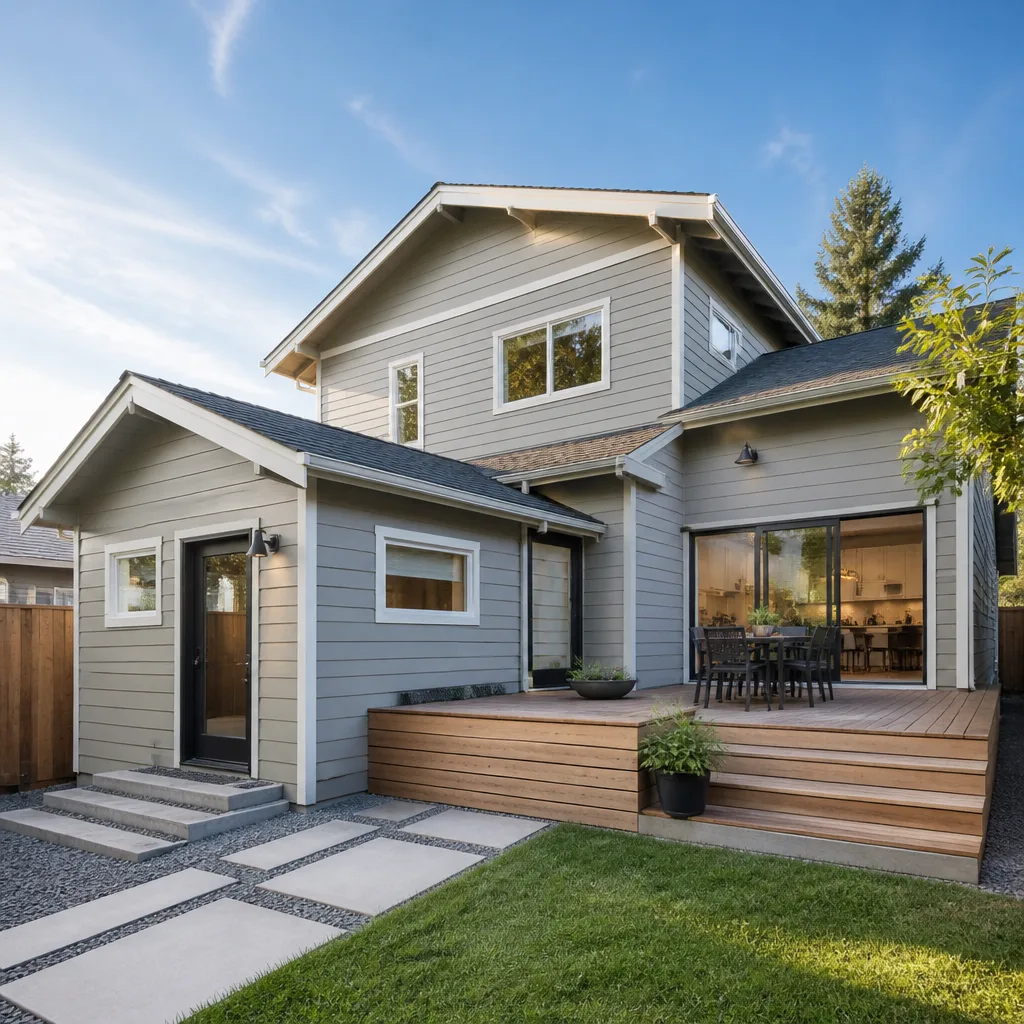
A standard house doesn’t have a seam where two structures meet. An addition does. That seam is where the new roof line, the new exterior wall, and the new foundation connect to the original, and it moves on a different schedule than the rest of the building. The new footing settles at its own rate. The existing stem wall has already done its settling. When those two drift apart even a little, the first problems show up at the connection.
Three tie-in points deserve a close look every year:
- Roof-to-wall flashing. Where the new roof meets the old house wall, a metal flashing should step up under the siding and out over the shingles. Check it for lifting, corrosion, or gaps at the top edge. This is the single most common source of hidden water intrusion on additions.
- Exterior paint and caulk at the old-new seam. The vertical joint where new siding or stucco meets old needs a continuous bead of exterior-grade sealant. Sun and the seasonal swing from hot to cool flex it. When the bead cracks, water gets behind the wall.
- Foundation transition. Where your addition meets the existing stem wall, look for a hairline crack that widens over time, or soil pulling away from the new footing. A stable crack is fine. One that grows is a signal.
We see this constantly in Santa Clarita, where additions in neighborhoods like Saugus and Valencia were built onto homes that had already been through a decade of hot summers. That temperature history matters – the old structure has already flexed and dried. Walking that seam once a year with a flashlight and a tube of sealant is the cheapest insurance you’ll ever buy for a five-figure project. For more on the build side, see our Home Additions & ADU in Santa Clarita page.
Your Year-One Maintenance Checklist
The first year after an addition or ADU is finished is when the building is still settling into itself. Wood dries and shrinks. Framing finds its load path. Concrete cures. None of this means something is wrong – it means you should look more often in year one than in year five. Here’s the sequence we recommend:
- Month one: Walk the entire exterior. Photograph the roof-to-wall flashing, the old-new caulk seam, and the foundation transition. Save those photos. You now have a baseline to compare against later.
- Month three: Check every interior corner where drywall meets ceiling and floor. Note any hairline cracks. Check that all doors and windows open and close smoothly and the latches line up.
- Month six: Inspect the exterior caulk seam again. Look for separation at the trim joints. Confirm that water drains away from the new foundation – not toward it.
- Month nine: Re-check door and window alignment. If a door that closed cleanly in month three now sticks, the structure is moving somewhere.
- Month twelve: Full exterior walk again. Compare to your month-one photos. Clean or replace the ADU’s HVAC filter. Flush the water heater if the ADU has its own.
Keep a simple folder – paper or phone photos work fine. By month twelve you’ll know the difference between normal settling and something that needs a call. If you’re planning an addition rather than maintaining one, our Barrett & Sons Construction Santa Clarita home page covers what to expect at the start.
Settling Cracks: What to Watch vs. What to Fix
Not every crack is a problem. Some are the building telling you it’s normal. Others are the building telling you something moved that shouldn’t have. Here’s the distinction we use on our own jobs.
Cracks to watch (usually harmless):
- Hairline cracks under 1/16 inch in drywall corners, at door frames, or where a wall meets the ceiling.
- Cracks that appeared in the first 12 months and haven’t grown since.
- Diagonal hairline cracks at window corners in newly framed walls.
- Shrinkage cracks in concrete flatwork that are tight and stable.
Cracks to act on:
- Any crack wider than 1/8 inch, or one that widens noticeably within a few months.
- Horizontal cracks in a foundation stem wall – these suggest a lateral load that shouldn’t be there.
- Stair-step cracks in masonry or block walls.
- Cracks paired with a door or window that has gone out of square.
Take a pencil and lightly mark the ends of a crack with the date. Check it in six months. That’s the simplest diagnostic tool there is, and it costs you nothing. Santa Clarita’s dry heat pulls moisture out of framing fast, so year-one shrinkage is more pronounced here than in coastal areas. That’s normal. A widening crack at the foundation transition is not.
ADU-Specific Maintenance
An ADU is a second dwelling, and that means it has its own systems. If it shares the main home’s HVAC, plumbing, and electrical, treat it as one house. If it has its own equipment, it needs its own routine. Most ADU owners forget this by year two.
HVAC filter schedule. If the ADU has its own air handler or mini-split, the filter needs attention on the same rhythm as the main house – check monthly, replace every 60 to 90 days. In Santa Clarita, where the summer dust and pollen run heavy and the AC runs hard from June through September, check it more often in the hot months. A clogged filter in a small unit stresses it faster than in a big one.
Water heater service. If the ADU has its own tank or tankless unit, flush it annually to clear sediment. Tankless units need a descaling flush per the manufacturer’s schedule. Test the pressure relief valve once a year. If it’s a gas appliance, keep the vent clear and have it checked by a licensed tech – gas work is not a homeowner job.
Egress paths. This one matters for code and safety. Every bedroom in an ADU needs a clear egress path, either a door to the exterior or a window large enough and low enough to escape through. Keep those windows unobstructed. Don’t stack furniture or planters in front of the egress window. Don’t let a patio cover, fence, or storage shed block the doorway. If the ADU is a rental, walk the egress path at every tenant turnover. Santa Clarita code enforcement cares about this if the unit is ever inspected, and more importantly, it keeps the people inside safe.
If you’ve installed a fence or gate around the ADU access, our Fence Installation in Santa Clarita page covers the gate and path considerations that keep both access and egress clean.
The Five-Year Items Everyone Skips
New construction feels like it will last forever. That’s exactly why the five-year maintenance gets skipped – the building still looks new, so nobody thinks about it. Here’s what needs doing at the five-year mark on any addition or ADU.
- Re-caulk the windows. Exterior caulk around window frames breaks down in about five to seven years. Santa Clarita’s UV load and the daily swing from hot days to cooler nights wear it faster. Cut out the old bead, clean the joint, and re-caulk with exterior-grade sealant rated for sun exposure.
- Touch up exterior paint at the trim joints. Paint at corners, seams, and around penetrations thins first. A small touch-up now prevents a full repaint later. Focus on the old-new seam where the addition meets the original house.
- Check deck ledger connections. If the addition includes a deck, inspect the ledger board where it attaches to the house. Check the lag screws or bolts for corrosion and confirm the flashing above the ledger is intact. This is a structural connection and it deserves a real look.
- Inspect the roof. Have the roof checked at year five, especially the flashing at the tie-in. If the addition roof is asphalt shingle – GAF or CertainTeed are what we install – you’re still years from a replacement, but the flashing and the penetrations need eyes on them.
- Service the ADU’s own systems. Water heater, HVAC, and any appliance that has its own warranty schedule. Five years is when a first service visit pays for itself.
We’ve walked plenty of Santa Clarita additions at the five-year mark and found nothing but a re-caulk job and a couple of touch-ups. That’s the good outcome. The bad ones are the additions where nobody looked at the flashing in five years and the water got in through the wall instead. For hardscape around the addition – paths, patio, driveway – see Driveway & Pavers in Santa Clarita. Belgard and Unilock pavers hold up well through our dry summers, and the base prep is what makes the difference.
A Seasonal Calendar for Santa Clarita
Santa Clarita weather is not San Diego weather and it’s not Bakersfield either. It’s hot, dry summers with real UV pressure, a Santa Ana wind season in fall, and short but intense rain events in winter. Each of those stresses a different part of an addition or ADU. Here’s the calendar we recommend to our clients.
Spring (March through May): Rain season is winding down. Walk the roof-to-wall flashing for wind or water damage from winter storms. Inspect the exterior caulk seam for separation. Check the grading around the addition – if the soil has shifted toward the foundation through winter, correct it now. Clean gutters. Check screens and seals on the ADU’s windows. First HVAC filter change of the year.
Summer (June through August): This is UV and heat season. Check the ADU’s AC filter monthly. Look for paint blistering or caulk cracking on sun-facing walls. Check for termite activity along the foundation transition – dry heat plus irrigation means pests find the moisture line. Verify that shade and venting on the ADU are working as intended. Flush the ADU water heater if you haven’t recently.
Fall (September through November): Santa Ana winds arrive. Inspect the roof for loose or lifted shingles at the tie-in and along ridges. Secure anything on the addition’s roof – vents, caps, satellite mounts. Check door and window alignment after the summer heat expansion. Re-caulk any seam that’s opened over the summer. Second HVAC filter change.
Winter (December through February): Rain events are brief but heavy. Confirm that gutters and downspouts route water away from the foundation. Check the grading around the ADU for ponding. Walk the interior for any water staining at ceiling-wall junctions. Pay attention to any crack at the foundation transition after the first significant rain. Keep the egress paths clear of winter debris.
Common Mistakes to Avoid
- Ignoring the old-new seam because it “looks new.” The tie-in is the most stressed joint on the whole addition. It’s also the one most homeowners never think about.
- Freaking out over every hairline crack. Year-one settling cracks are normal, especially in Santa Clarita’s dry heat. Measure and date them before deciding.
- Skipping the ADU’s separate systems. A second dwelling with its own HVAC and water heater needs its own filter and flush schedule. Don’t lump it in with the main house.
- Blocking egress windows with furniture or planters. In any ADU, those openings are a life-safety path. Keep them clear.
- Letting the grading go. After construction, soil settles. If water now runs toward the addition instead of away, that’s a problem you can see long before you can feel it.
- Putting off the five-year re-caulk. Small caulk jobs are cheap. Water behind a wall is not.
- Assuming the builder will come back for maintenance. The workmanship warranty covers construction defects, not routine upkeep. The annual walk is yours.
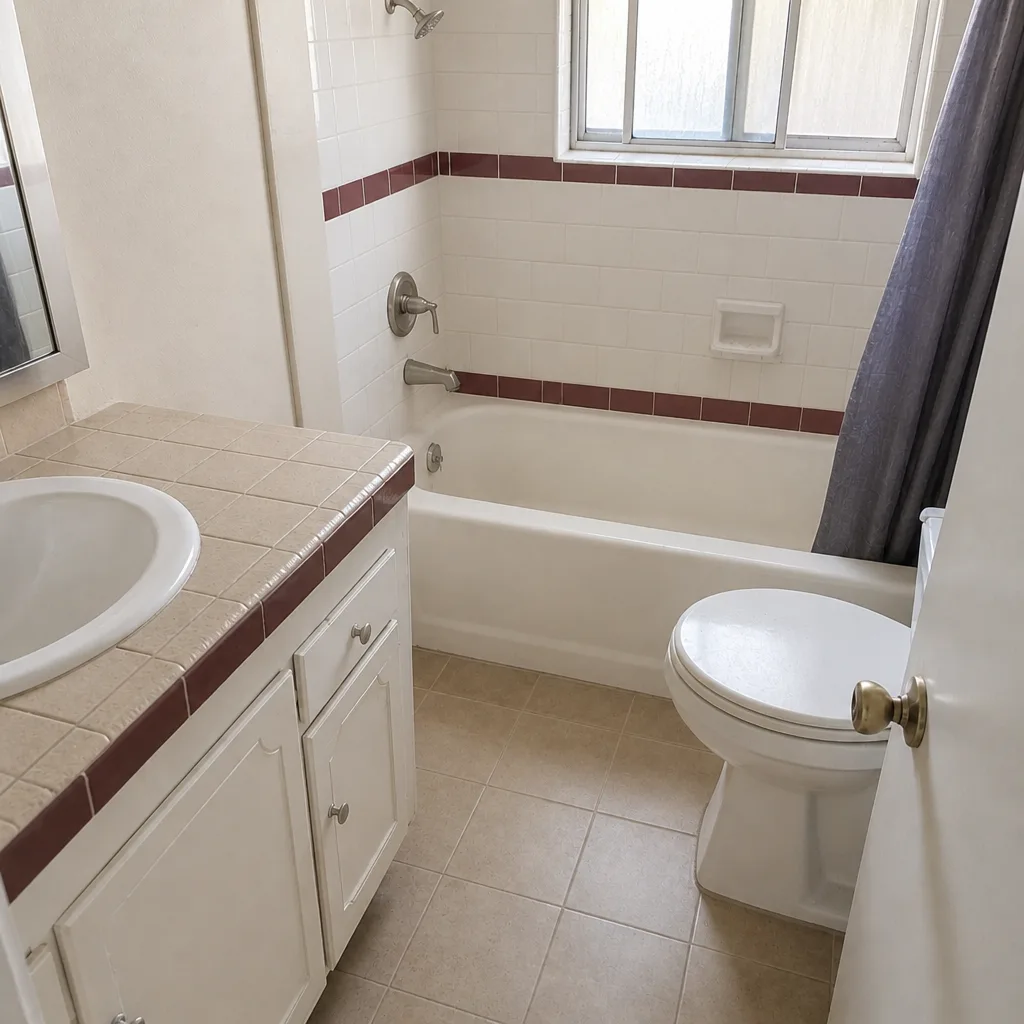
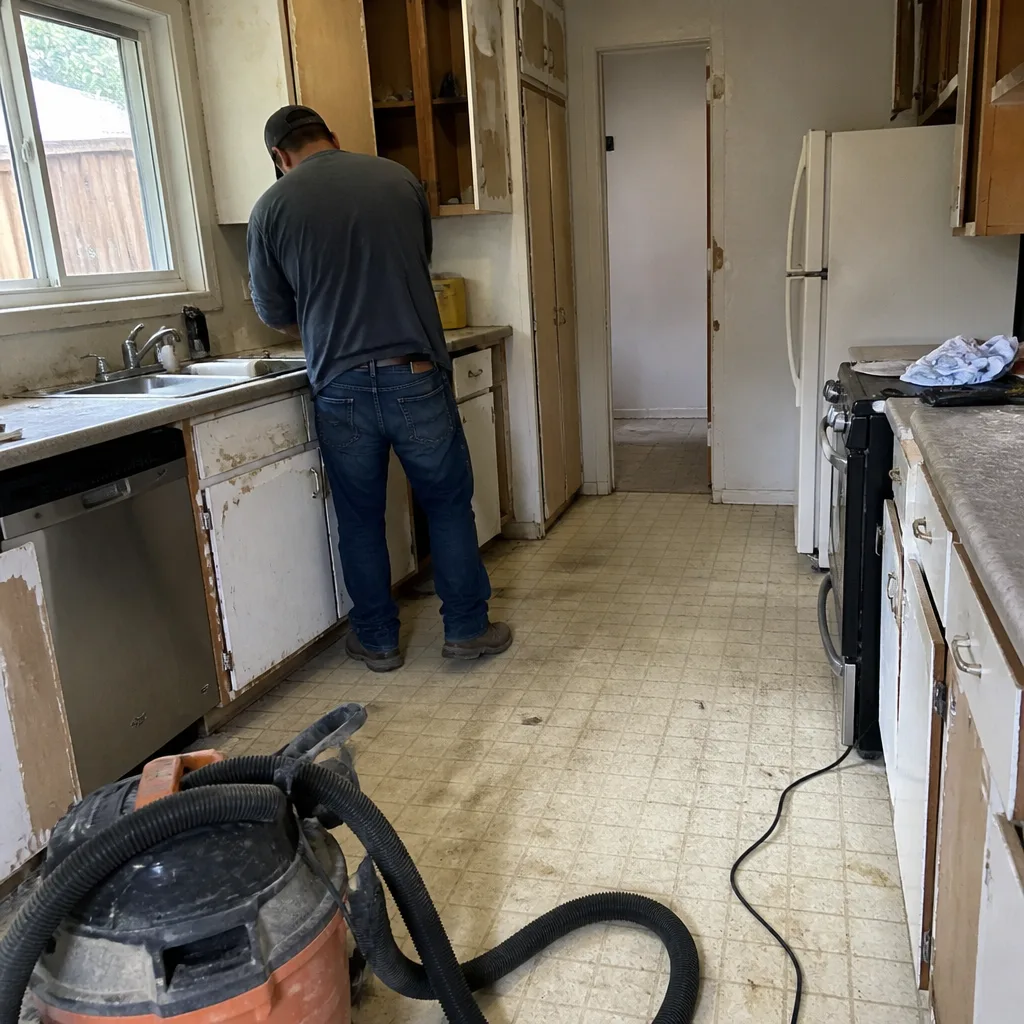
See the difference
 Before
 After
 Before
 After
 Before
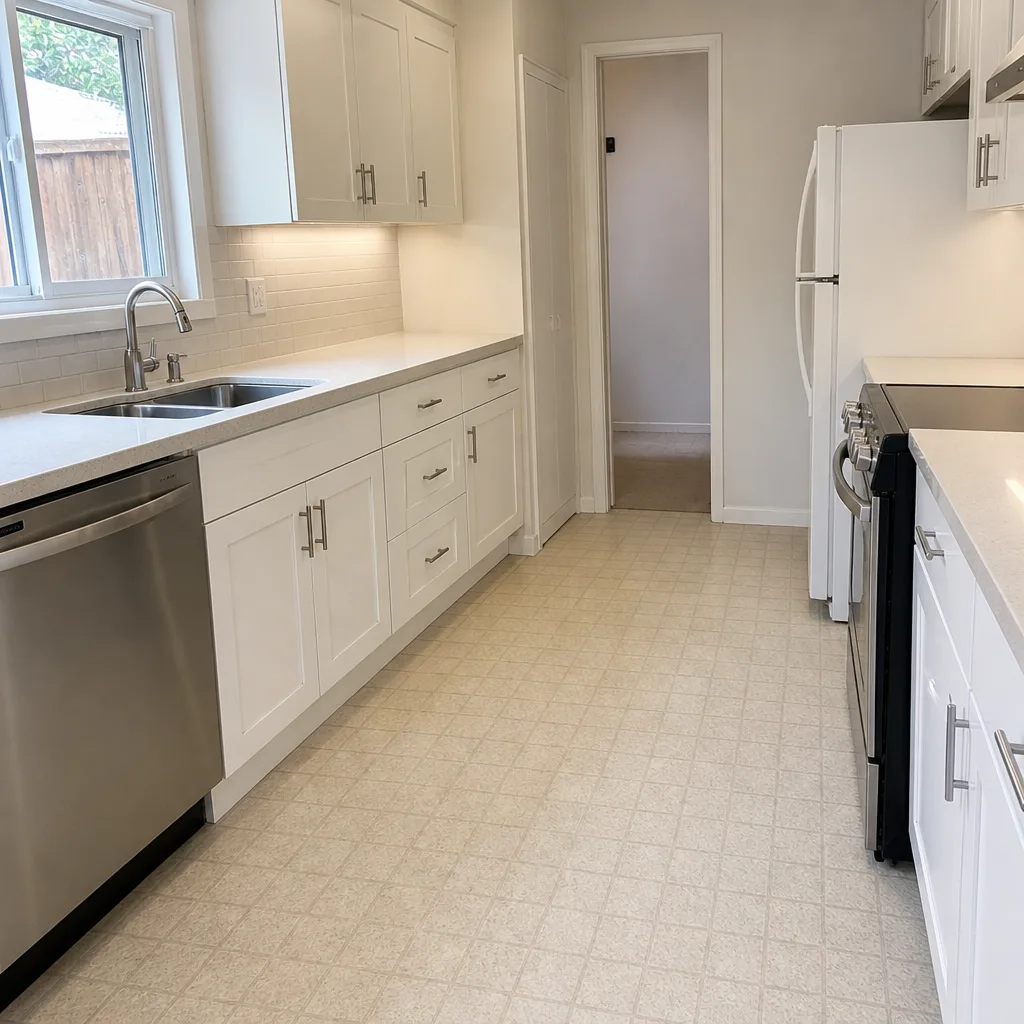 After
When to Call a Professional
Call us when a crack widens across a season, when water staining appears at the flashing or the ceiling-wall junction, when a door or window that used to close cleanly no longer does, or when the ADU’s water heater, gas appliance, or HVAC needs service beyond a filter change. Call us when you’re not sure whether a crack is normal settling or a real structural signal. Those are the calls we take seriously, because we’ve seen the difference between the two and we can tell you plainly which one you have.
Barrett & Sons Construction Santa Clarita offers free estimates in Santa Clarita – call (833) 762-8116 to schedule a walk-through. We give you a written scope, a written price, and no surprise at the end.
Frequently Asked Questions
Inspect the exterior tie-in points once a year, and check the ADU’s HVAC filter monthly in the hot months. In the first year after construction, do the full checklist at months one, three, six, nine, and twelve. After year one, once a year in spring and once in fall covers the essentials.
The roof-to-wall flashing where the new addition meets the existing house. It’s the most common hidden leak point on any addition, and it can fail without visible signs until water appears inside. Check it every year.
Hairline cracks in the first year are normal, especially here where the dry heat pulls moisture from framing fast. Act on cracks wider than 1/8 inch, horizontal cracks in the foundation, or cracks that are growing. Mark the ends with a pencil and date them if you’re not sure.
Yes, if it has its own HVAC, water heater, or other equipment. The ADU’s filter schedule, water heater flush, and egress window checks all need their own routine. If those systems are shared with the main house, use the main house schedule.
Routine maintenance and re-caulking don’t require permits. Structural repairs, replacing a water heater, or moving any wall or opening might. Call us and we’ll tell you which side of that line your job falls on, and if it needs a permit we pull it and get the inspection signed.
A thorough annual walk-through on an addition or ADU usually takes a couple of hours. The estimate is free – we come out, look at what you’ve got, and give you a written scope with a written price before any work happens. Call (833) 762-8116 for an exact quote.
The Bottom Line
Additions and ADUs need a different maintenance rhythm than the original house because the seams – roof-to-wall flashing, the exterior caulk at the old-new joint, and the foundation transition – are where trouble starts quietly. Do a focused walk in year one, catch settling cracks early, keep the ADU’s own systems on their own schedule, and don’t skip the five-year re-caulk and ledger check. Follow the Santa Clarita seasonal calendar and you’ll catch most issues while they’re small and cheap. Skip it and the first sign will be water on the wrong side of a wall.
If you’re planning an addition, an ADU, or a maintenance walk-through on a completed one, Barrett & Sons Construction Santa Clarita is here. We pull the permits, write every change order before the work happens, back the job with our 90-Day Done Right Promise, and answer the phone with a live person any time you call. Call (833) 762-8116 for a free estimate.
Written by the team at Barrett & Sons Construction Santa Clarita.